What this book covers
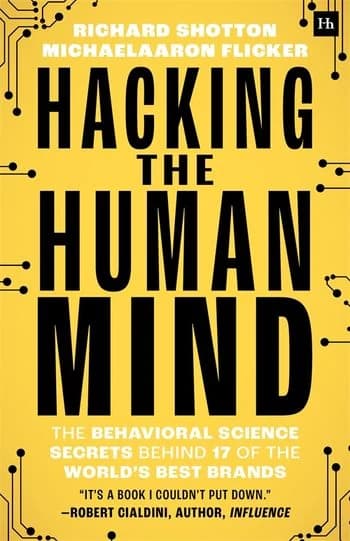
MichaelAaron Flicker and Richard Shotton start with recognisable brands, then explore the behavioural explanations behind their appeal. That case-led structure gives creative teams concrete material for discussing perceived value, effort and social influence. Treat the examples as starting points for testable ideas in your client's context, rather than proof that a tactic caused a brand's success.
Bring it to your work
Choose a case explanation and identify what is similar and different about one of your clients before proposing a test. PMC editorial prompt, not a quoted book exercise or tested outcome.
Access and review scope
Paid book; price varies by retailer and format. Full book not read; contents, introduction and part of first chapter inspected on 6 September 2026. Case claims were not independently tested. Evergreen 2025 discovery. Page count omitted because publisher records conflict. Author chapter landing page requests email; no signup needed for the public indexed sample inspected by the reviewer.
External reviews & commentary
These are other readers’ assessments, summarised with their original source and context. Recommendations, review fees and earlier editions are identified below.
Research World (ESOMAR): Jack Miles ↗
Miles highlights the shift from explaining a bias first to opening with a brand story. He also values the short, self-contained chapters and newer experiments, while noting that some principles will be familiar to readers of Shotton’s earlier books.
Context: Review of the 2025 work. Includes comments from the author; this is separate from publisher-hosted endorsements.
Adpulp: Dan Goldgeier ↗
Goldgeier finds the brand examples accessible and engaging, but questions whether the marketers deliberately applied the behavioural principles identified by the authors. That distinction is useful when turning a retrospective story into a claim about what caused success.
Context: The reviewer discloses a review copy supplied by Fortier PR. Review of the 2025 work.
Prepared with AI assistance from the sources identified on this page. The applications and comparisons are Paid Media Collective suggestions, not claims of full-book reading. An external review does not verify every claim in a book.
Another book to consider
The Choice Factory →
Choose this for a reference organised around individual biases rather than brand stories.
Edition & source notes
The reference below identifies the material checked for this listing. It may differ from the format offered by the main book link.
- Reference edition
- Paperback; numbered edition unspecified
- Format
- paperback
- Reference edition date
- 30 September 2025
- ISBN-13
- 9781804091326
Publisher or author description reviewed. Sources checked . Book not read in full.
Reading context: Evergreen discovery.
Selected public evidence; full book not read.
Access: Paid book; price varies by retailer and format.
- harriman-house.com
- Public sample (theconsumerbehaviorlab.com)
- theconsumerbehaviorlab.com
- panmacmillan.com.au
Paid book; price varies by retailer and format.
Full book not read; contents, introduction and part of first chapter inspected on 6 September 2026. Case claims were not independently tested.
Evergreen 2025 discovery. Page count omitted because publisher records conflict.
Author chapter landing page requests email; no signup needed for the public indexed sample inspected by the reviewer.
Source facts and reading prompts prepared with AI assistance. The named authors and linked publishers retain credit for the original work. Source verification is separate from an assessment of current platform tactics.
Take the idea off the page.
Which alternative explanation could account for the brand outcome described?
Talk with the collective