Anthropic · Status at source date: Newsletter archive
Claude shares memory between chat and cloud Cowork
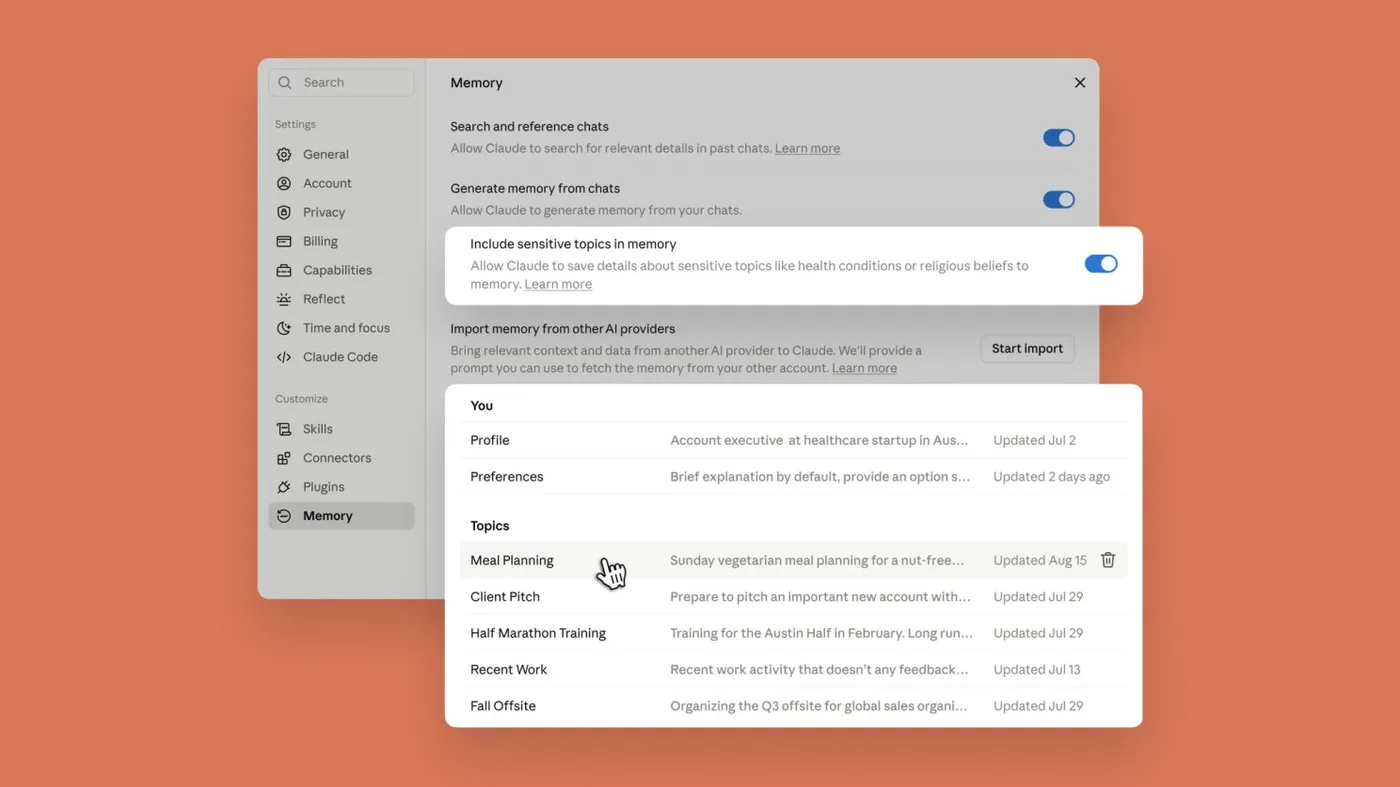
Anthropic has introduced one editable memory across Claude chat and cloud-based Cowork, allowing context learned in one surface to inform work in the other. Users can inspect, edit, or delete saved topics; memory is on by default for Free, Pro, and Max users, while Team and Enterprise administrators control availability and individual users opt in.
Why it matters for advertisers
For you, this means longer-running workflows need fewer repeated briefs, but teams should review what is remembered, separate client contexts, and keep sensitive information outside shared memory unless explicitly approved.
Perspective from the original PMC newsletter.Sources & contributor credit
- Newsletter coverage · Paid Media Collective newsletter
Original newsletter text, contributor labels and media for this update.
- Source referenced in newsletterLinkedIn
Linked from the original newsletter. The source publication date has not been independently confirmed.
- Source referenced in newsletterAnthropic Help Centre
Linked from the original newsletter. The source publication date has not been independently confirmed.

Original creator unverified
The original creator has not yet been verified. Newsletter curation and publication do not establish original authorship.
Attribution evidence and limitations
Full attribution review pending.
A source link alone does not establish original authorship.
Original image and video creators have not yet been verified.
- Published on this site
This update reflects the dated source reporting. Availability may have changed. Further coverage of this same development will be added to this page.
Original newsletter text and archive evidence
Claude shares memory between chat and cloud Cowork
Anthropic has introduced one editable memory across Claude chat and cloud-based Cowork, allowing context learned in one surface to inform work in the other. Users can inspect, edit, or delete saved topics; memory is on by default for Free, Pro, and Max users, while Team and Enterprise administrators control availability and individual users opt in. For you, this means longer-running workflows need fewer repeated briefs, but teams should review what is remembered, separate client contexts, and keep sensitive information outside shared memory unless explicitly approved.
Source captured . No explicit first-contributor label was provided for this update.