Industry · Status at source date: Spotted in the Wild
Reported Meta Muse and Instinct Tests Show Experimental Multi-Item Cart Building
Juozas Kaziukėnas reports that Meta’s Muse and Instinct can build multi-item carts from one request, but calls the feature experimental and presently unusable.
What changed
A reported experimental observation
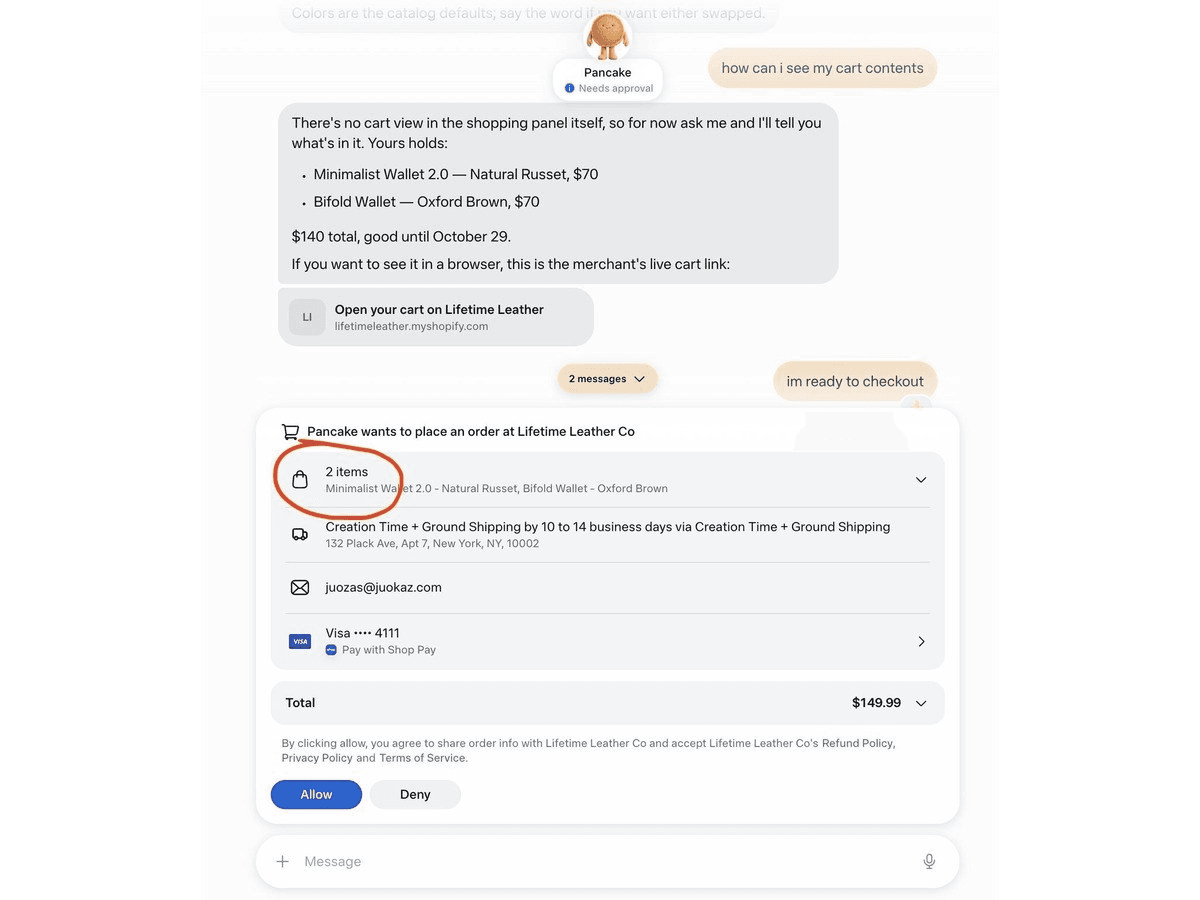
Juozas Kaziukėnas reported that Meta’s Muse and the Instinct agent can build multi-item carts, limited to one merchant per cart and without a visible cart interface. In one reported test, Instinct built a 112-item cart from a single request.
He described the feature as experimental and unusable for now. No corroboration was found, so this remains an attributed observation rather than evidence of a generally available or reliable shopping capability.
What the report may signal
If representative, the observation may indicate that agent shopping is moving beyond choosing an individual item towards assembling a merchant-specific order. That possibility makes catalogue completeness, product relationships and order constraints more relevant to future agent-mediated shopping.
It does not show that any particular merchant catalogue is accessible, that customers can reliably complete an order or that an invisible-cart design will persist. One test cannot establish adoption, availability or commercial impact.
A useful evaluation would use a small, known list containing variants, quantities and an incompatible pairing. Review whether the agent selects the intended products and exposes conflicts before considering larger-cart demonstrations meaningful. This proposed test is not evidence that either agent supports such controls.
Prepare catalogue basics without overclaiming
Teams can inspect whether product data supports complementary-item decisions through clear titles, quantities, variants, compatibility and pack information. That is useful catalogue hygiene, not proof of integration with either named agent.
Keep observed experiments separate from operational commitments. Any evaluation should seek repeatable tests, merchant confirmation and an auditable record of what the agent selected, changed and ultimately submitted.
Why it matters for advertisers
The report suggests a possible shift from item-level assistance to multi-item order assembly, but its experimental, unusable and uncorroborated status prevents firm planning assumptions.
What to check next
- Check product titles, variants, quantities and compatibility fields for ambiguity.
- Map complementary products and bundled-order constraints in catalogue data.
- Treat multi-item agent-cart claims as hypotheses until independently repeatable.
Sources & contributor credit
- Reporting or practitioner sourceJuozas Kaziukėnas on LinkedIn
Source cited in the published Week 40 newsletter. Article observation/reporting date is shown separately; this page’s original publication date is not inferred.
- Newsletter coverage · Paid Media Collective Week 40
Published edition used for story selection, copy, source credits and media; curation is distinct from original authorship.

Original creator unverified
Contributor roles follow the published newsletter and its linked evidence. Reporting, official discussion and visual authorship are kept separate; no independently unverified first-reporting priority is awarded.
Attribution evidence and limitations
Published story and credit line reconciled with the expanded article.
Original post, primary documentation and secondary reporting links retained.
Visible image content inspected for story relevance; image credit retained separately from reporting credit.
Attribution checked . This is a review date, not the original publication date.
- Published on this site
- Article updated
This update reflects the dated source reporting. Availability may have changed. Further coverage of this same development will be added to this page.