OpenAI · Status at source date: Platform update
OpenAI introduces Ultrafast access for GPT-6.1 Sol
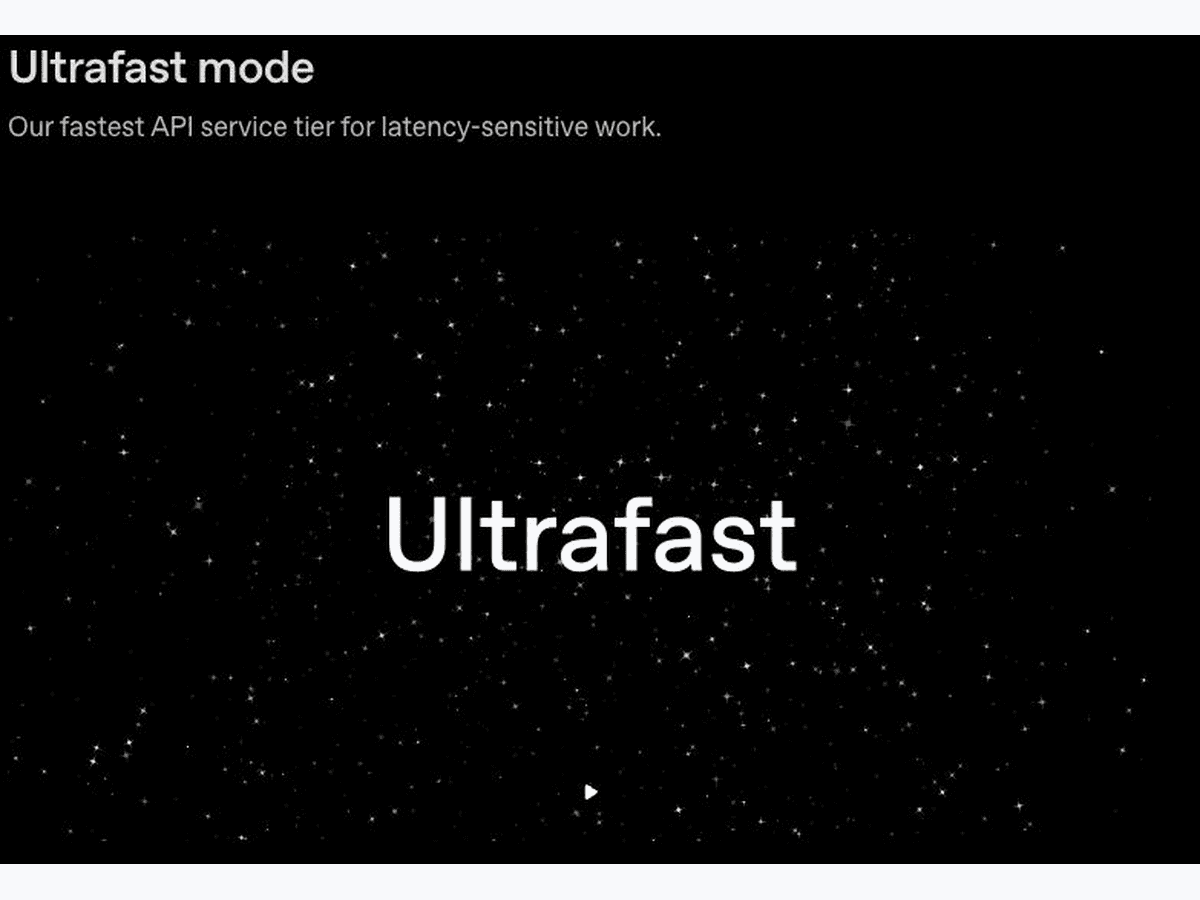
OpenAI announced Ultrafast access for GPT-6.1 Sol across the API, Codex and ChatGPT Work. Access varies by product and plan, and the API option is positioned as a higher-cost tier.
What changed
A faster tier with differing access
OpenAI announced Ultrafast access for GPT-6.1 Sol across the API, Codex and ChatGPT Work. Access conditions vary by product and plan, so the rollout does not establish that every team or account can use it in the same way.
API documentation positions Ultrafast as a higher-cost service tier for time-sensitive work. The relevant decision is therefore a trade-off between turnaround and total task cost, not a general instruction to move an entire workflow to the faster option.
Test complete tasks, not model latency alone
Marketing teams can evaluate repeated research or reporting work where elapsed time creates a genuine operational constraint. Use representative inputs, compare the current and proposed approaches under similar conditions, and measure the review required to produce an acceptable result.
A faster service tier may reduce response time while leaving research, source checking, stakeholder approval or downstream production unchanged. Measure time to a usable outcome, not only the duration of the model step.
Make a bounded adoption decision
Start with a subset of work that has defined urgency, quality requirements and a cost owner. Compare reliability, output quality, end-to-end turnaround and spend before extending use. Confirm the relevant product and plan entitlement as part of the test.
The supplied evidence does not state exact pricing, universal eligibility, rollout completion, service levels or guaranteed performance for any task. Vendor speed claims should not be converted into workflow guarantees.
Why it matters for advertisers
Ultrafast may be valuable when turnaround has measurable operational consequences. Testing the full workflow shows whether premium speed produces a useful gain after review time, access conditions and cost are included.
What to check next
- Identify one repeated task where faster completion has a clear operational value.
- Compare time to usable output, review effort, reliability and cost with the current setup.
- Confirm product-specific and plan-specific access before proposing wider adoption.
Sources & contributor credit
- Practitioner observation · OpenAI Developers
Source reporting or observation date, not a universal launch date.
- Newsletter coverage · Paid Media Collective Week 41
Yoann Ferrand’s newsletter curation. Original reporting, account observations and visual credits are listed separately.

Original creator unverified
Original contributors and source authors are distinguished from later observations, visual credits and newsletter curation. An explicit observation credit does not establish first-ever discovery.
Attribution evidence and limitations
Published Week 41 copy and earlier event coverage reconciled.
Original work and earlier reporting evidence retained.
Story-specific image visually inspected and credited.
Attribution checked . This is a review date, not the original publication date.
- Published on this site
- Article updated
This update reflects the dated source reporting. Availability may have changed. Further coverage of this same development will be added to this page.