BigQuery · Status at source date: Newsletter archive
BigQuery adds time-series functions to the query editor
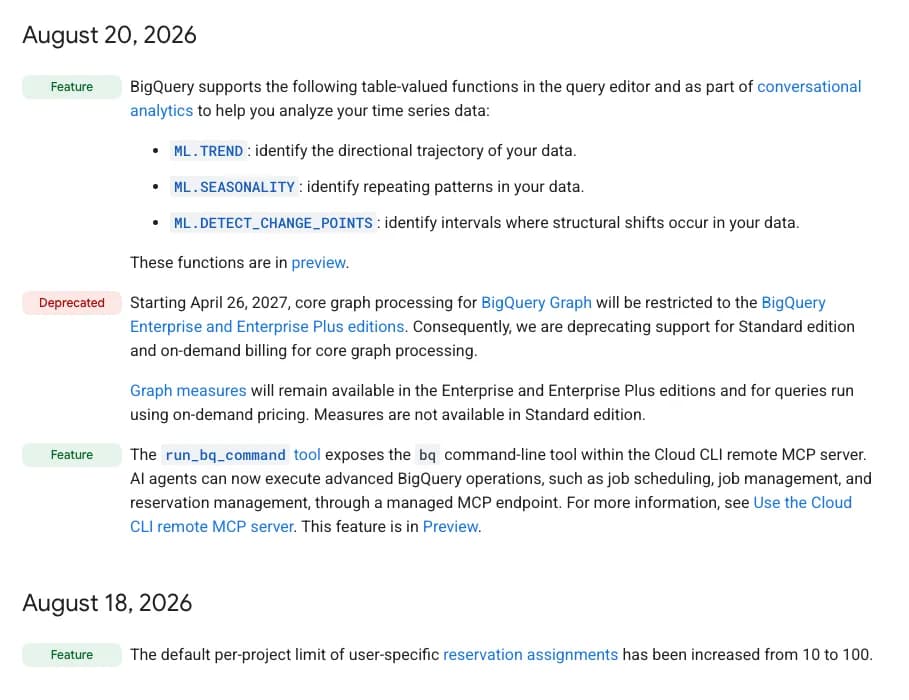
BigQuery's 20 August release notes added preview support for table-valued functions, including ML.TREND, ML.SEASONALITY, and ML.DETECT_CHANGE_POINTS in the query editor and conversational analytics. The functions are designed to expose patterns and anomalies in time-series data through reusable queries.
Why it matters for advertisers
For you, this means campaign and revenue monitoring can move closer to native warehouse analysis, so test the functions against existing anomaly-detection logic before replacing production models.
Perspective from the original PMC newsletter.Sources & contributor credit
- Newsletter coverage · Paid Media Collective newsletter
Original newsletter text, contributor labels and media for this update.
- Source referenced in newsletterBigQuery release notes
Linked from the original newsletter. The source publication date has not been independently confirmed.

Original creator unverified
The original creator has not yet been verified. Newsletter curation and publication do not establish original authorship.
Attribution evidence and limitations
Full attribution review pending.
A source link alone does not establish original authorship.
Original image and video creators have not yet been verified.
- Published on this site
This update reflects the dated source reporting. Availability may have changed. Further coverage of this same development will be added to this page.
Original newsletter text and archive evidence
BigQuery adds time-series functions to the query editor
BigQuery's 20 August release notes added preview support for table-valued functions, including ML.TREND, ML.SEASONALITY, and ML.DETECT_CHANGE_POINTS in the query editor and conversational analytics. The functions are designed to expose patterns and anomalies in time-series data through reusable queries. For you, this means campaign and revenue monitoring can move closer to native warehouse analysis, so test the functions against existing anomaly-detection logic before replacing production models.
Source captured . No explicit first-contributor label was provided for this update.