Amazon Ads · Status at source date: Newsletter archive
Google publishes official guidance on optimising for generative AI search
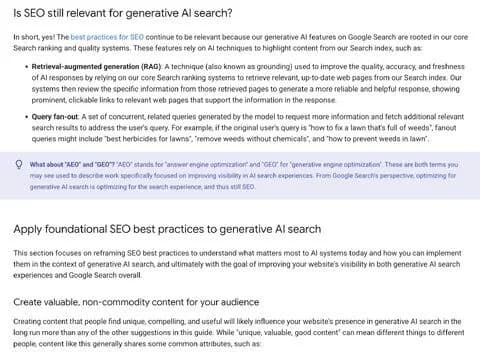
Google has published its first major piece of official guidance on optimising websites for generative AI features on Google Search: including AI Overviews, AI Mode, and the broader generative AI experiences. Aleyda Solís and Charly Wargnier have both flagged the publication as having practitioner framing: this is the canonical reference Google has been deferring to for over a year, finally formalising what Google expects from websites that want to be cited or surfaced in AI-generated responses.
What changed
The publication covers content structure recommendations, technical SEO alignment, and the relationship between traditional SEO signals and AI-citation visibility. Charly Wargnier's read: it's the structured optimisation framework practitioners have been working toward through Chris Long's compiled ranking factors (Week 19), now formalised by Google itself. Aleyda's read: it's the foundation for the next 12 months of SEO practice as AI-generated search experiences become the default surface.
Why it matters for advertisers
For you, this means SEO and content teams should treat the Google guidance as the canonical reference document for the 2026 strategy. Worth a structured team read-through and a re-evaluation of current content strategy against Google's stated expectations. Particularly relevant for content-heavy sites where AI citation and AI Overview inclusion have been a material question without official guidance.
Perspective from the original PMC newsletter.Sources & contributor credit
- Newsletter coverage · Paid Media Collective newsletter
Original newsletter text, contributor labels and media for this update.
- Source referenced in newsletterGoogle Search Central
Linked from the original newsletter. The source publication date has not been independently confirmed.
- Source referenced in newsletterLinkedIn
Linked from the original newsletter. The source publication date has not been independently confirmed.
Original creator unverified
The names below are source credits. The original creator and first-reporting priority have not yet been independently verified.
Attribution evidence and limitations
Full attribution review pending.
A source link alone does not establish original authorship.
Original image and video creators have not yet been verified.
- Published on this site
This update reflects the dated source reporting. Availability may have changed. Further coverage of this same development will be added to this page.
Original newsletter text and archive evidence
Google publishes official guidance on optimising for generative AI search
Google has published its first major piece of official guidance on optimising websites for generative AI features on Google Search: including AI Overviews, AI Mode, and the broader generative AI experiences. Aleyda Solís and Charly Wargnier have both flagged the publication as having practitioner framing: this is the canonical reference Google has been deferring to for over a year, finally formalising what Google expects from websites that want to be cited or surfaced in AI-generated responses.
The publication covers content structure recommendations, technical SEO alignment, and the relationship between traditional SEO signals and AI-citation visibility. Charly Wargnier's read: it's the structured optimisation framework practitioners have been working toward through Chris Long's compiled ranking factors (Week 19), now formalised by Google itself. Aleyda's read: it's the foundation for the next 12 months of SEO practice as AI-generated search experiences become the default surface.
For you, this means SEO and content teams should treat the Google guidance as the canonical reference document for the 2026 strategy. Worth a structured team read-through and a re-evaluation of current content strategy against Google's stated expectations. Particularly relevant for content-heavy sites where AI citation and AI Overview inclusion have been a material question without official guidance.
Source captured . No explicit first-contributor label was provided for this update.