Industry · Status at source date: Operational reminders
Google September 2026 Spam Update Had Not Finished by the End of the Review Window
Google’s September 2026 spam update began on 24 September and had no completion notice by the review cut-off; reported volatility was not Google-confirmed.
What changed
The rollout had not formally completed
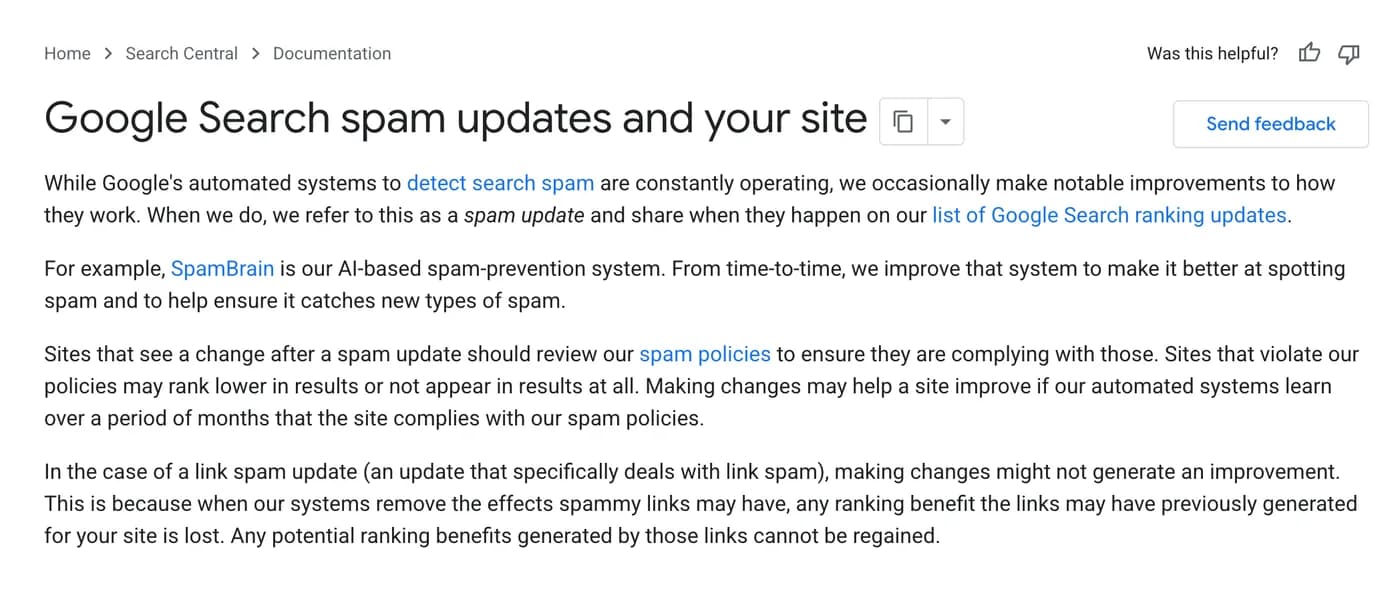
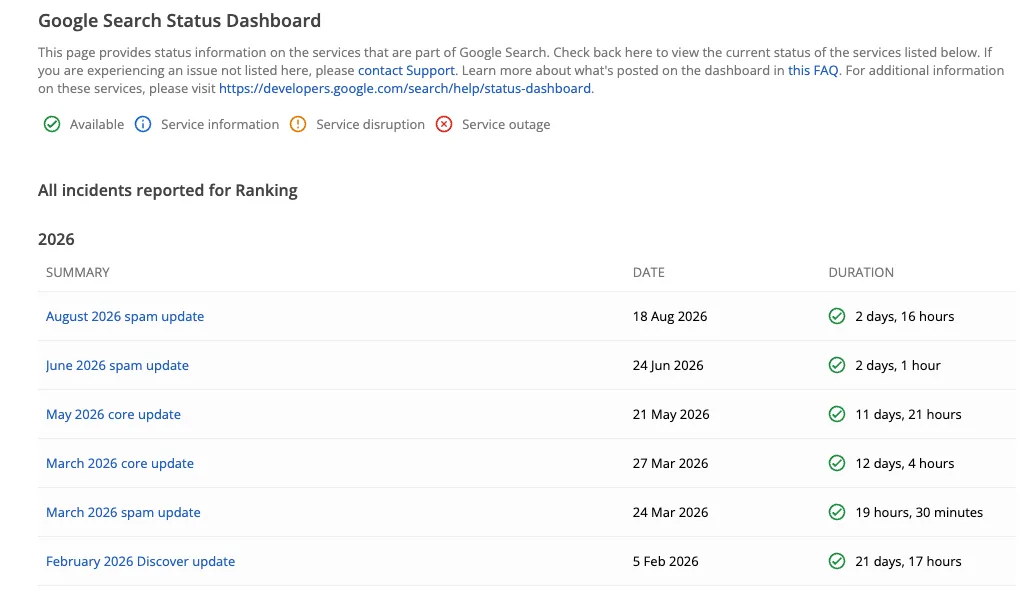
Google’s September 2026 spam update began on 24 September. At the end of the stated observation window, the Google Search Status Dashboard showed no completion notice.
That absence supports only the conclusion that completion had not been announced by that cut-off. It does not establish the remaining duration, affected sites or the mechanism behind any particular ranking movement.
Treat reported volatility as observation
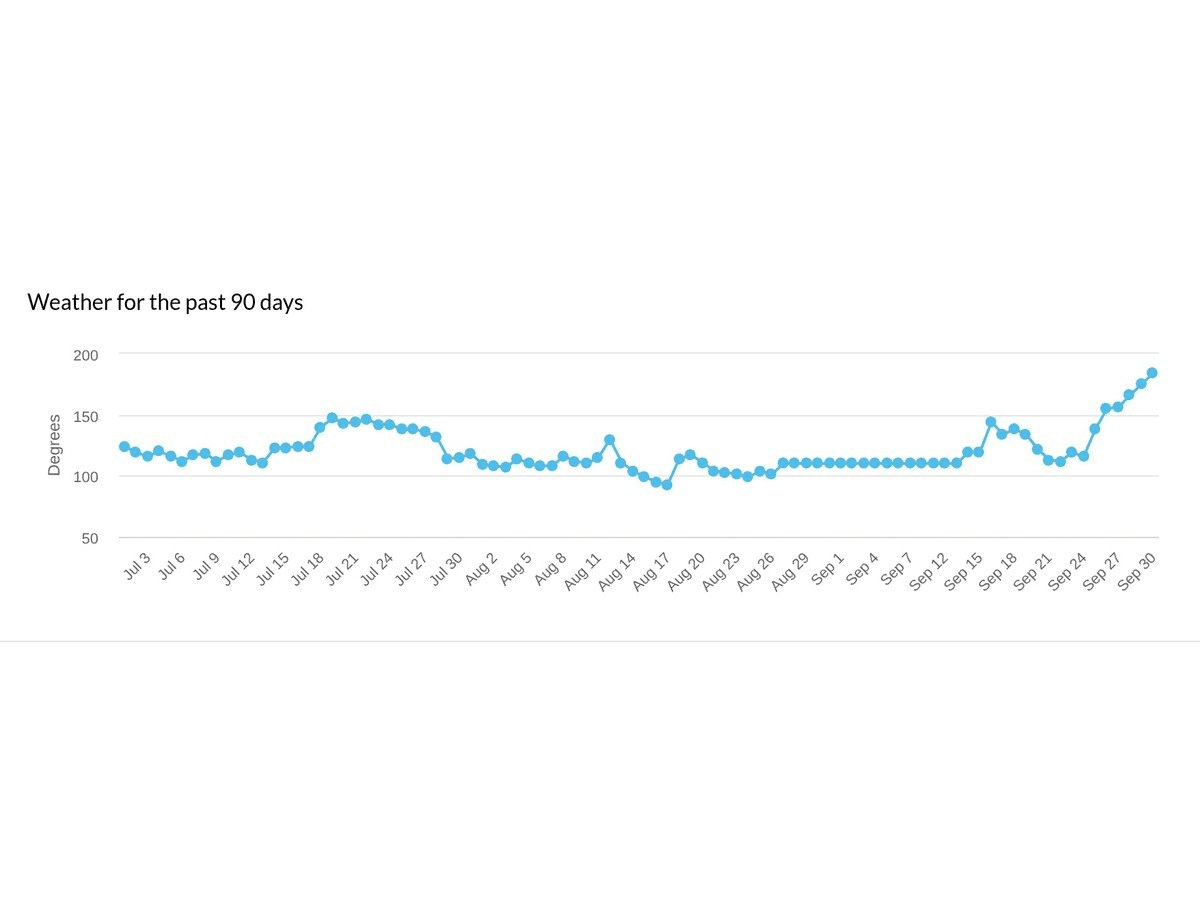
Search Engine Roundtable reported a second wave of volatility on 30 September, based on monitoring tools and site-owner accounts rather than a Google confirmation. Third-party signals can assist situational awareness but do not prove cause or scope.
Organic swings may therefore continue. Teams should annotate organic reporting with the rollout dates and observed volatility while retaining other possible explanations, including site changes, demand shifts and measurement variation.
A useful diagnostic is to compare landing-page and query-level organic changes with paid spend and lead quality, not only total leads. If paid settings remained stable while organic visibility changed, that pattern may justify investigation, but it still does not prove that the spam update caused the outcome.
Avoid paid-media misattribution
When leads change during an organic update, do not assume that a paid campaign caused the movement or insulated the business from it. Review channel mix, search visibility, spend and conversion steps together before assigning cause.
Compare pre-update and in-window periods while noting material campaign and site changes. The available information does not support a recovery forecast, affected-site diagnosis or recommended bidding response.
Why it matters for advertisers
An unfinished spam-update rollout can complicate interpretation of search and lead trends, so paid-media reporting needs annotations before causal narratives are formed.
What to check next
- Annotate organic and lead reports from 24 September onwards.
- Separate Google-confirmed rollout status from third-party volatility observations.
- Review spend, visibility and conversion changes together before attributing lead movement.
Sources & contributor credit
- Original sourceGoogle Search Status Dashboard
Source cited in the published Week 40 newsletter. Article observation/reporting date is shown separately; this page’s original publication date is not inferred.
- Reporting or practitioner sourceSearch Engine Roundtable
Source cited in the published Week 40 newsletter. Article observation/reporting date is shown separately; this page’s original publication date is not inferred.
- Newsletter coverage · Paid Media Collective Week 40
Published edition used for story selection, copy, source credits and media; curation is distinct from original authorship.

Original creator unverified
Contributor roles follow the published newsletter and its linked evidence. Reporting, official discussion and visual authorship are kept separate; no independently unverified first-reporting priority is awarded.
Attribution evidence and limitations
Published story and credit line reconciled with the expanded article.
Original post, primary documentation and secondary reporting links retained.
Visible image content inspected for story relevance; image credit retained separately from reporting credit.
Attribution checked . This is a review date, not the original publication date.
- Published on this site
- Article updated
This update reflects the dated source reporting. Availability may have changed. Further coverage of this same development will be added to this page.