Amazon Ads · Status at source date: APIs and reporting
Amazon Marketing Stream v2 and Reporting API v1 Reach General Availability
Amazon says Marketing Stream v2 and Reporting API v1 became generally available worldwide on 30 September, expanding frequent and cross-account reporting.
What changed
Worldwide general availability
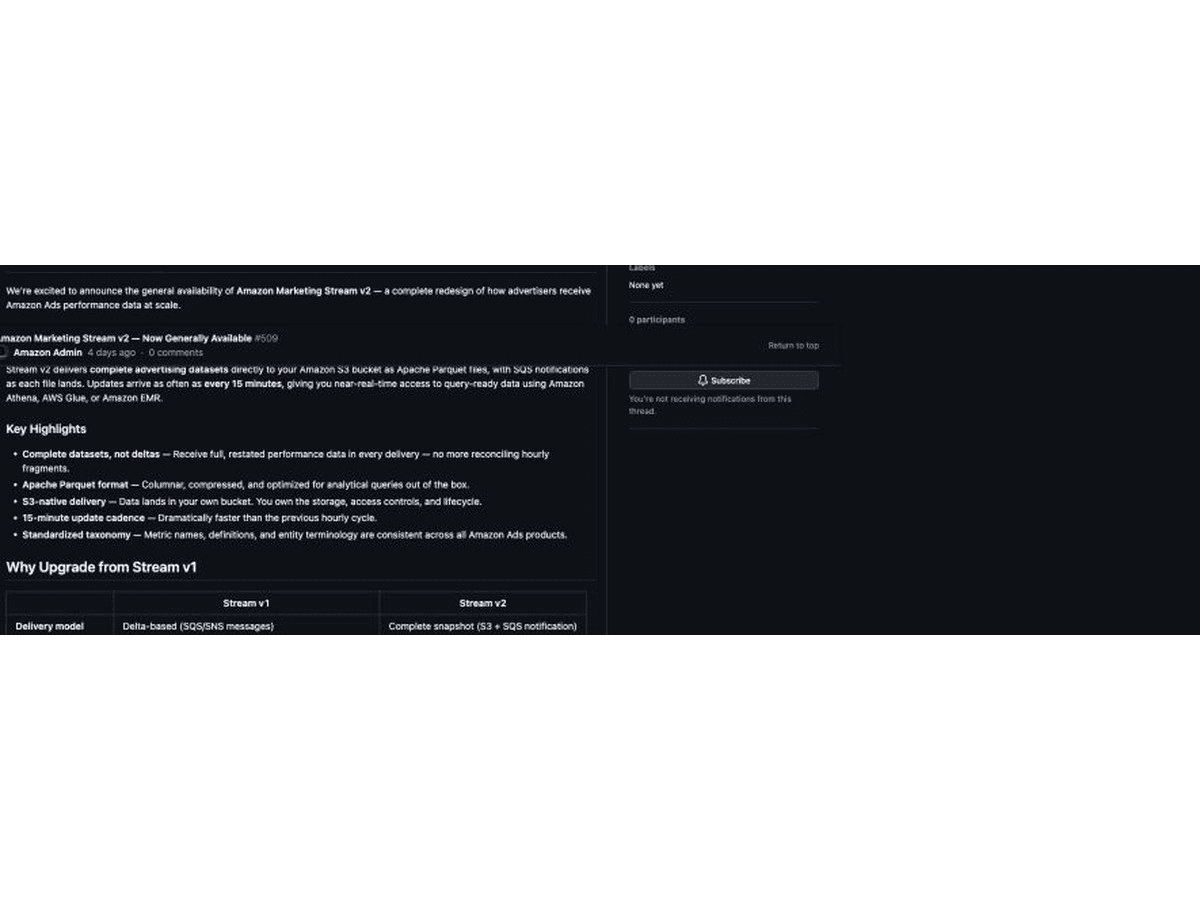
Amazon made Marketing Stream v2 and Reporting API v1 generally available worldwide on 30 September. Marketing Stream v2’s ads-performance dataset carries around 400 metrics and more than 50 dimensions, with delivery as often as every 15 minutes.
The release notes also say ASIN-level conversion data, including halo sales, arrives every four to six hours. These different cadences matter: a frequently updated performance feed should not be interpreted as though every downstream conversion measure refreshes on the same schedule.
Reporting API attribution distinctions
Reporting API v1 supports cross-product and cross-account reports. It attributes conversions to the traffic date and may return higher DSP totals than v3. Those documented distinctions can affect reconciliation even when two reports appear to cover the same period.
Before changing a pipeline, define the report type, account scope, traffic-date convention, conversion window and expected refresh time. This is particularly important when users are accustomed to a different version or attribution presentation.
A useful acceptance test is to choose days with stable, well-understood activity and compare totals only after the slower conversion data has had time to arrive. Apparent differences should then be classified as timing, attribution, scope or unexplained variance rather than merged into one discrepancy.
Reconcile before automating pacing
The more frequent stream may make near-real-time pacing possible, but it does not make every newly received metric final. Reconcile a representative period against existing reports, including ASIN conversion timing and DSP totals where relevant.
Run old and new outputs in parallel, document expected differences, then decide which measure governs each operational decision. No evidence here shows that a particular pacing strategy will improve advertising results.
Why it matters for advertisers
The APIs increase reporting scope and freshness, while differing update times and attribution conventions make reconciliation a prerequisite for dependable automation.
What to check next
- Run Reporting API v1 and existing reports in parallel for a representative period.
- Separate 15-minute performance delivery from four-to-six-hour ASIN conversion updates.
- Document traffic-date attribution and expected DSP differences before changing dashboards.
Sources & contributor credit
- Original sourceAmazon Ads API release notes
Source cited in the published Week 40 newsletter. Article observation/reporting date is shown separately; this page’s original publication date is not inferred.
- Newsletter coverage · Paid Media Collective Week 40
Published edition used for story selection, copy, source credits and media; curation is distinct from original authorship.

Original creator unverified
Contributor roles follow the published newsletter and its linked evidence. Reporting, official discussion and visual authorship are kept separate; no independently unverified first-reporting priority is awarded.
Attribution evidence and limitations
Published story and credit line reconciled with the expanded article.
Original post, primary documentation and secondary reporting links retained.
Visible image content inspected for story relevance; image credit retained separately from reporting credit.
Attribution checked . This is a review date, not the original publication date.
- Published on this site
- Article updated
This update reflects the dated source reporting. Availability may have changed. Further coverage of this same development will be added to this page.