Amazon Ads · Status at source date: Announcements
Amazon Ads Opens Natural-Language Analytics Closed Beta
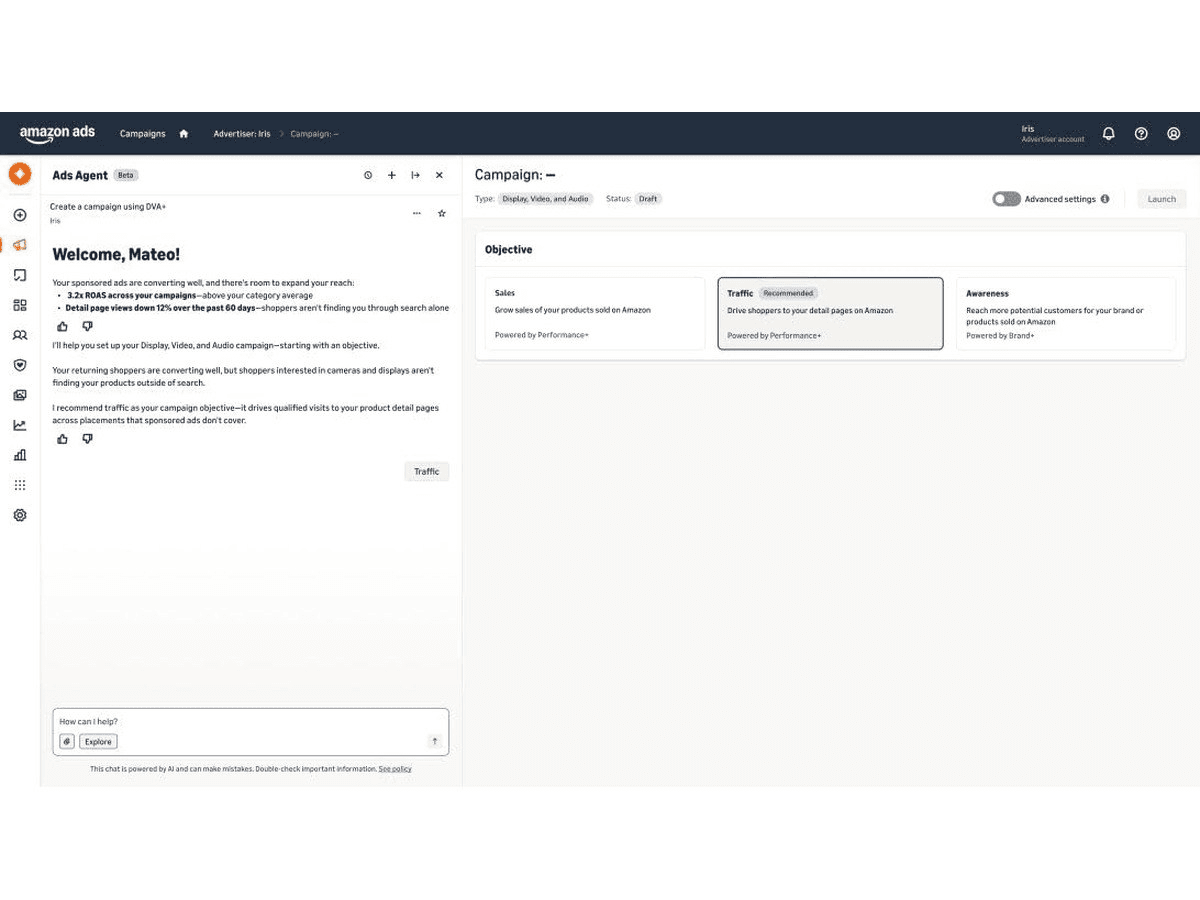
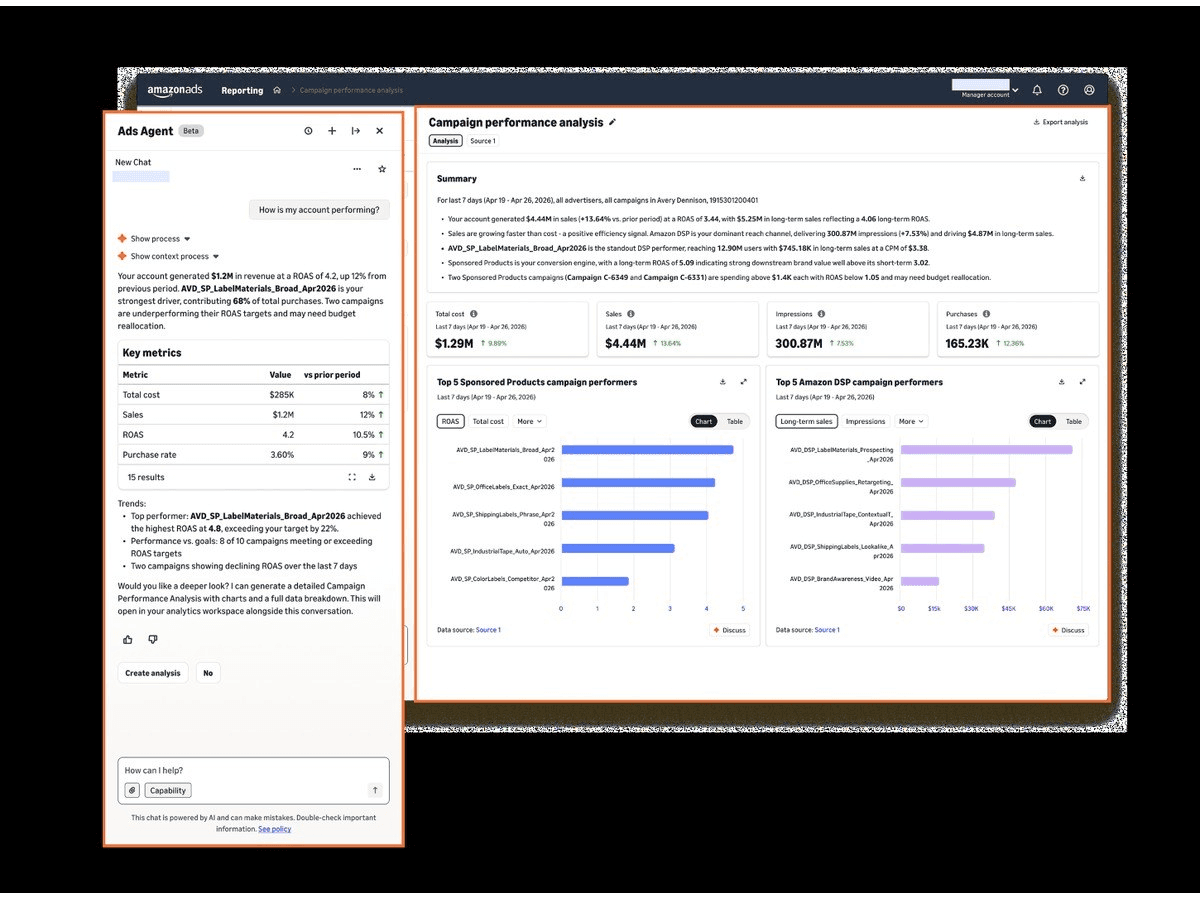
Amazon Ads says its natural-language analytics closed beta uses unified reporting and includes new-to-brand and long-term sales, with two access routes.
What changed
Closed beta, not confirmed broad release
Amazon Ads has opened a closed beta for natural-language analytics built on unified reporting. Its description says the feature includes new-to-brand and long-term sales. Advertisers can seek access through an Amazon representative or a waitlist, and Amazon’s page lists 21 countries.
Some practitioner posts described the feature as live in 23 marketplaces. That conflicts with Amazon’s closed-beta status and listed country count. The official description is the supported status, so posts or screenshots should not be used to infer general availability.
Use routine questions as validation cases
Natural-language reporting may accelerate routine checks, but each answer should initially be treated as an analytical starting point. An editorially suggested first use is a question whose expected result can be independently recreated in existing reports, using a defined period, account scope and metric.
Before sharing an answer, document the wording of the request, reporting period, product or account scope, metric definitions and filters. Compare the result with a saved report and investigate differences before it informs a budget or performance decision.
A useful comparison is repeatability rather than novelty. Ask the same bounded business question in a few clearly equivalent ways and check whether the scope and result remain stable. This editorial test can expose interpretation problems that a single plausible answer would conceal.
Establish a verification habit
A beta workflow benefits from a short validation log containing the request, output, comparison report and resolution of any discrepancy. This can distinguish mismatches caused by interpretation, aggregation or incomplete scope.
Amazon does not describe interface behaviour, permissions, answer accuracy or future expansion in the cited material. Beta participants should verify early answers against reports rather than assume conversational access removes normal reporting controls.
Why it matters for advertisers
Natural-language access could shorten routine reporting work, but closed-beta status and conflicting marketplace claims make careful validation essential.
What to check next
- Confirm access through an Amazon representative or the stated waitlist.
- Recreate initial answers in unified reporting before relying on them.
- Record country, account scope, dates, filters and metric definitions for each validation.
Sources & contributor credit
- Original sourceAmazon Ads What's New
Source cited in the published Week 40 newsletter. Article observation/reporting date is shown separately; this page’s original publication date is not inferred.
- Newsletter coverage · Paid Media Collective Week 40
Published edition used for story selection, copy, source credits and media; curation is distinct from original authorship.

Original creator unverified
Contributor roles follow the published newsletter and its linked evidence. Reporting, official discussion and visual authorship are kept separate; no independently unverified first-reporting priority is awarded.
Attribution evidence and limitations
Published story and credit line reconciled with the expanded article.
Original post, primary documentation and secondary reporting links retained.
Visible image content inspected for story relevance; image credit retained separately from reporting credit.
Attribution checked . This is a review date, not the original publication date.
- Published on this site
- Article updated
This update reflects the dated source reporting. Availability may have changed. Further coverage of this same development will be added to this page.