Pinterest Ads · Status at source date: Research
Pinterest Beauty Trend Report highlights more specific searches
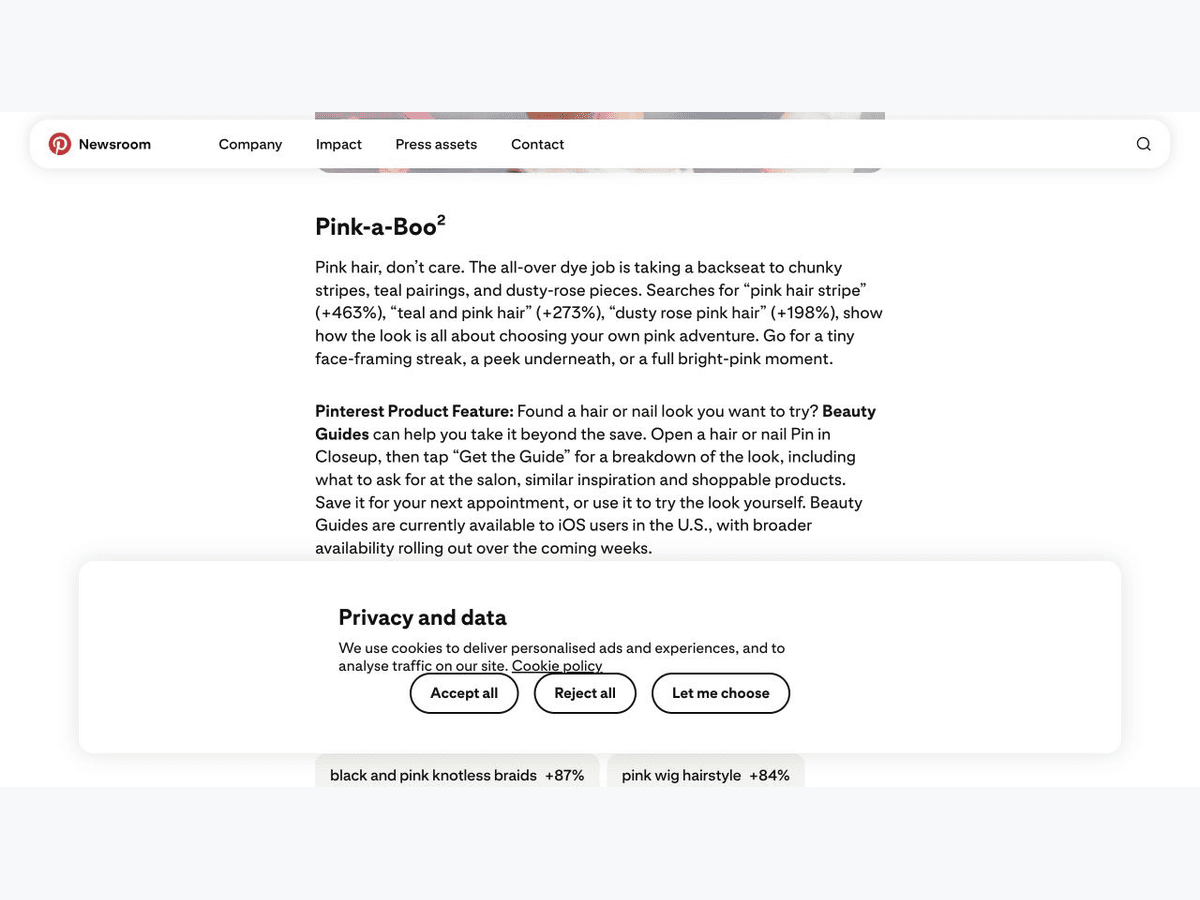
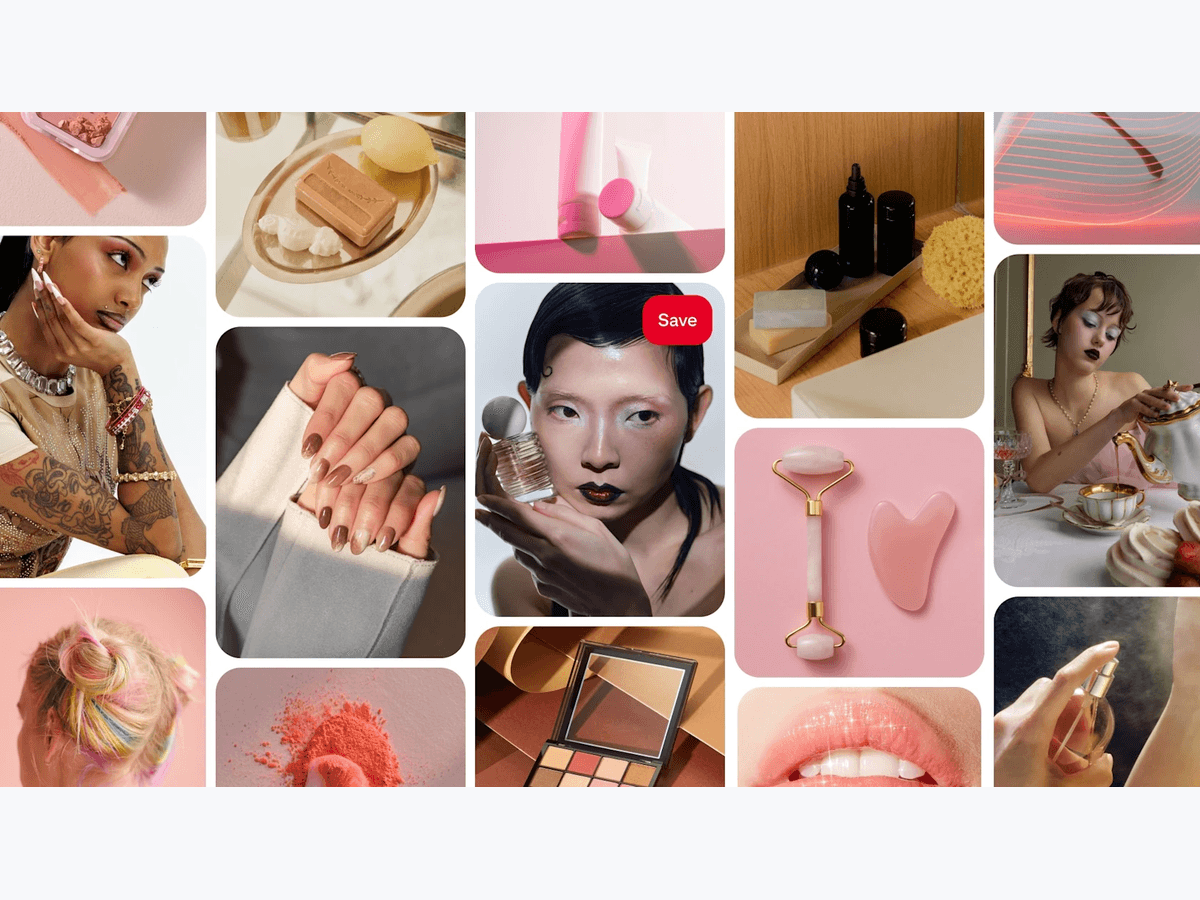
Pinterest’s Beauty Trend Report highlights increasingly specific searches across hair, nails, fragrance and make-up. The findings can inform creative hypotheses, but they are not evidence of sales or campaign performance.
What changed
What the report highlights
Pinterest’s Beauty Trend Report highlights increasingly specific searches across hair, nails, fragrance and make-up. It offers a view of search-interest signals on Pinterest that creative teams can use to develop ideas for seasonal work.
Greater specificity may help planning move beyond broad category labels towards subjects, aesthetics or language worth exploring. Teams still need to decide whether an identified theme fits their brand, audience, products and campaign objective.
Treat search interest as a signal
Search activity on one platform is not equivalent to purchase demand, advertising performance or behaviour across the wider beauty market. A rise in searches can justify further investigation, but it does not demonstrate that a related product will sell or that a campaign using the theme will perform.
Before repeating a growth percentage, examine the associated data and methodology. Establish what was measured, over which dates, among which users or markets and against what comparison. Without that context, a platform-specific observation can easily become an unsupported market-wide claim.
Convert themes into controlled tests
Use a relevant theme to form a testable creative hypothesis. Define the variable being tested, preserve an appropriate comparison and choose measures connected to the campaign objective. Keep Pinterest’s research distinct from results generated by the brand’s own test.
The supplied evidence does not include the report’s full methodology, specific trend figures or proof that any theme transfers across markets, audiences or formats. Those gaps should remain visible when the research is used.
Why it matters for advertisers
The report may make creative exploration more precise, but its strongest use is as a source of hypotheses. Distinguishing platform search interest from demand prevents promising signals from being overstated as commercial proof.
What to check next
- Choose a relevant theme and express it as one clearly defined creative hypothesis.
- Review the underlying dates, population and methodology before citing a percentage or growth claim.
- Test the idea against an appropriate comparison using outcomes tied to the campaign objective.
Sources & contributor credit
- Original official source · Pinterest
Source reporting or observation date, not a universal launch date.
- Newsletter coverage · Paid Media Collective Week 41
Yoann Ferrand’s newsletter curation. Original reporting, account observations and visual credits are listed separately.

Original creator unverified
Original contributors and source authors are distinguished from later observations, visual credits and newsletter curation. An explicit observation credit does not establish first-ever discovery.
Attribution evidence and limitations
Published Week 41 copy and earlier event coverage reconciled.
Original work and earlier reporting evidence retained.
Story-specific image visually inspected and credited.
Attribution checked . This is a review date, not the original publication date.
- Published on this site
- Article updated
This update reflects the dated source reporting. Availability may have changed. Further coverage of this same development will be added to this page.