What reliable AI infrastructure means for PPC
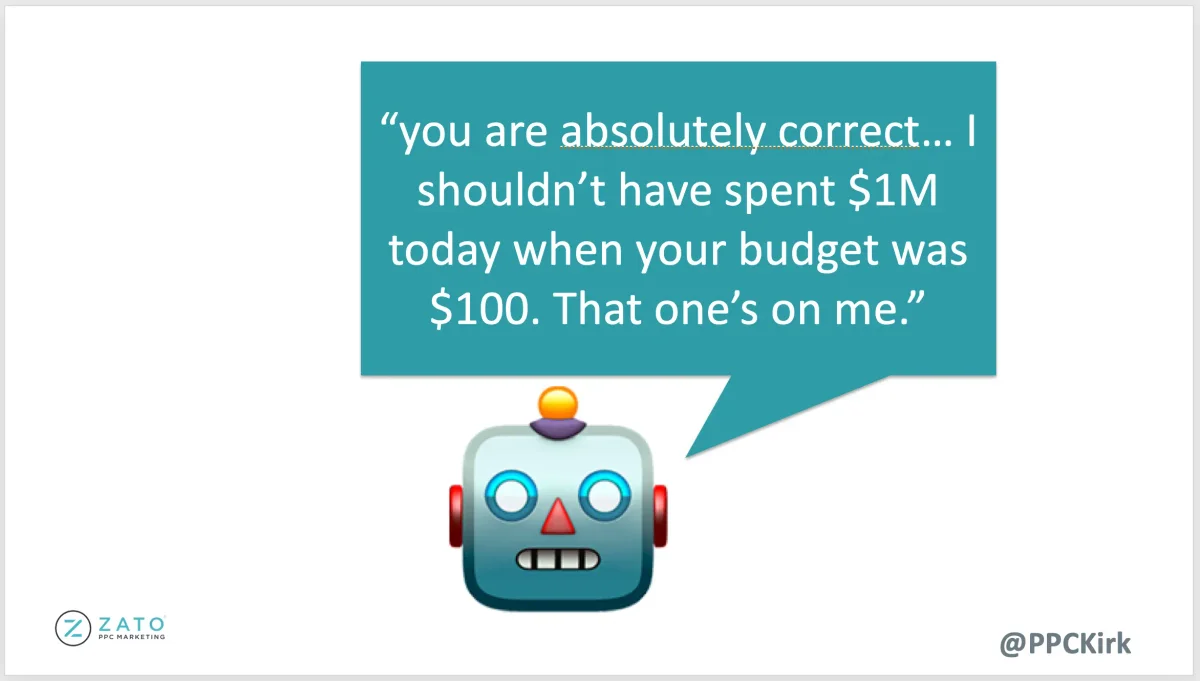
Kirk Williams argues that useful PPC automation needs testing, maintenance and safeguards beyond a successful prompt. The distinction matters when an experiment starts making repeated changes in live advertising accounts. His argument shifts attention from the initial demonstration to the testing, maintenance and oversight needed afterwards. Read it when comparing a custom workflow with a maintained product, and use it to question who will detect errors, handle edge cases and reverse an unwanted change.
ZATO · Published

Why make time for it?
Read this when weighing a custom AI workflow against a maintained product. It brings the operational cost of running automation into a conversation often dominated by impressive demos.
What to look for
- Separate a working prototype from something trusted to make repeated account changes.
- Ask who handles edge cases, updates and failures once the initial build is complete.
Keep in mind
This is a practitioner’s argument, not a comparative product test or evidence that every managed tool is safer.
Take this question into the article
Who would notice and reverse an incorrect change made by your proposed workflow?
The people behind the article
Explore their work and recorded contributions on PMC.
Authorship points are shared between coauthors. Experts receive credit for substantive contributions, not mentions. One work earns one award per person, including when it appears elsewhere on PMC. How recognition works
Read the full argument.
Continue to ZATO for the complete article and supporting material.
Read the full articleReading notes reviewed 30 Sept 2026. The publication date above belongs to the original source.