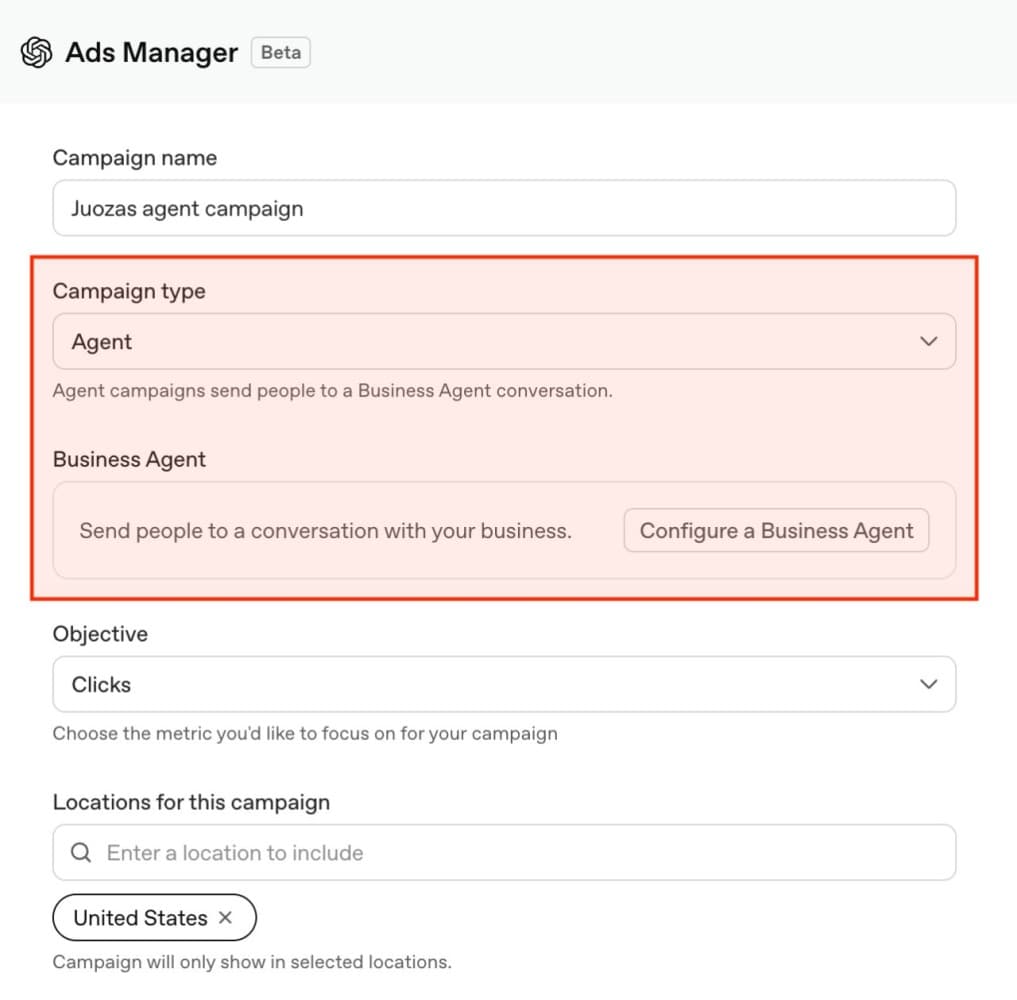
ChatGPT Ads · Status at source date: Test
OpenAI outlines US visual-ad test during image generation
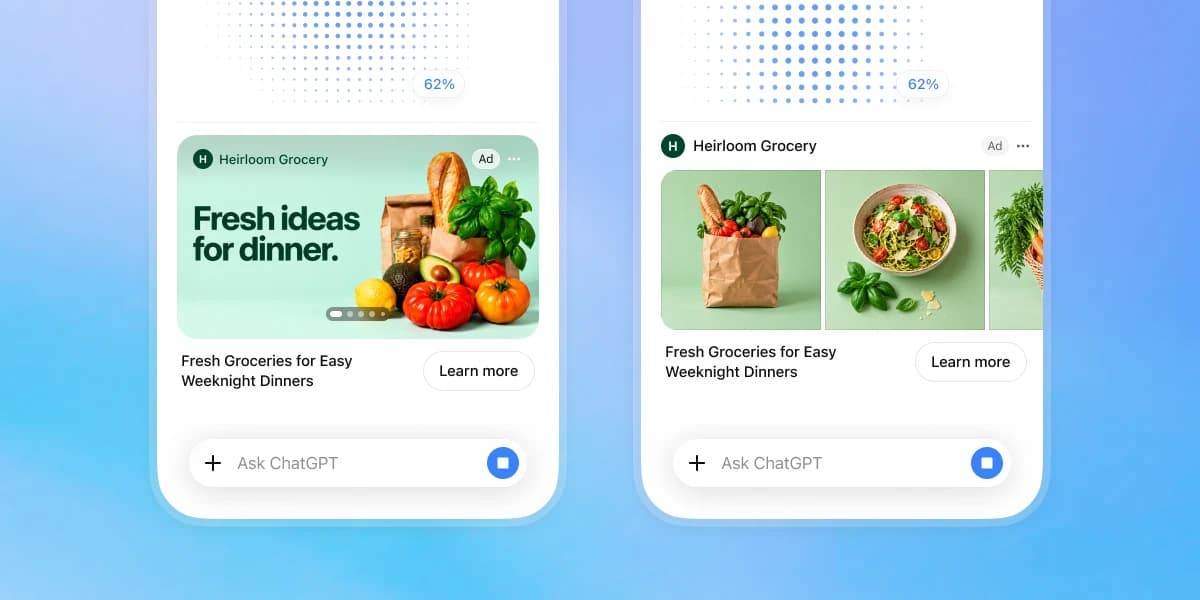
OpenAI says it will test visual ads later in October in the US with an initial group of advertisers. The ads are planned for image-generation moments, are labeled, and are separate from the generated image.
What changed
The announcement establishes a test direction, not a universal launch. Exact timing within later October, format specifications, advertiser eligibility, buying mechanics and pricing are not established. OpenAI also says advertising does not influence answers. Advertisers should preserve that distinction when assessing the opportunity: the planned placement is adjacent to an image-generation experience, rather than an ad inserted into the generated output itself.
For an early test, the strongest preparation is a use-case brief rather than a conventional channel forecast. Define the moment an advertiser believes the format can serve, the audience context it expects to reach, and the action it wants a user to take next. Then identify what would count as evidence of relevance without treating interaction as proof of persuasion. Creative review should consider whether a visual message is understandable beside varied image-generation requests and whether it can remain useful without appearing to imply endorsement by the response.
Build a measurement plan around observable behavior and explicit uncertainty. Decide which on-site events are reliable, how viewability or exposure is defined if provided, and how conversions will be deduplicated against other activity. Where volume permits, use a comparison strategy designed before the test begins. If a causal experiment is not feasible, describe conclusions as attributed or directional rather than incremental. Keep brand, legal and product teams involved in how claims, imagery and landing experiences are evaluated.
Initial tests can be especially sensitive to placement context. Develop an exclusion and escalation process for unsuitable adjacency, unexpected user interpretation or a mismatch between creative and the generated-image journey. Review screenshots and live examples where access permits, but do not substitute a mockup for verified format details. The decision after a first run should be based on quality, measurement confidence and operational fit as well as any conversion signal.
Why it matters for advertisers
A labeled visual placement around image generation presents a different creative question from a search, feed or display unit. The surrounding user intent may be exploratory and highly variable, so a broad audience description is unlikely to be enough. Advertisers that define relevance, safety and measurement conditions in advance will be better placed to learn from a limited test without over-reading a small or novel sample.
What to check next
- Confirm US eligibility, test timing, format details, buying route and reporting fields before allocating budget.
- Write a concise hypothesis tying creative, user context and a measurable next action together.
- Prepare creative that is clear without suggesting that generated answers or images endorse the advertiser.
- Implement conversion deduplication and predefine whether results will be attributed, experimental or directional.
- Set escalation rules for contextual concerns, misleading interpretations and unresolved placement questions.
Sources & contributor credit
- Official Source · OpenAI
- Discovery coverage; original platform author remains OpenAIBarry Schwartz / Search Engine Roundtable

Original creator unverified
Credits reflect the editor's latest changes. Original authorship has not been independently verified for this version.
Attribution evidence and limitations
Full attribution review pending.
A source link alone does not establish original authorship.
Original image and video creators have not yet been verified.
- Published on this site
- Article updated
This update reflects the dated source reporting. Availability may have changed. Further coverage of this same development will be added to this page.