Amazon Ads · Status at source date: Newsletter archive
Top AI citation ranking factors compiled from 50+ studies
Chris Long has surfaced an aggregated analysis of the top AI citation ranking factors: Cyrus S.'s synthesis across studies and research from Kevin Indig, Lily Ray, Michael King, Dan Petrovic, Rand Fishkin, Metehan Yeşilyurt, and others. The output: 54 distinct ranking factors around which the assembled expert opinions form a consensus.
What changed
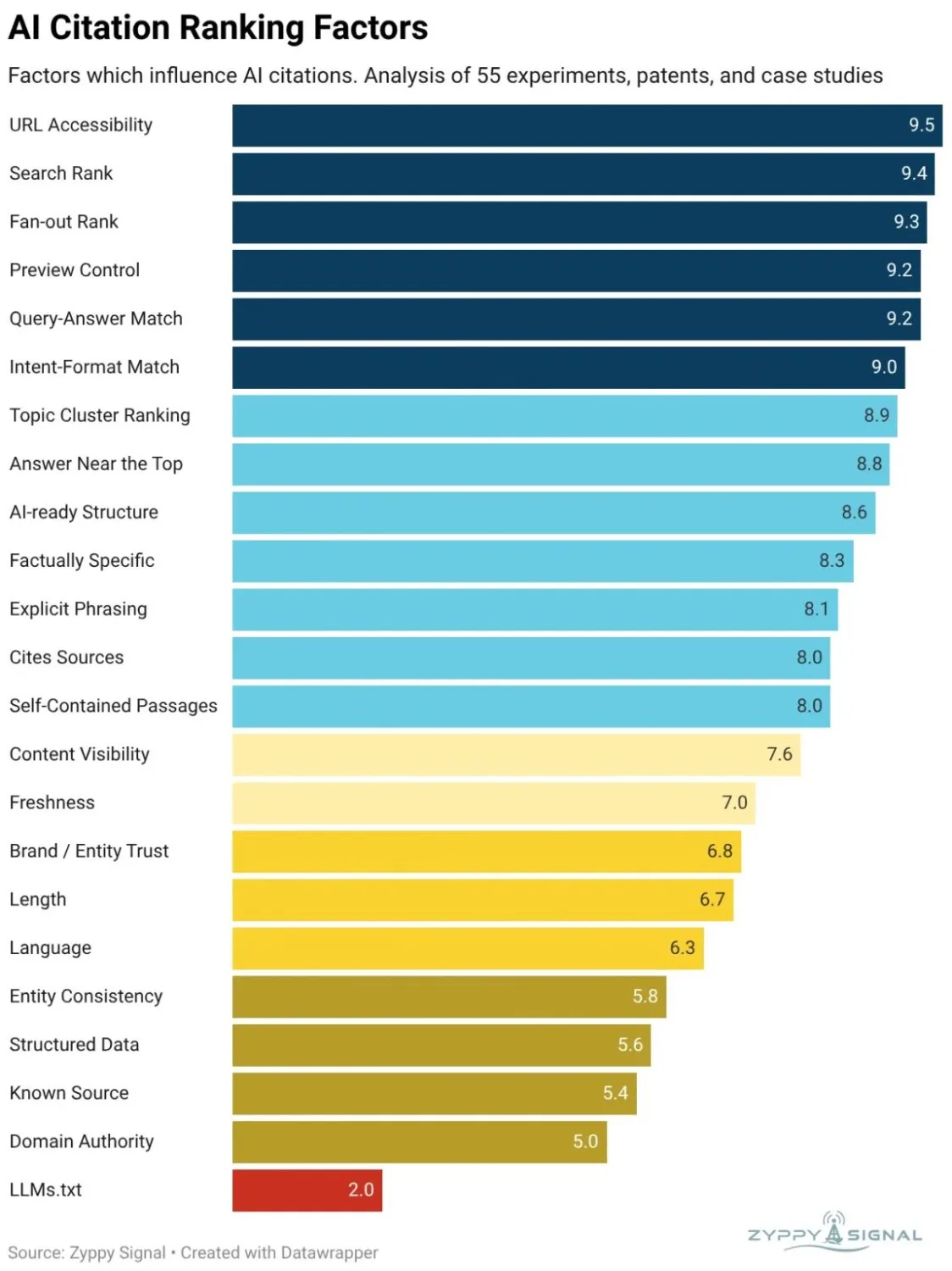
Top factors include URL Accessibility (content is crawlable, indexable, and usable for grounding: score 9.5), SEO Rank (the better the content performs in search engines like Google, the more likely it is to be cited: score 9.4, per Louise L. and Ryan Law), and Fan-Out Rank (score 9.2, measuring content's distribution across the broader knowledge graph).
The synthesis matters because AI-citation visibility: being the source ChatGPT, Claude, Gemini, or Perplexity points to when answering user queries: is becoming a meaningful traffic-driving channel separate from traditional organic search. The factor consensus provides practitioners with a structured optimisation framework rather than the case-by-case, anecdotal approach that has dominated AI-citation discussions to date.
Why it matters for advertisers
For you, this means marketing and SEO teams should evaluate AI-citation visibility as a measurable, optimisable workstream rather than a side-effect of regular SEO. Worth identifying the top 5–10 priority pages on which AI citation matters most (typically high-margin product pages, key category pages, and authoritative thought-leadership content) and benchmarking their performance against the 54-factor checklist.
Perspective from the original PMC newsletter.Sources & contributor credit
- Newsletter coverage · Paid Media Collective newsletter
Original newsletter text, contributor labels and media for this update.
- Source referenced in newsletterLinkedIn
Linked from the original newsletter. The source publication date has not been independently confirmed.
Original creator unverified
The names below are source credits. The original creator and first-reporting priority have not yet been independently verified.
Attribution evidence and limitations
Full attribution review pending.
A source link alone does not establish original authorship.
Original image and video creators have not yet been verified.
- Published on this site
This update reflects the dated source reporting. Availability may have changed. Further coverage of this same development will be added to this page.
Original newsletter text and archive evidence
Top AI citation ranking factors compiled from 50+ studies
Chris Long has surfaced an aggregated analysis of the top AI citation ranking factors: Cyrus S.'s synthesis across studies and research from Kevin Indig, Lily Ray, Michael King, Dan Petrovic, Rand Fishkin, Metehan Yeşilyurt, and others. The output: 54 distinct ranking factors around which the assembled expert opinions form a consensus. Top factors include URL Accessibility (content is crawlable, indexable, and usable for grounding: score 9.5), SEO Rank (the better the content performs in search engines like Google, the more likely it is to be cited: score 9.4, per Louise L. and Ryan Law), and Fan-Out Rank (score 9.2, measuring content's distribution across the broader knowledge graph).
The synthesis matters because AI-citation visibility: being the source ChatGPT, Claude, Gemini, or Perplexity points to when answering user queries: is becoming a meaningful traffic-driving channel separate from traditional organic search. The factor consensus provides practitioners with a structured optimisation framework rather than the case-by-case, anecdotal approach that has dominated AI-citation discussions to date.
For you, this means marketing and SEO teams should evaluate AI-citation visibility as a measurable, optimisable workstream rather than a side-effect of regular SEO. Worth identifying the top 5–10 priority pages on which AI citation matters most (typically high-margin product pages, key category pages, and authoritative thought-leadership content) and benchmarking their performance against the 54-factor checklist.
Source captured . No explicit first-contributor label was provided for this update.