Industry · Status at source date: Research
Graphite and Similarweb Analyse the Early ChatGPT Ads Market
Graphite and Similarweb analysed more than 95,000 ads and 8,000 landing pages, reporting early ChatGPT Ads findings alongside important methodology limits.
What changed
What the study covers
Graphite and Similarweb’s State of ChatGPT Ads analyses more than 95,000 ads collected from 1 April to 16 August, more than 8,000 landing pages and Similarweb panel data current to September.
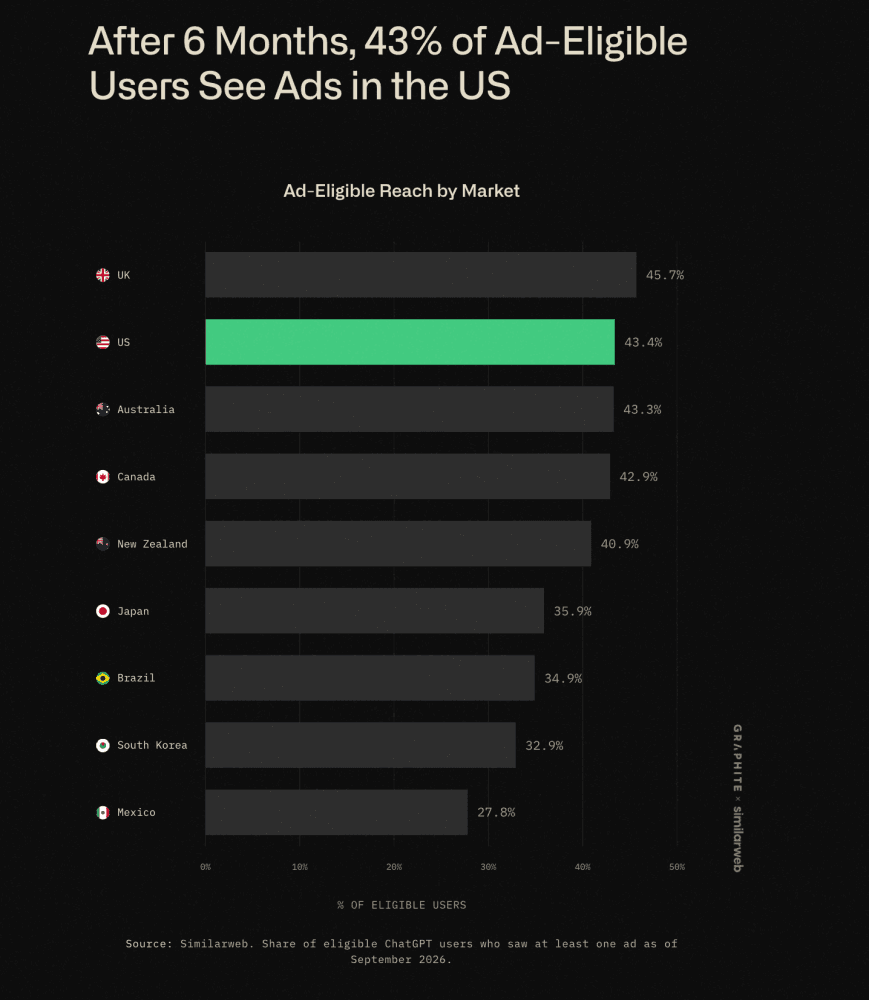
It reports a 112% increase in click-through rate since launch and says 43% of ad-eligible US users see ads. These are research findings, not a forecast of returns for a future advertiser test.
Read the measurement limits with the results
Similarweb does not disclose panel volumes, and the landing-page classification was 85% accurate. Those limitations affect how confidently a reader can generalise precise percentages or interpret category-level findings.
The collection window matters too. It captures an early period, and a rise “since launch” describes the study’s comparison rather than assuring that the trend will continue. The report is market context, not a media plan.
A useful sensitivity check is to identify which conclusions depend on landing-page categories and ask whether plausible misclassification would change the decision. Findings based on broad exposure may carry different uncertainty from a narrow category ranking built on classified pages.
Use the study to frame test design
For teams considering ChatGPT Ads, the research can help specify questions about audience context, landing pages and independently measured outcomes. Define success before launch and keep platform or panel observations separate from first-party conversion data.
Read the methodology alongside the conclusions, including collection dates, classification choices and panel disclosures. The research does not establish future pricing, inventory, targeting options or a guaranteed click-through-rate trajectory.
Why it matters for advertisers
The study provides broad early-market context, but its undisclosed panel volume and imperfect page classification mean its statistics should shape questions, not replace testing.
What to check next
- Read the methodology and findings together before using a headline statistic.
- Set first-party success measures for any ChatGPT Ads test.
- Compare the study’s landing-page classifications with your own destination taxonomy.
Sources & contributor credit
- Reporting or practitioner sourceGraphite + Similarweb
Source cited in the published Week 40 newsletter. Article observation/reporting date is shown separately; this page’s original publication date is not inferred.
- Newsletter coverage · Paid Media Collective Week 40
Published edition used for story selection, copy, source credits and media; curation is distinct from original authorship.
Original creator unverified
Contributor roles follow the published newsletter and its linked evidence. Reporting, official discussion and visual authorship are kept separate; no independently unverified first-reporting priority is awarded.
Attribution evidence and limitations
Published story and credit line reconciled with the expanded article.
Original post, primary documentation and secondary reporting links retained.
Visible image content inspected for story relevance; image credit retained separately from reporting credit.
Attribution checked . This is a review date, not the original publication date.
- Published on this site
- Article updated
This update reflects the dated source reporting. Availability may have changed. Further coverage of this same development will be added to this page.