Google Ads · Status at source date: Newsletter archive
Google Ads API expands product reporting across campaign types from 15 June
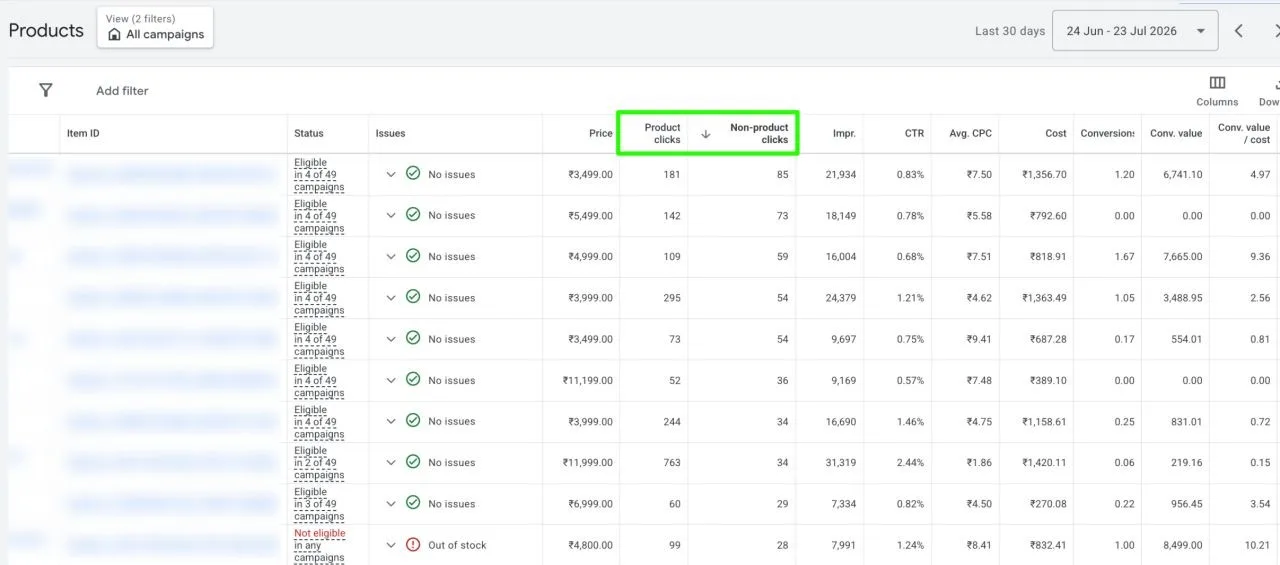
Google has expanded product reporting in the Google Ads API as of 15 June 2026, as flagged by Loveleen Joao and announced on the Google Ads Developer Blog. Cost and conversion metrics now return at the product level for Video, Demand Gen, and App campaigns, where previously only impressions and clicks were available.
What changed
All campaign types connected to Google Merchant Centre now return data consistently via shopping_performance_view, and all networks are reported for Performance Max, closing a gap that had left PMax product reporting incomplete.
Two cautions matter for anyone reading the data. Because previously hidden network data is now included, Performance Max product metrics will show a one-time spike that reflects fuller coverage rather than a real performance jump. And there is no historical backfill: the expanded data is available only from 15 June onward, so year-on-year and pre/post comparisons need to be annotated.
Why it matters for advertisers
For you, this means measurement and engineering teams gain product-level ROAS visibility across PMax, Shopping, Video, and Demand Gen in one view. Worth annotating the 15 June cutover in your reporting, treating the PMax metric step-up as a coverage artefact rather than growth, and updating any dashboards built on the old, narrower product data.
Perspective from the original PMC newsletter.Sources & contributor credit
- Newsletter coverage · Paid Media Collective newsletter
Original newsletter text, contributor labels and media for this update.
- Source referenced in newsletterLinkedIn
Linked from the original newsletter. The source publication date has not been independently confirmed.
Original creator unverified
The names below are source credits. The original creator and first-reporting priority have not yet been independently verified.
Attribution evidence and limitations
Full attribution review pending.
A source link alone does not establish original authorship.
Original image and video creators have not yet been verified.
- Published on this site
This update reflects the dated source reporting. Availability may have changed. Further coverage of this same development will be added to this page.
Original newsletter text and archive evidence
Google Ads API expands product reporting across campaign types from 15 June
Google has expanded product reporting in the Google Ads API as of 15 June 2026, as flagged by Loveleen Joao and announced on the Google Ads Developer Blog. Cost and conversion metrics now return at the product level for Video, Demand Gen, and App campaigns, where previously only impressions and clicks were available. All campaign types connected to Google Merchant Centre now return data consistently via shopping_performance_view, and all networks are reported for Performance Max, closing a gap that had left PMax product reporting incomplete.
Two cautions matter for anyone reading the data. Because previously hidden network data is now included, Performance Max product metrics will show a one-time spike that reflects fuller coverage rather than a real performance jump. And there is no historical backfill: the expanded data is available only from 15 June onward, so year-on-year and pre/post comparisons need to be annotated.
For you, this means measurement and engineering teams gain product-level ROAS visibility across PMax, Shopping, Video, and Demand Gen in one view. Worth annotating the 15 June cutover in your reporting, treating the PMax metric step-up as a coverage artefact rather than growth, and updating any dashboards built on the old, narrower product data.
Source captured . No explicit first-contributor label was provided for this update.