Google · Status at source date: Update
Bulk URL edits may require an identity check
Google’s current documentation describes an identity check when bulk changes introduce a destination host that has not previously been used by that customer account.
What changed
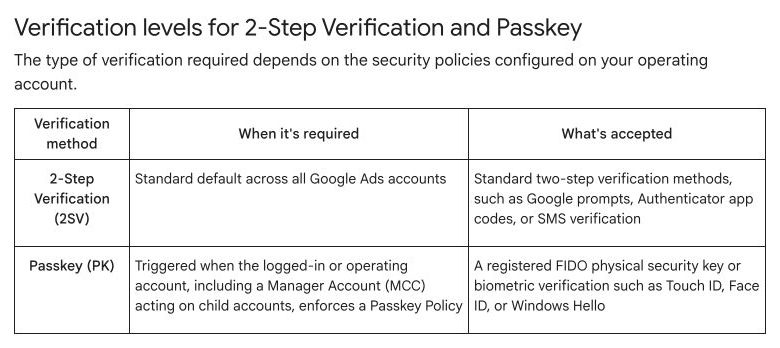
The method follows the operating account’s security policy: two-step verification or a required passkey. Domain history is not inherited from an MCC or sibling account. Established-domain spreadsheet rows can proceed while new-domain rows await verification; an unattended upload cannot complete the challenge. This is documented current behaviour, not a confirmed new global passkey mandate.
Date and availability: Current documentation checked 22 November 2026 · revision date not established.
The trigger described by Google is a net-new destination host in the specific customer account, combined with the current verification session. Domain history is not pooled across a manager account or inherited from sibling accounts. A destination already used by one client can therefore still trigger a check when introduced to another client account.
The required method follows the operating account's security policy. Standard two-step verification and an enforced passkey policy are different cases; the latter requires an accepted registered passkey or physical security key. Google's page describes a 60-minute verified session. This is a security check on a potentially sensitive edit, not an advertising-policy approval of the destination.
The workflow also differs by editing method. With in-table edits, completing the challenge leaves the selections staged and the advertiser applies them again. With asynchronous spreadsheet uploads, established-domain rows can proceed while new-domain rows are held for verification. The results screen provides a Verify action for an authorised operator. An unattended scheduled upload cannot complete an interactive challenge on its own.
Before a domain migration or large URL change, have the authorised operator and required authentication method available, review the upload results, and distinguish held rows from successful ones. Do not assume that an uploaded file means every URL was changed. Google describes no support bypass for the check. The help page confirms the documented workflow; its initial publication and revision dates remain unknown.
Sources & contributor credit
- Original sourceGoogle


Original creator unverified
Credits reflect the editor's latest changes. Original authorship has not been independently verified for this version.
Attribution evidence and limitations
Full attribution review pending.
A source link alone does not establish original authorship.
Original image and video creators have not yet been verified.
- Published on this site
- Article updated
This update reflects the dated source reporting. Availability may have changed. Further coverage of this same development will be added to this page.