Google Merchant Center · Status at source date: Reported product observation
Merchant Center adds detail to organic AI performance insights
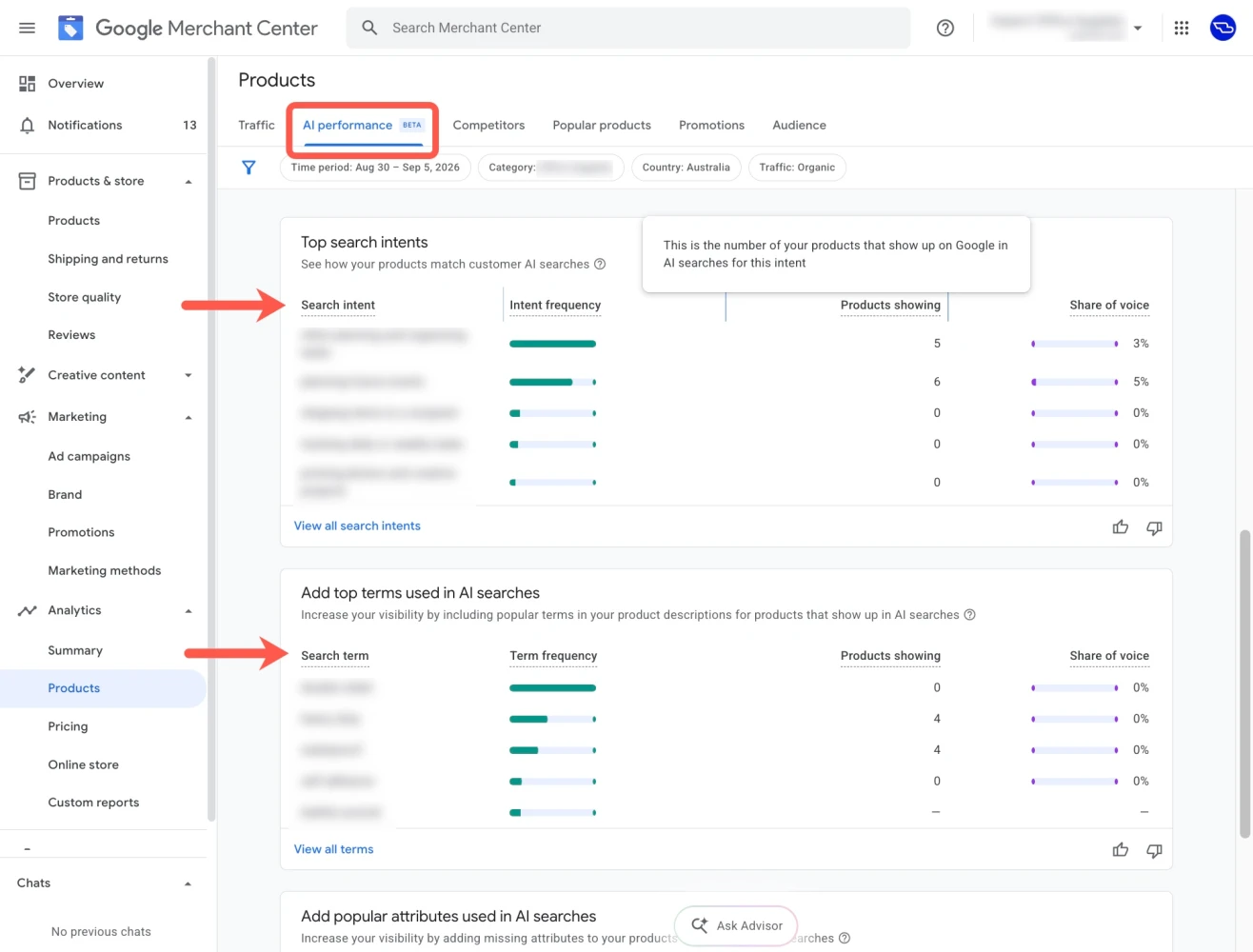
Brodie Clark is credited with observing additional sections in Merchant Center's AI performance reporting. Barry Schwartz's 9 September coverage identifies Brodie's observation and screenshots; Google's current documentation explains the report's scope.
What changed
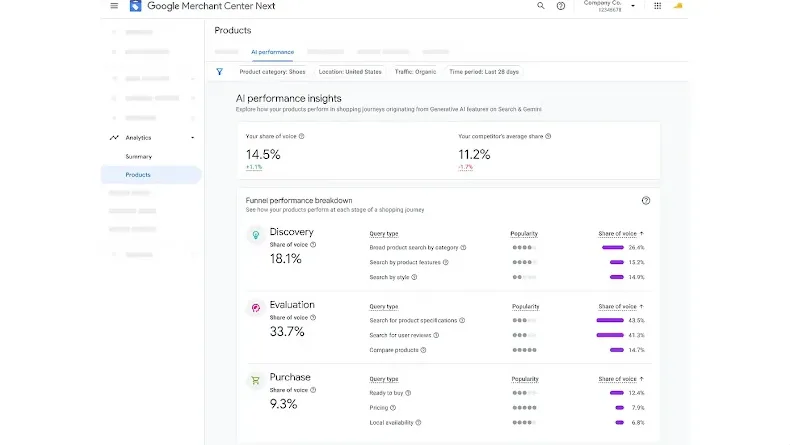
The documented insights include search terms, product attributes and shopping intent. They concern organic AI traffic and exclude paid ads. Google lists English-language availability in Australia, Canada, India, New Zealand and the US, and warns that 100% share of voice can reflect missing competitor data. This is distinct from the earlier coverage of the report's expansion into more countries.
For a retail advertising team, the most useful application is a product-data investigation. An insight about an attribute can prompt a check of whether that information is accurate and complete in the catalog. If shoppers seek a material, size or use case that the product data describes poorly, correcting the information is a concrete task. This is an example of an editorial workflow, not proof that any one attribute change will increase visibility.
Keep the evaluation aligned with the report. A change in organic AI visibility does not establish an improvement in paid campaign return. Similarly, a very high share-of-voice figure should trigger a check of the comparison data before being presented as competitive dominance. The report can identify useful questions without answering every acquisition or revenue question the business has.
Why it matters for advertisers
Brodie's explicit observation and screenshot credit takes priority over the secondary publisher as contributor evidence. The original X post could not be accessed in this check, so its exact original timestamp and first-ever priority remain unresolved. Barry retains reporting credit, while Google is the source for current product definitions. That separation lets the article credit the person who documented the change without overstating the available chronology.
What to check next
- Check report availability and review product information against relevant attributes and intent.
- Keep organic AI visibility separate from paid-media performance in stakeholder reporting.
- Investigate missing comparison data before interpreting a 100% share-of-voice result.
Sources & contributor credit
- Original credited observationBrodie Clark
Original X post linked by coverage. Original access and exact timestamp unresolved in this check. Attribution is an explicit credit, not an independently established first-ever discovery.
- Subsequent reporting · Barry Schwartz, Search Engine Roundtable
Merchant Center AI performance reporting additions. 9 September 2026. Explicitly credits Brodie Clark’s observation and screenshots.
- Official documentation or announcement · Checked Google Merchant Center Help
About AI performance insights. Undated current documentation, checked 12 September.



Original creator unverified
Credits reflect the editor's latest changes. Original authorship has not been independently verified for this version.
Attribution evidence and limitations
Full attribution review pending.
A source link alone does not establish original authorship.
Original image and video creators have not yet been verified.
- Published on this site
- Article updated
This update reflects the dated source reporting. Availability may have changed. Further coverage of this same development will be added to this page.