Meta · Status at source date: Account observation
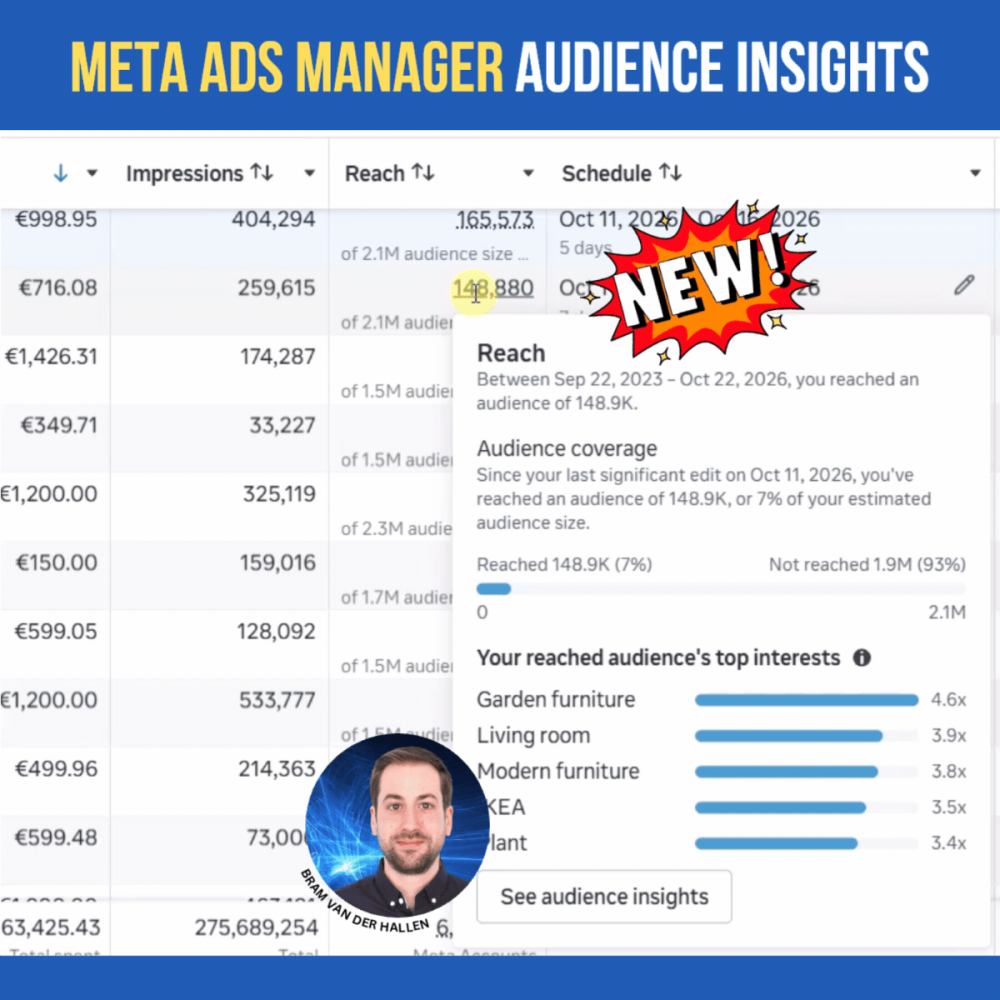
Hovering over Reach at ad-set level opens audience insights, including interests you never targeted
Bram Van der Hallen also reports an audience insights panel on the Reach metric at ad-set level, showing reach against estimated audience size, over-represented demographics and the reached audience's top interests relative to all Meta accounts over the past seven days, even when the ad set uses no interest targeting. A linked dashboard adds a bubble chart that groups age and gender segments by cost per result and CTR, with Meta's creative suggestion for each quadrant. Use the panel to develop creative hypotheses, then test them. An audience characteristic reported after delivery is not evidence that targeting that interest would improve results.
What changed
Week 43 follow-up: 2026-10-23
Earlier coverage and context (2026-10-18)
Petri van Gaalen reported an Audience Overview option in a client's Meta advertising account. His original post says the option was visible in only a few of the accounts he manages, and describes opening an ad set to see information about the people actually reached.
The report highlights interests and demographic characteristics that distinguish the reached audience. It supports a limited account observation, not a claim that every advertiser now has access or that the feature changes campaign targeting automatically.
This is a late catch-up. The original post identifier points to 18 October, before the main 19–25 October reporting week, although an absolute publication timestamp was not independently confirmed. Later coverage should not replace van Gaalen's original contribution or reset the observation's date.
For an advertiser who sees the option, distinguish information about delivered reach from the audience initially selected in campaign setup. Those are related but different views. Use the panel to frame questions about delivery, then compare those questions with the campaign's objective and actual business results.
For example, a demographic characteristic appearing prominently in reached-audience data does not by itself justify excluding everyone else. It may reflect delivery conditions or the particular campaign period. Record the account, campaign context and date when comparing observations across accounts.
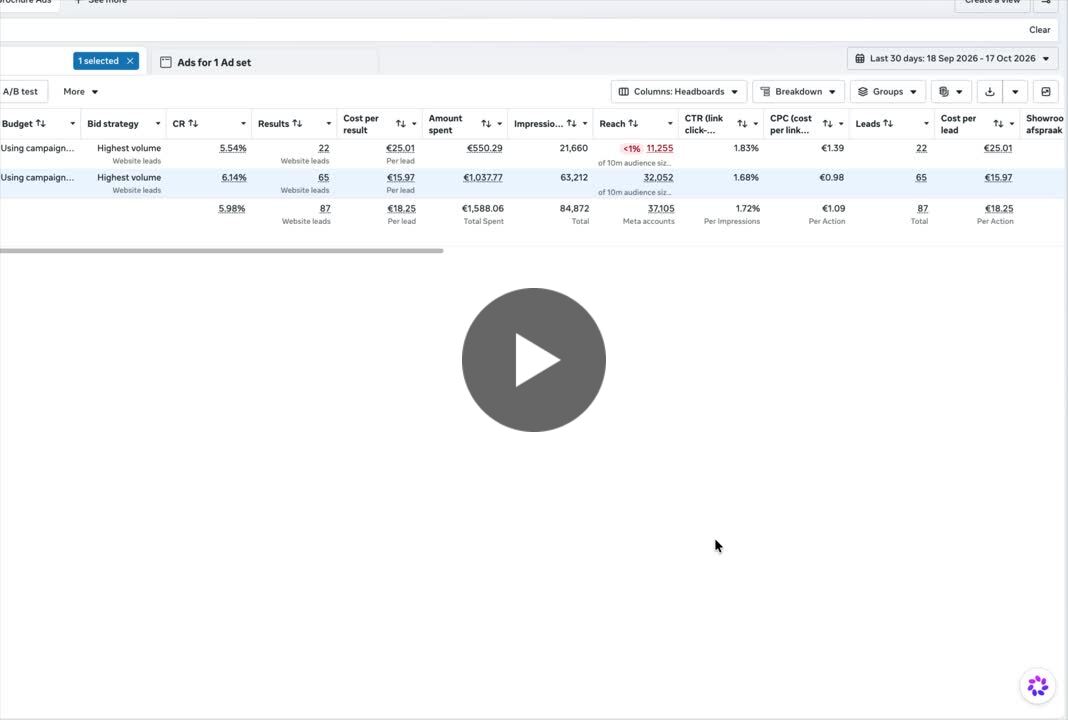
A team that can access the panel should first note the reporting period, audience definitions and metrics visible in its own account. Compare those definitions with the reports used for budget decisions before drawing conclusions about a new audience opportunity. The observation is useful for finding the interface, but it does not validate every comparison or guarantee access in other accounts. A demonstration thumbnail is included as source context; the original post is the place to inspect the presenter's walkthrough and explanation.
Sources & contributor credit
- Original reportPetri van Gaalen
18 October estimated from the original post identifier. Late catch-up; exact timestamp and wider rollout date unresolved.
- Source referenced in newsletterLinkedIn
Linked in Yoann Ferrand’s published Week 43 newsletter.
- Newsletter coveragePaid Media Collective
Published Week 43 edition; source for the approved credit, image and wording reconciliation.


Original creator unverified
Credits reflect the editor's latest changes. Original authorship has not been independently verified for this version.
Attribution evidence and limitations
Full attribution review pending.
A source link alone does not establish original authorship.
Original image and video creators have not yet been verified.
- Published on this site
- Article updated
This update reflects the dated source reporting. Availability may have changed. Further coverage of this same development will be added to this page.