Industry · Status at source date: Announcements
Court Reportedly Dismisses Chegg and Penske AI Overviews Antitrust Claims Without Prejudice
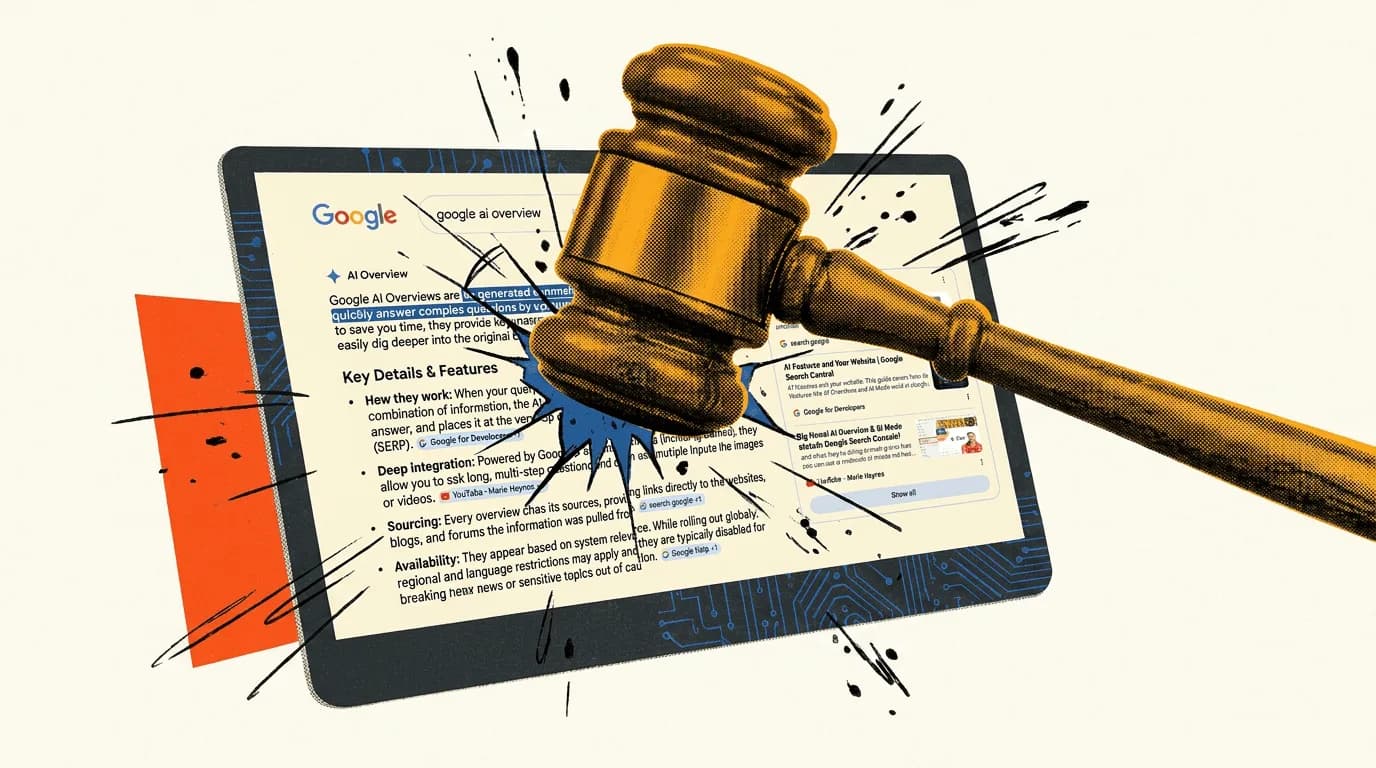
Reporting says Judge Amit Mehta dismissed Chegg and Penske Media’s AI Overviews antitrust claims without prejudice, leaving open possible amended claims.

What changed
A procedural ruling, not final liability
Reporting on Judge Amit Mehta’s decision says the court dismissed Chegg and Penske Media’s AI Overviews antitrust claims without prejudice. That procedural description leaves open the possibility that claims may be amended.
The underlying ruling was not reviewed. The account should therefore remain attributed to the reporting rather than presented as an independently verified description of the court’s reasoning or findings.
Scope matters in legal reporting
The reported decision concerns the claims in these cases. It does not resolve every legal challenge involving AI Overviews, establish final liability or award damages. A procedural dismissal differs from a merits ruling after trial or a final appellate outcome.
The development does not immediately change advertising tools or campaign delivery, according to the available account. A litigation headline should not be converted into an immediate platform-product conclusion.
A useful legal-news test is to ask whether a summary identifies the parties, challenged claims, disposition and possibility of amendment without stating that the whole dispute is over. If it cannot do so, the headline is probably carrying more certainty than the available reporting supports.
Track the next procedural document
A monitoring record should capture the court, parties, claims, disposition, whether amendment is permitted and any next filing deadline that is subsequently reported. An amended complaint or later ruling should be compared with the prior procedural position rather than treated as an unrelated event.
No legal conclusion is supported beyond the attributed description. Without the ruling, the precise reasoning, scope of dismissal and next procedural steps remain unresolved.
Why it matters for advertisers
The reported dismissal changes the posture of two cases but does not determine wider AI Overviews litigation, establish liability or immediately change advertising products.
What to check next
- Label the development as a reported dismissal without prejudice in internal updates.
- Do not present it as evidence of final legality, liability or damages.
- Monitor subsequent complaints, orders or rulings before revising risk assessments.
Sources & contributor credit
- Reporting or practitioner sourceSearch Engine Roundtable
Source cited in the published Week 40 newsletter. Article observation/reporting date is shown separately; this page’s original publication date is not inferred.
- Reporting or practitioner sourceTheWrap
Source cited in the published Week 40 newsletter. Article observation/reporting date is shown separately; this page’s original publication date is not inferred.
- Newsletter coverage · Paid Media Collective Week 40
Published edition used for story selection, copy, source credits and media; curation is distinct from original authorship.

Original creator unverified
Contributor roles follow the published newsletter and its linked evidence. Reporting, official discussion and visual authorship are kept separate; no independently unverified first-reporting priority is awarded.
Attribution evidence and limitations
Published story and credit line reconciled with the expanded article.
Original post, primary documentation and secondary reporting links retained.
Visible image content inspected for story relevance; image credit retained separately from reporting credit.
Attribution checked . This is a review date, not the original publication date.
- Published on this site
- Article updated
This update reflects the dated source reporting. Availability may have changed. Further coverage of this same development will be added to this page.