Meta Ads · Status at source date: Spotted in the Wild
Meta lead-gen setup shows a quality-versus-volume slider
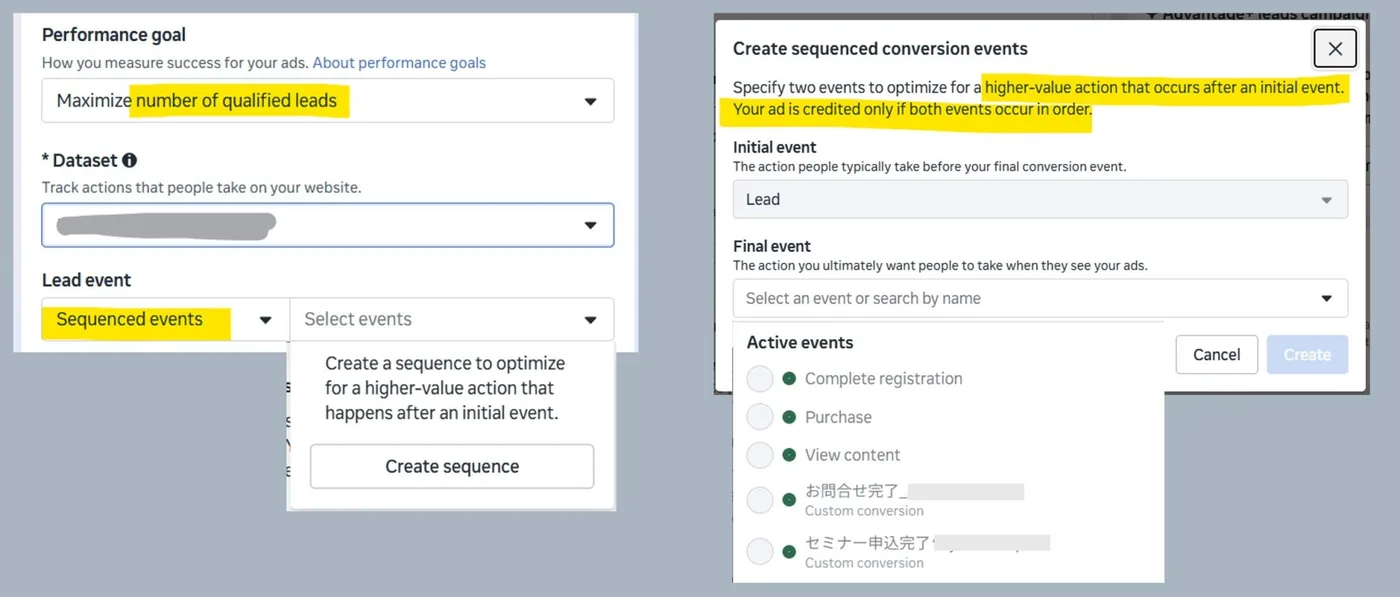
Andrea Di Petrillo documented a lead-quality preference slider alongside lead-generation and qualification events. The account example separates the initial form submission from a later outcome, with feedback supplied through an appropriate CRM integration or Conversions API.

What changed
This is a current interface observation; qualifying-lead controls existed earlier. Check availability and event definitions before changing the preference. A slider cannot compensate for inconsistent or missing downstream lead-quality data.
A lead-generation campaign can optimise around an initial form submission or around a later signal that reflects qualification. Andrea Di Petrillo's account example brings a preference between quality and volume into the setup. That visual is useful implementation evidence, but it does not establish how the slider is translated into delivery decisions in every campaign.
The quality signal still needs a consistent business definition. A team might count a qualified lead after a sales review, a completed appointment or another agreed stage. Mixing those definitions across campaigns makes feedback harder to interpret. The control should therefore be reviewed alongside the event being sent through the CRM integration or Conversions API, not in isolation.
Before testing a different preference, check whether downstream events are arriving reliably and whether the time between submission and qualification is understood. A short reporting window can make a campaign look weak simply because later outcomes have not arrived yet. Compare cohorts and mature outcomes before judging the effect of a preference change.
The observation is not evidence that a slider can repair incomplete tracking, eliminate poor enquiries or guarantee a fixed cost per qualified lead. Nor does it make qualifying-lead optimisation a new concept: related controls existed before this account screenshot.
The final newsletter dates the observation to 28 October and credits Andrea Di Petrillo. Availability, default settings and the impact of a change must still be checked in the actual account. Preserve the original settings when documenting any authorised experiment.
Sources & contributor credit
- Original postLinkedIn
Source retained from Yoann Ferrand’s final Week 44 edition.


Original creator unverified
Credits reflect the editor's latest changes. Original authorship has not been independently verified for this version.
Attribution evidence and limitations
Full attribution review pending.
A source link alone does not establish original authorship.
Original image and video creators have not yet been verified.
- Published on this site
- Article updated
This update reflects the dated source reporting. Availability may have changed. Further coverage of this same development will be added to this page.