Microsoft Advertising · Status at source date: Company results
Microsoft search advertising revenue grows 12% excluding traffic costs
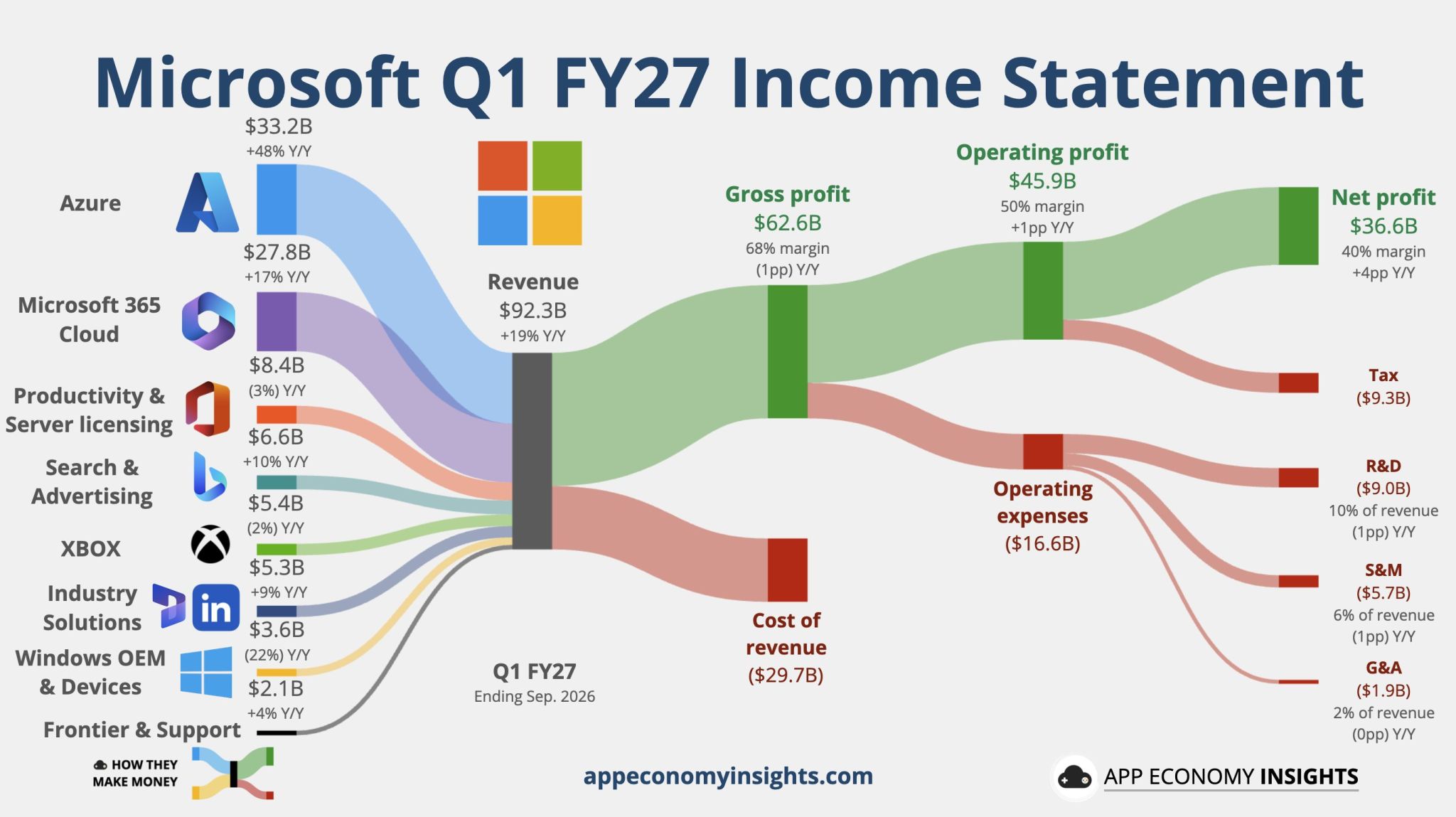
Microsoft's FY27 Q1 results report 12% growth in search and advertising revenue excluding traffic acquisition costs, in both reported and constant currency terms.
What changed
The result provides platform business context. A similar rounded growth rate to Google Search does not establish equivalent audience quality, channel maturity or suitability for an advertiser's budget; those decisions still need account-level evidence.
The phrase excluding traffic acquisition costs is part of the metric and should remain in every comparison. It identifies a different basis from a gross advertising-revenue figure. Removing that qualification can make comparisons across companies appear simpler than they are and can overstate what the published growth rate represents.
Microsoft reports the 12% increase in both reported and constant-currency terms for FY27 Q1. That does not mean every country, placement or advertising product grew at the same rate. The result is a company-level reporting line, not an account-level performance benchmark.
For advertisers comparing Microsoft Advertising with another platform, the relevant test still involves audience fit, available inventory, conversion quality and cost in the actual campaigns. Similar rounded revenue-growth rates do not establish equivalent reach or equal suitability for a business. They also do not show how much budget an advertiser should allocate to either channel.
A useful planning document can include the earnings result as business context while keeping campaign evidence in a separate section. Record which revenue definition and reporting period each company uses before making a comparison. Then use the advertiser's own economics to assess a proposed test, including the time and measurement needed to judge it fairly.
The source is Microsoft's 28 October investor-relations release. Barry Schwartz is credited for reporting, with Jack Rowbotham and Bertrand Seguin retained for analysis. Their commentary is not presented as authorship of the official financial statement or evidence of a guaranteed campaign outcome.
Sources & contributor credit
- Official sourceMicrosoft Investor Relations
Source retained from Yoann Ferrand’s final Week 44 edition.
- Original postJack Rowbotham
Source retained from Yoann Ferrand’s final Week 44 edition.
- Original postBertrand Seguin
Source retained from Yoann Ferrand’s final Week 44 edition.


Original creator unverified
Credits reflect the editor's latest changes. Original authorship has not been independently verified for this version.
Attribution evidence and limitations
Full attribution review pending.
A source link alone does not establish original authorship.
Original image and video creators have not yet been verified.
- Published on this site
- Article updated
This update reflects the dated source reporting. Availability may have changed. Further coverage of this same development will be added to this page.