Google Ads · Status at source date: Newsletter archive
AI Max URL controls clarified ahead of DSA migration
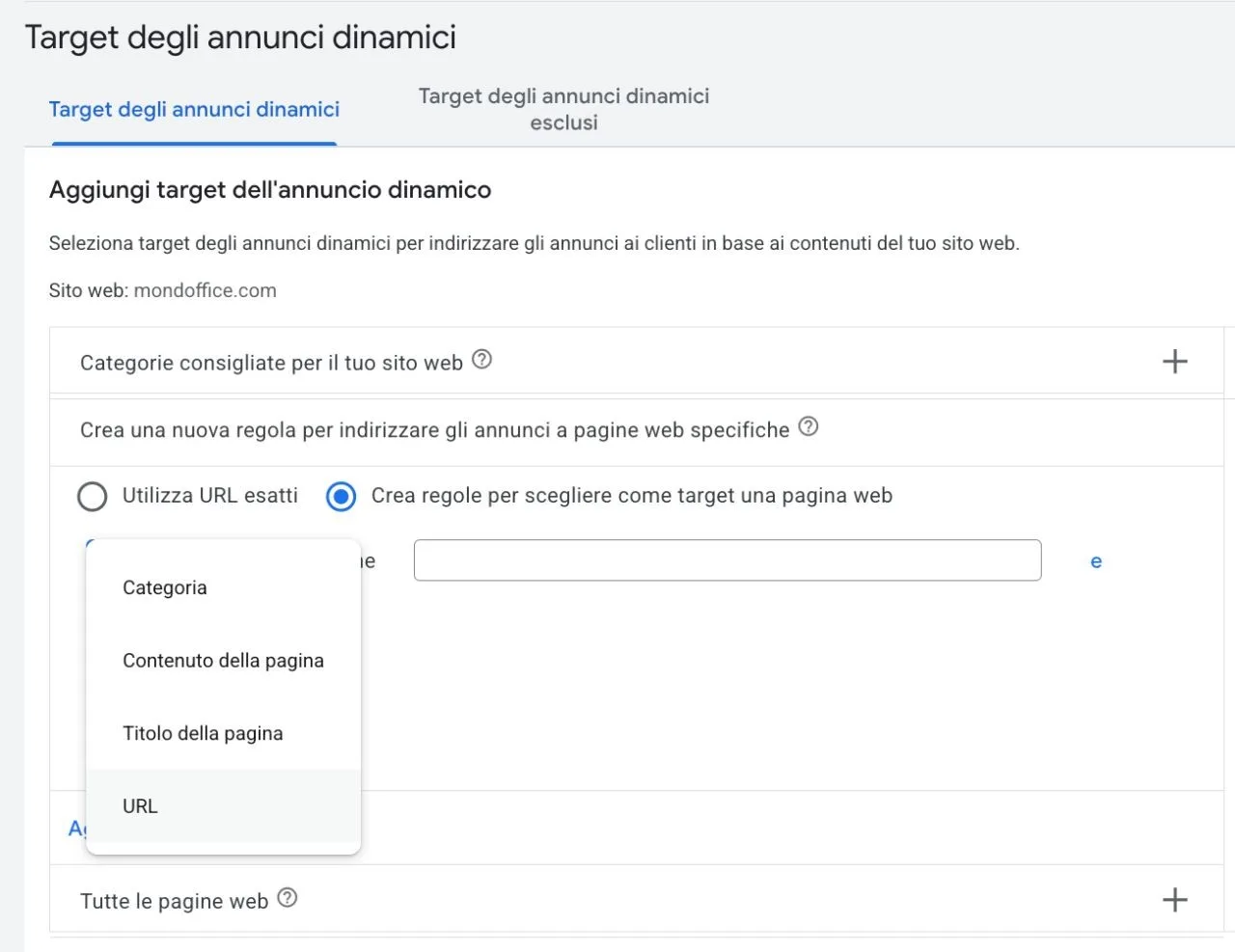
Ginny Marvin (Google Ads Product Liaison) has detailed AI Max's URL-targeting capabilities in reply to Gabriele Benedetti's question about parity with DSA campaigns. The clarification corrects the assumption that AI Max lacks landing-page targeting: AI Max does support a combination of URL rule types: URLs, custom labels in page feeds, and URL combo rules: similar to DSA.
What changed
URL exclusions are managed at the campaign level; URL inclusions at the ad group level. AI Max also supports page feeds, with multiple custom labels per feed.
The gap is narrower than initially framed but still material. AI Max does not support all DSA rule types: "page contains" rules and some other DSA-specific configurations are not currently available.
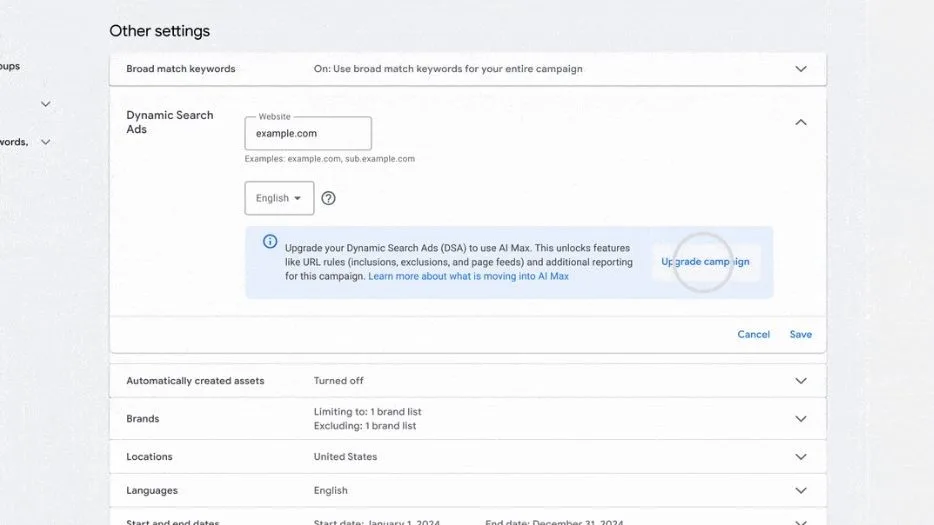
For existing DSA ad groups, Google's new migration tools will transfer all URL settings, including rule combinations or targets that aren't available in AI Max, as read-only.
Read-only rules continue to function but cannot be edited. Coming later this year: content and title-related exclusions at the account level, complementing AI Max's existing inventory-aware serving (which automatically excludes out-of-stock items). With account-level exclusions, advertisers can always exclude content they don't want their ads associated with, closing a meaningful brand-safety gap.
Why it matters for advertisers
For you, this means DSA-to-AI-Max migration is feasible without losing existing URL-targeting work: but accounts with "page contains" rules or other unsupported DSA configurations should plan for those rules to be read-only post-migration. Worth auditing existing DSA campaigns now for rule types that won't be editable after the move, and adjusting account architecture before migration to ensure the post-migration setup remains practical to manage.
Perspective from the original PMC newsletter.Sources & contributor credit
- Newsletter coverage · Paid Media Collective newsletter
Original newsletter text, contributor labels and media for this update.
- Source referenced in newsletterLinkedIn
Linked from the original newsletter. The source publication date has not been independently confirmed.

Original creator unverified
The names below are source credits. The original creator and first-reporting priority have not yet been independently verified.
Attribution evidence and limitations
Full attribution review pending.
A source link alone does not establish original authorship.
Original image and video creators have not yet been verified.
- Published on this site
This update reflects the dated source reporting. Availability may have changed. Further coverage of this same development will be added to this page.
Original newsletter text and archive evidence
AI Max URL controls clarified ahead of DSA migration
Ginny Marvin (Google Ads Product Liaison) has detailed AI Max's URL-targeting capabilities in reply to Gabriele Benedetti's question about parity with DSA campaigns. The clarification corrects the assumption that AI Max lacks landing-page targeting: AI Max does support a combination of URL rule types: URLs, custom labels in page feeds, and URL combo rules: similar to DSA. URL exclusions are managed at the campaign level; URL inclusions at the ad group level. AI Max also supports page feeds, with multiple custom labels per feed.
The gap is narrower than initially framed but still material. AI Max does not support all DSA rule types: "page contains" rules and some other DSA-specific configurations are not currently available.
For existing DSA ad groups, Google's new migration tools will transfer all URL settings, including rule combinations or targets that aren't available in AI Max, as read-only.
Read-only rules continue to function but cannot be edited. Coming later this year: content and title-related exclusions at the account level, complementing AI Max's existing inventory-aware serving (which automatically excludes out-of-stock items). With account-level exclusions, advertisers can always exclude content they don't want their ads associated with, closing a meaningful brand-safety gap.
For you, this means DSA-to-AI-Max migration is feasible without losing existing URL-targeting work: but accounts with "page contains" rules or other unsupported DSA configurations should plan for those rules to be read-only post-migration. Worth auditing existing DSA campaigns now for rule types that won't be editable after the move, and adjusting account architecture before migration to ensure the post-migration setup remains practical to manage.
Source captured . No explicit first-contributor label was provided for this update.