Amazon Ads · Status at source date: Seasonal reminder
Amazon US peak fulfilment fees: check the seasonal schedule
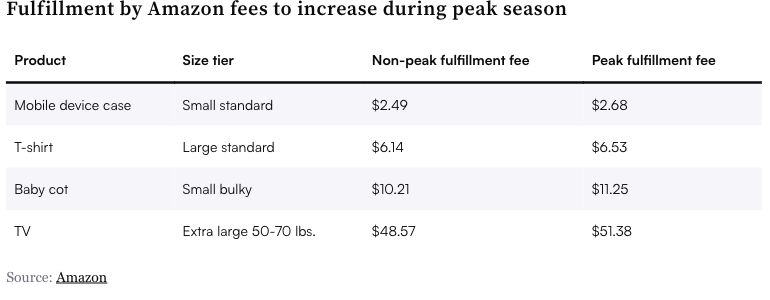
Amazon’s US holiday peak fulfilment-fee period runs from 15 October to 14 January 2027, according to Supply Chain Dive’s July report of Amazon’s announcement.
What changed
It reports an average increase of $0.32 per unit, with the existing 3.5% fuel and logistics surcharge applied on top. Charges vary by product and service, so use the account’s actual fee schedule rather than the average for margin calculations. This is a reminder about a previously announced seasonal change, not a new fee announcement. Recheck contribution margins before increasing peak-season ad spend.
Advertising efficiency and order profitability can move in different directions during the peak period. A campaign might report an unchanged return on ad spend while fulfilment costs reduce the contribution left from each order. That is an accounting implication, not evidence that Amazon has changed how the advertising platform calculates ROAS.
A practical review uses the actual products being promoted. For each important item, compare expected revenue with the applicable fulfilment charge, selling fees, product cost and planned discount. Add other costs used in the business’s own contribution-margin calculation. The reported average increase is unsuitable as a substitute for the product-specific schedule, especially when size, weight or service differ across the catalogue. Do not treat the examples in press coverage as the fee for a different SKU.
Once the margin assumptions are checked, consider whether the campaign’s targets still reflect the business outcome being pursued. Any adjustment should account for the purpose of the campaign, inventory and the reliability of conversion reporting. Record when seasonal assumptions begin and end so January reporting does not continue using a temporary cost model by mistake. This is a dated operational reminder, not evidence of a fee announcement made this week.
Why it matters for advertisers
Peak-season fulfilment costs can affect the margin left after advertising, even when reported ROAS is stable.
What to check next
- Check the applicable fee schedule for promoted products.
- Recalculate contribution margins before raising seasonal ad spend.
- Record the seasonal period separately from the July announcement date.
Sources & contributor credit
- Coverage by Max Garland · Supply Chain Dive
- Linked original announcementAmazon

Source credits reviewed
Supply Chain Dive’s July report supports the dated seasonal reminder. No individual first-contributor or newly announced October launch is claimed.
Attribution evidence and limitations
The published text and credit roles were independently reviewed for this exact version. Supply Chain Dive’s July report supports the dated seasonal reminder. No individual first-contributor or newly announced October launch is claimed.
Original sources and secondary discovery links are distinguished in the article. Unresolved first-reporting priority is not treated as confirmed authorship.
Selected media and displayed credits were inspected. Amazon fee data via Max Garland / Supply Chain Dive; capture by PMC. Source access and credit do not establish ownership or permission to reuse.
Attribution checked . This is a review date, not the original publication date.
- Published on this site
- Article updated
This update reflects the dated source reporting. Availability may have changed. Further coverage of this same development will be added to this page.