Google Ads · Status at source date: Test
Google tests exact and phrase match Search ads in AI Mode
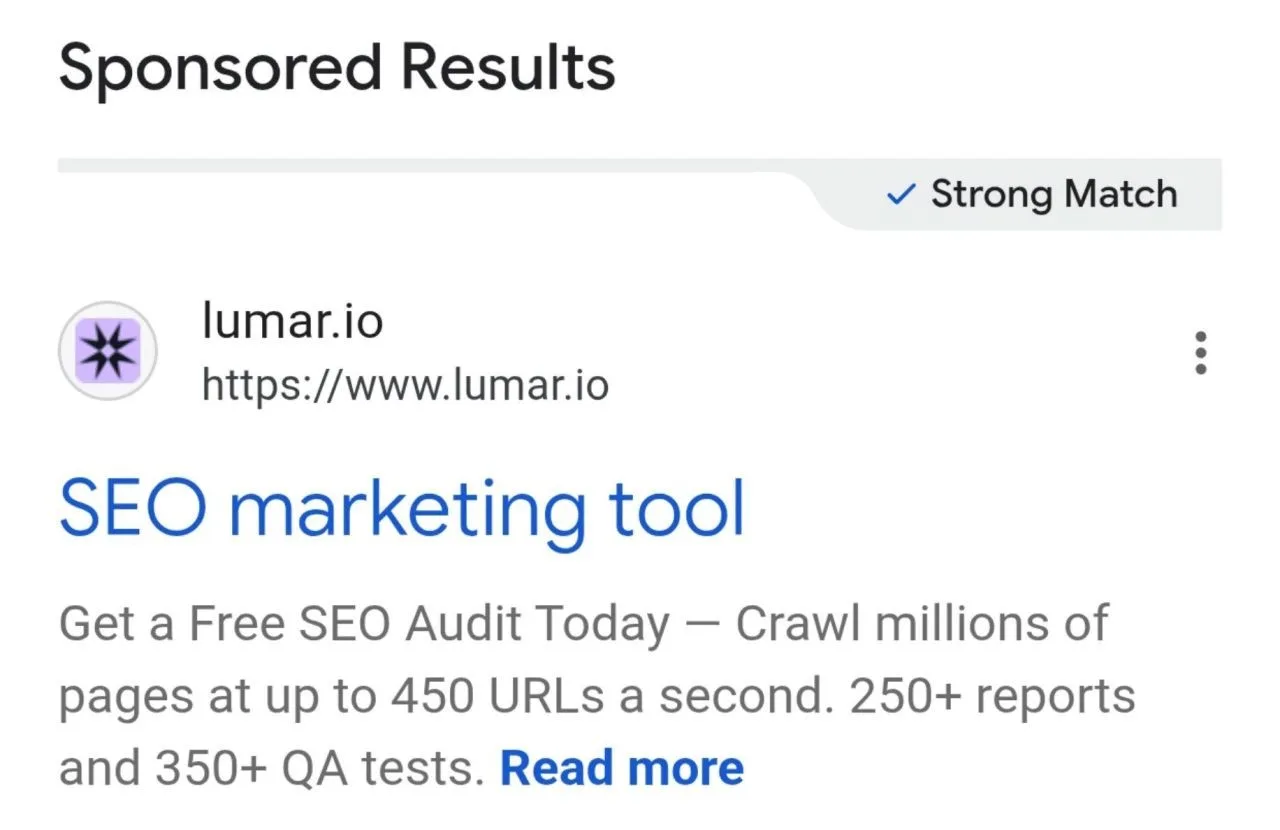
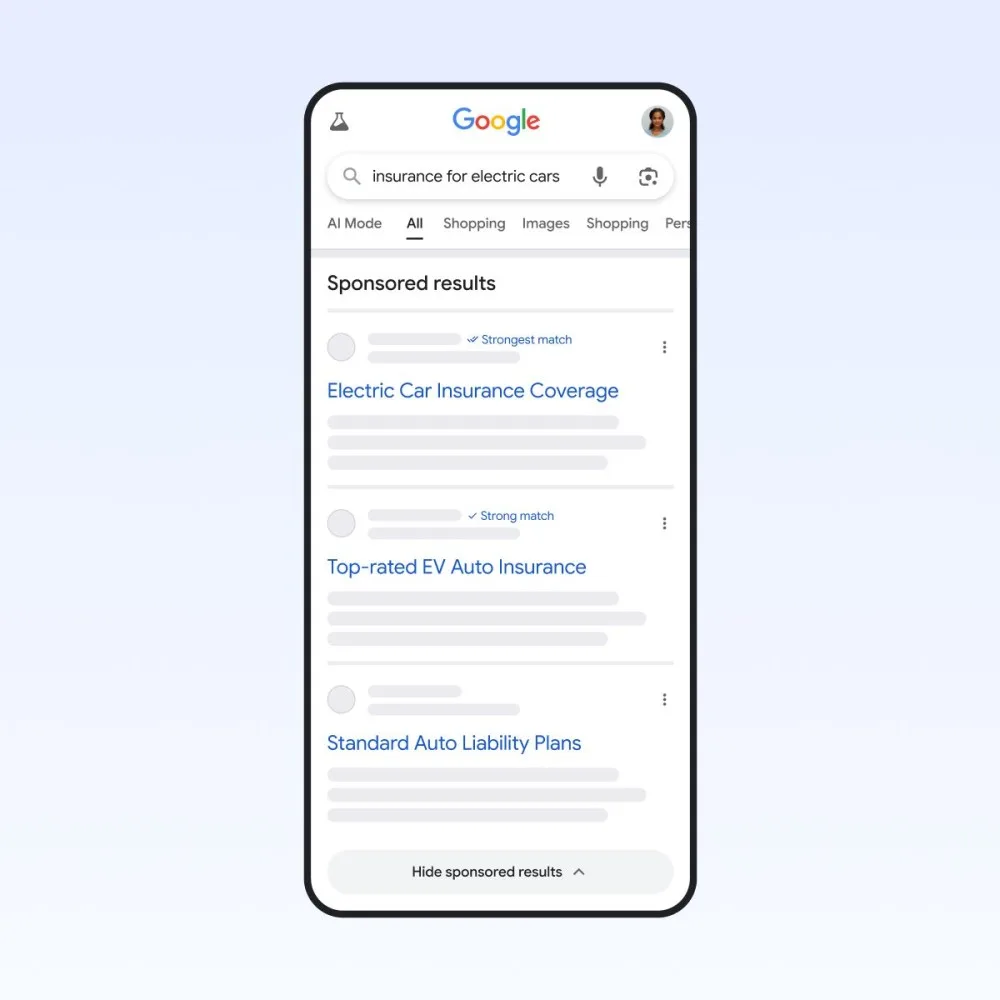
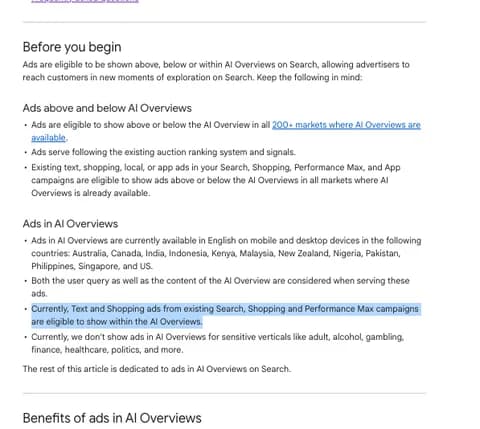
Google is running a small experiment that allows exact- and phrase-match keywords from regular Search campaigns to serve text ads in AI Mode, following tests reported by Anthony Higman.
What changed
Anthony Higman reported finding regular Search campaigns with restrictive match types serving in AI Mode after tests across several campaigns. Ginny Marvin then clarified in the original LinkedIn discussion that exact and phrase match keywords can serve text ads there when user intent is explicit and direct. Barry Schwartz’s follow-up report quotes Google describing the activity as a small experiment.
The qualification about intent is central. This observation does not establish that every query or conversational journey is open to every Search campaign, nor that all AI-oriented ad formats are included. Ginny distinguishes the text-ad case from the more complex conversational intent and newer formats addressed by AI Max and Performance Max for Search. Treat the specific eligibility observation separately from claims about the whole AI Mode advertising product.
For an account review, preserve the campaign setup and evidence that led to the observation. Record the match types, enabled features and the relevant ad experience rather than relying on a headline about expanded access. If the available reports do not isolate AI Mode traffic, say so when assessing results. A screenshot of an ad appearing is useful evidence of placement, but it cannot measure the placement’s contribution to the campaign average.
Why it matters for advertisers
The report changes a planning assumption about where familiar Search campaigns may appear, but it does not establish a reason to switch off another campaign feature. Compare the purpose and observed results of each setup. Any decision about AI Max should consider its actual matching, asset and destination behaviour in the account, as well as the business outcomes it produces. Avoid treating access to one placement as a complete comparison between products.
What to check next
- Keep the campaign configuration and placement evidence together when investigating access.
- Respect Google’s explicit-intent qualification and the experiment’s limited scope.
- Evaluate feature decisions using account results and clearly state any reporting limitations.
Sources & contributor credit
- Newsletter coverage · Paid Media Collective newsletter
Original newsletter text, contributor labels and media for this update.
- Original source · Checked Google clarification
Linked and credited in issue 229. The newsletter text was reviewed for this summary; the original publication date is not independently established here. Google clarification | Search Engine Roundtable • 3 September 2026
- Source referenced in newsletterSearch Engine Roundtable
Linked from the original newsletter. The source publication date has not been independently confirmed.
- Source referenced in newsletterGoogle clarification
Linked from the original newsletter. The source publication date has not been independently confirmed.


Original creator unverified
The cited source authors and any separately identified visual or tool creators are credited for their documented roles. Independent first-reporting priority is not established.
Attribution evidence and limitations
Read Anthony Higman’s original post, Ginny Marvin’s complete comment in the preserved primary discussion, and Barry Schwartz’s follow-up report. Preserved Anthony’s observation priority and Ginny’s distinct official clarification. The small-experiment description comes from Barry’s quoted exchange, not an invented direct statement to PMC. No new media was added.
Original source links and verified profile links are retained. A missing profile remains unresolved rather than being inferred from a name match.
This record has no newsletter screenshot or video to newly attribute. Preserved the existing media decisions and did not import unrelated screenshots from nearby stories.
- Linked and credited in issue 229. The newsletter text was reviewed for this summary; the original publication date is not independently established here. Google clarification | Search Engine Roundtable • 3 September 2026
- Linked from the original newsletter. The source publication date has not been independently confirmed.
- Linked from the original newsletter. The source publication date has not been independently confirmed.
Attribution checked . This is a review date, not the original publication date.
- Published on this site
- Article updated
This update reflects the dated source reporting. Availability may have changed. Further coverage of this same development will be added to this page.
Original newsletter text and archive evidence
Google tests exact and phrase match Search ads in AI Mode
Google is running a small experiment that allows exact- and phrase-match keywords from regular Search campaigns to serve text ads in AI Mode, following tests reported by Anthony Higman. Google’s Ginny Marvin says eligibility is limited to explicit, direct intent; AI Max and Performance Max still support more complex conversational intent and additional formats. For you, this means restrictive match types can appear in this test, but the finding alone does not justify changing your campaign strategy.
Exact and phrase match keywords are eligible to serve text ads in AI Mode. Note however that this is limited to cases where there is explicit and direct user intent. AI Max and PMax for Search are designed to capture complex conversational intent and access our latest ad formats (like Highlighted Answers). Ginny Marvin
Source captured . First-contributor labels follow the newsletter’s explicit wording.