Microsoft Advertising · Status at source date: Newsletter archive
Google fixes its Shopify integration to report order volume and value server-side
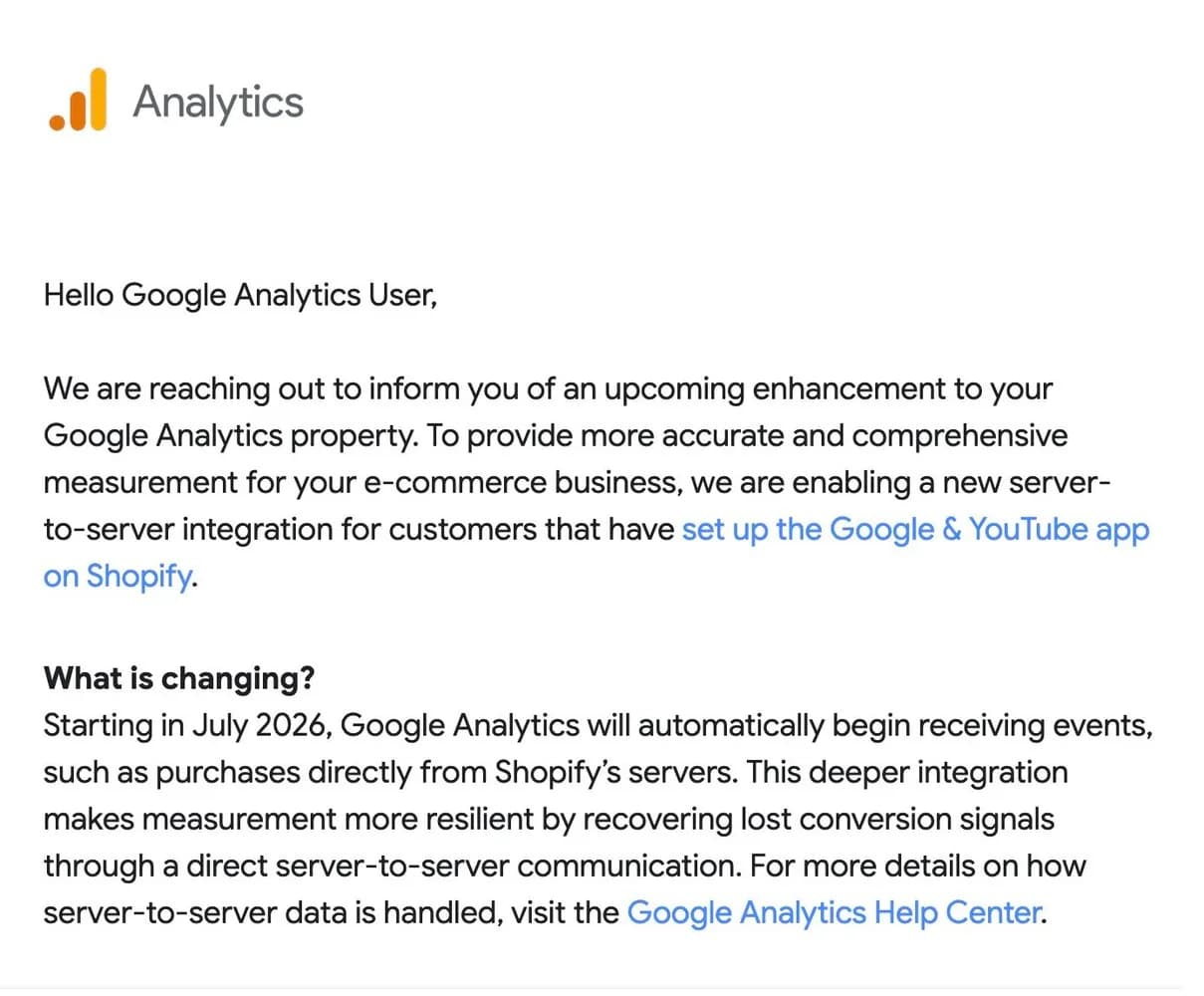
Google is updating its Shopify integration (the Google & YouTube app) to use server-to-server events, fixing a long-standing gap in how order volumes and values are reported, flagged by Maz Darvish. Until now, the app relied on client-side, browser-based tracking that routinely missed purchases: an estimated 10–40% lost to ad blockers, privacy browsers, iOS restrictions, and shoppers closing the tab before the confirmation page loaded.
What changed
The update routes purchase data directly from Shopify's backend to the Google Analytics API, with transaction IDs matched across browser and server so each order is counted once. Google has confirmed that figures still won't reconcile to 100% because attribution models, time zones, and refund handling differ between the two systems.
A significant caveat came from Emmanuel Flossie, a Google Shopping Diamond Product Expert: Google is also changing product IDs in August, which will force merchants to effectively start from scratch, losing historical data and performance on affected products. So the same window that recovers lost conversion signals also threatens to reset the product-level history advertisers rely on.
Because server-to-server tracking recovers previously uncounted purchases, merchants should expect a step-up in reported conversions and revenue once the integration lands: which will inflate year-on-year comparisons unless the change is annotated.
Why it matters for advertisers
For you, this means Shopify merchants in the Google app should see more accurate order volume and value reporting, but should plan for two disruptions: a reporting uplift that distorts year-on-year trends, and an August product-ID change that may wipe out product-level history. Worth annotating the rollout date in your reporting, watching for duplicate conversions if you run a legacy hardcoded tag alongside the app, and preparing for the product-ID reset before August. With a caveat noted by Emmanuel Flossie
Perspective from the original PMC newsletter.Sources & contributor credit
- Newsletter coverage · Paid Media Collective newsletter
Original newsletter text, contributor labels and media for this update.
- Source referenced in newsletterLinkedIn
Linked from the original newsletter. The source publication date has not been independently confirmed.
Original creator unverified
The names below are source credits. The original creator and first-reporting priority have not yet been independently verified.
Attribution evidence and limitations
Full attribution review pending.
A source link alone does not establish original authorship.
Original image and video creators have not yet been verified.
- Published on this site
This update reflects the dated source reporting. Availability may have changed. Further coverage of this same development will be added to this page.
Original newsletter text and archive evidence
Google fixes its Shopify integration to report order volume and value server-side
Google is updating its Shopify integration (the Google & YouTube app) to use server-to-server events, fixing a long-standing gap in how order volumes and values are reported, flagged by Maz Darvish. Until now, the app relied on client-side, browser-based tracking that routinely missed purchases: an estimated 10–40% lost to ad blockers, privacy browsers, iOS restrictions, and shoppers closing the tab before the confirmation page loaded. The update routes purchase data directly from Shopify's backend to the Google Analytics API, with transaction IDs matched across browser and server so each order is counted once. Google has confirmed that figures still won't reconcile to 100% because attribution models, time zones, and refund handling differ between the two systems.
A significant caveat came from Emmanuel Flossie, a Google Shopping Diamond Product Expert: Google is also changing product IDs in August, which will force merchants to effectively start from scratch, losing historical data and performance on affected products. So the same window that recovers lost conversion signals also threatens to reset the product-level history advertisers rely on.
Because server-to-server tracking recovers previously uncounted purchases, merchants should expect a step-up in reported conversions and revenue once the integration lands: which will inflate year-on-year comparisons unless the change is annotated.
For you, this means Shopify merchants in the Google app should see more accurate order volume and value reporting, but should plan for two disruptions: a reporting uplift that distorts year-on-year trends, and an August product-ID change that may wipe out product-level history. Worth annotating the rollout date in your reporting, watching for duplicate conversions if you run a legacy hardcoded tag alongside the app, and preparing for the product-ID reset before August.
With a caveat noted by Emmanuel Flossie
Source captured . No explicit first-contributor label was provided for this update.