Google Ads · Status at source date: Newsletter archive
Google says the budget-limited bidding change is not a broader update.
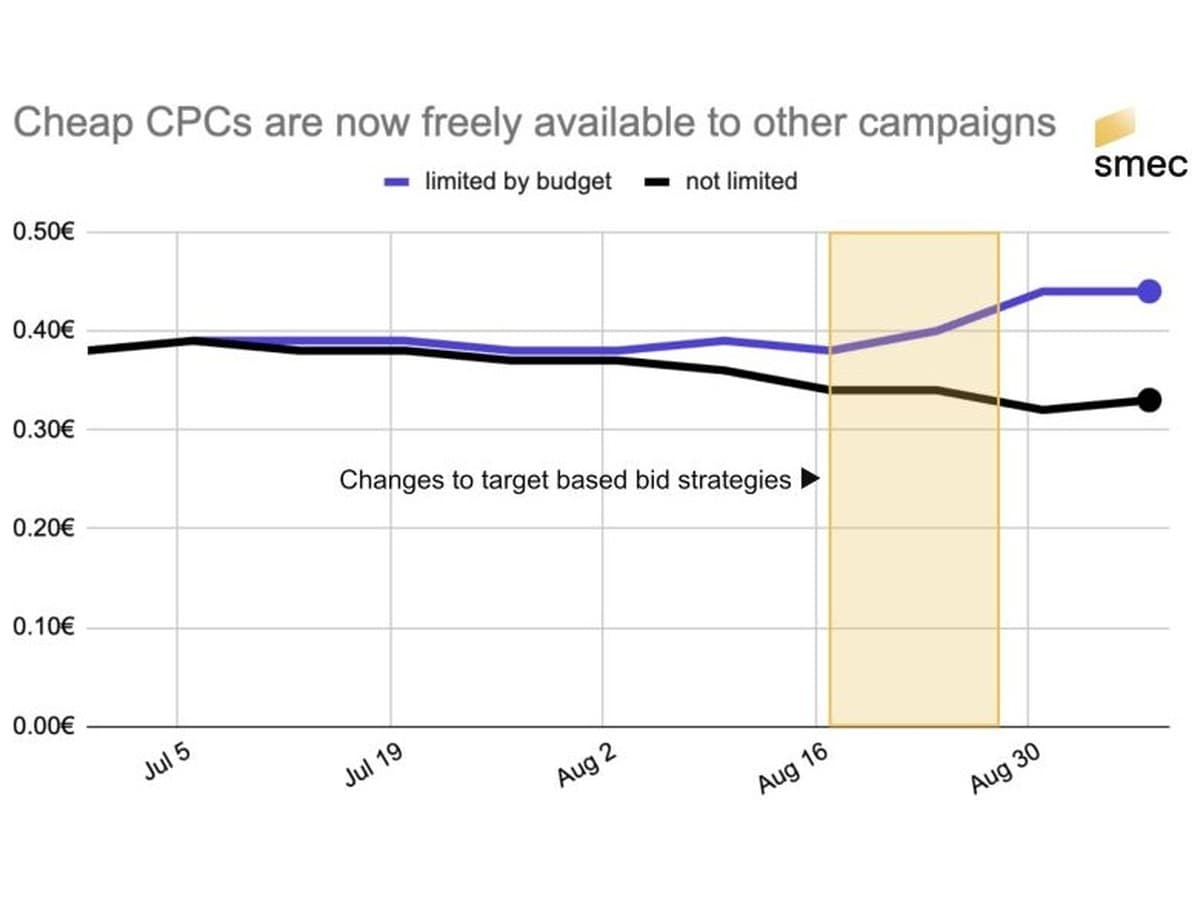
Ahead of the 17 August change for budget-limited campaigns, Google's Ads Liaison, Ginny Marvin, confirmed that the update only affects budget-constrained campaigns using a target and is not a broader Smart Bidding change. She added that it will not result in any changes to spending, and that a campaign whose target is reset to its current achieved average should continue to perform as it does now.
What changed
The clarification followed a widely shared critique from Joey Bidner and a question from Maggie Humphrey about whether "more predictable performance" implied a broader shift in bidding, and continues the bidding target optimisation change covered in Week 25.
Why it matters for advertisers
For you, this means bidding plans can stay anchored to the announced scope, so avoid restructuring accounts on speculation. Yes this only impacts budget-constrained campaigns using a target because this is already the bidding behavior when campaigns using a target aren’t budget constrained. This change ensures expected bidding behavior will be the same regardless of whether a campaign using a target is budget-constrained or not. And that if advertisers do opt to change budgets on budget-constrained campaigns, they should expect more stable performance behavior as the campaign scales. Performance has often fluctuated unexpectedly, especially in budget-limited campaigns, as the budget is changed. This has been a frustrating experience for advertisers, making it difficult to scale campaigns with confidence. That’s what this change aims to address. In short we're making the controls clearer; the target will more precisely control your ROI.
Perspective from the original PMC newsletter.Sources & contributor credit
- Newsletter coverage · Paid Media Collective newsletter
Original newsletter text, contributor labels and media for this update.
- Source referenced in newsletterLinkedIn
Linked from the original newsletter. The source publication date has not been independently confirmed.
Original creator unverified
The names below are source credits. The original creator and first-reporting priority have not yet been independently verified.
Attribution evidence and limitations
Full attribution review pending.
A source link alone does not establish original authorship.
Original image and video creators have not yet been verified.
- Published on this site
This update reflects the dated source reporting. Availability may have changed. Further coverage of this same development will be added to this page.
Original newsletter text and archive evidence
Google says the budget-limited bidding change is not a broader update.
Ahead of the 17 August change for budget-limited campaigns, Google's Ads Liaison, Ginny Marvin, confirmed that the update only affects budget-constrained campaigns using a target and is not a broader Smart Bidding change. She added that it will not result in any changes to spending, and that a campaign whose target is reset to its current achieved average should continue to perform as it does now. The clarification followed a widely shared critique from Joey Bidner and a question from Maggie Humphrey about whether "more predictable performance" implied a broader shift in bidding, and continues the bidding target optimisation change covered in Week 25. For you, this means bidding plans can stay anchored to the announced scope, so avoid restructuring accounts on speculation.
Yes this only impacts budget-constrained campaigns using a target because this is already the bidding behavior when campaigns using a target aren’t budget constrained. This change ensures expected bidding behavior will be the same regardless of whether a campaign using a target is budget-constrained or not. And that if advertisers do opt to change budgets on budget-constrained campaigns, they should expect more stable performance behavior as the campaign scales.
Performance has often fluctuated unexpectedly, especially in budget-limited campaigns, as the budget is changed. This has been a frustrating experience for advertisers, making it difficult to scale campaigns with confidence. That’s what this change aims to address.
In short we're making the controls clearer; the target will more precisely control your ROI.
Source captured . No explicit first-contributor label was provided for this update.