Google Merchant Center · Status at source date: Newsletter archive
Out-of-stock products must now have disabled buy buttons
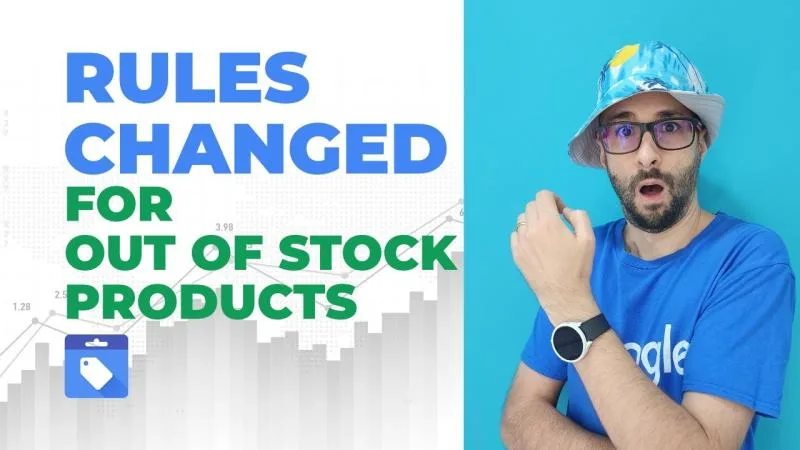
Google has updated its Merchant Centre landing page requirements to mandate that the buy button on out-of-stock product pages be visually disabled: greyed out and non-clickable: rather than simply hidden or removed. Emmanuel Flossie of FeedArmy, who identified and detailed the change, notes the distinction is specific: hiding the button or styling it as invisible is no longer compliant.
What changed
The technical implementation requires adding the HTML disabled attribute to the button element rather than using CSS to hide or remove it. The requirement also affects the availability attribute in product feeds: for any product where the button is disabled, the feed value should reflect the appropriate state: out_of_stock, backorder, or preorder: and the landing page should match it precisely. Products where the feed signals availability but the page shows no active purchase path will face disapproval.
Flossie's analysis suggests this change affects virtually every online store and represents one of the more practically significant Merchant Centre policy updates in recent months. The rule closes a gap that allowed merchants to keep out-of-stock products from appearing in Shopping placements without providing a functional purchase path.
Why it matters for advertisers
For you, this means auditing your product pages for disabled vs hidden buy buttons, reviewing your availability feed values against the actual landing page states, and prioritising any products currently disapproved due to landing page mismatches.
Perspective from the original PMC newsletter.Sources & contributor credit
- Newsletter coverage · Paid Media Collective newsletter
Original newsletter text, contributor labels and media for this update.
- Source referenced in newsletterFeedArmy
Linked from the original newsletter. The source publication date has not been independently confirmed.

Original creator unverified
The names below are source credits. The original creator and first-reporting priority have not yet been independently verified.
Attribution evidence and limitations
Full attribution review pending.
A source link alone does not establish original authorship.
Original image and video creators have not yet been verified.
- Published on this site
This update reflects the dated source reporting. Availability may have changed. Further coverage of this same development will be added to this page.
Original newsletter text and archive evidence
Out-of-stock products must now have disabled buy buttons
Google has updated its Merchant Centre landing page requirements to mandate that the buy button on out-of-stock product pages be visually disabled: greyed out and non-clickable: rather than simply hidden or removed. Emmanuel Flossie of FeedArmy, who identified and detailed the change, notes the distinction is specific: hiding the button or styling it as invisible is no longer compliant.
The technical implementation requires adding the HTML disabled attribute to the button element rather than using CSS to hide or remove it. The requirement also affects the availability attribute in product feeds: for any product where the button is disabled, the feed value should reflect the appropriate state: out_of_stock, backorder, or preorder: and the landing page should match it precisely. Products where the feed signals availability but the page shows no active purchase path will face disapproval.
Flossie's analysis suggests this change affects virtually every online store and represents one of the more practically significant Merchant Centre policy updates in recent months. The rule closes a gap that allowed merchants to keep out-of-stock products from appearing in Shopping placements without providing a functional purchase path.
For you, this means auditing your product pages for disabled vs hidden buy buttons, reviewing your availability feed values against the actual landing page states, and prioritising any products currently disapproved due to landing page mismatches.
Source captured . No explicit first-contributor label was provided for this update.