Apple Ads · Status at source date: Newsletter archive
Universal Commerce Protocol adds Cart, Catalogue, and Identity Linking
Google has announced three new optional capabilities for the Universal Commerce Protocol, the open standard designed to enable AI agents to interact with retailer infrastructure without hard-coded integrations. The additions reflect feedback from the first wave of UCP adopters and address practical gaps in the initial release.

What changed
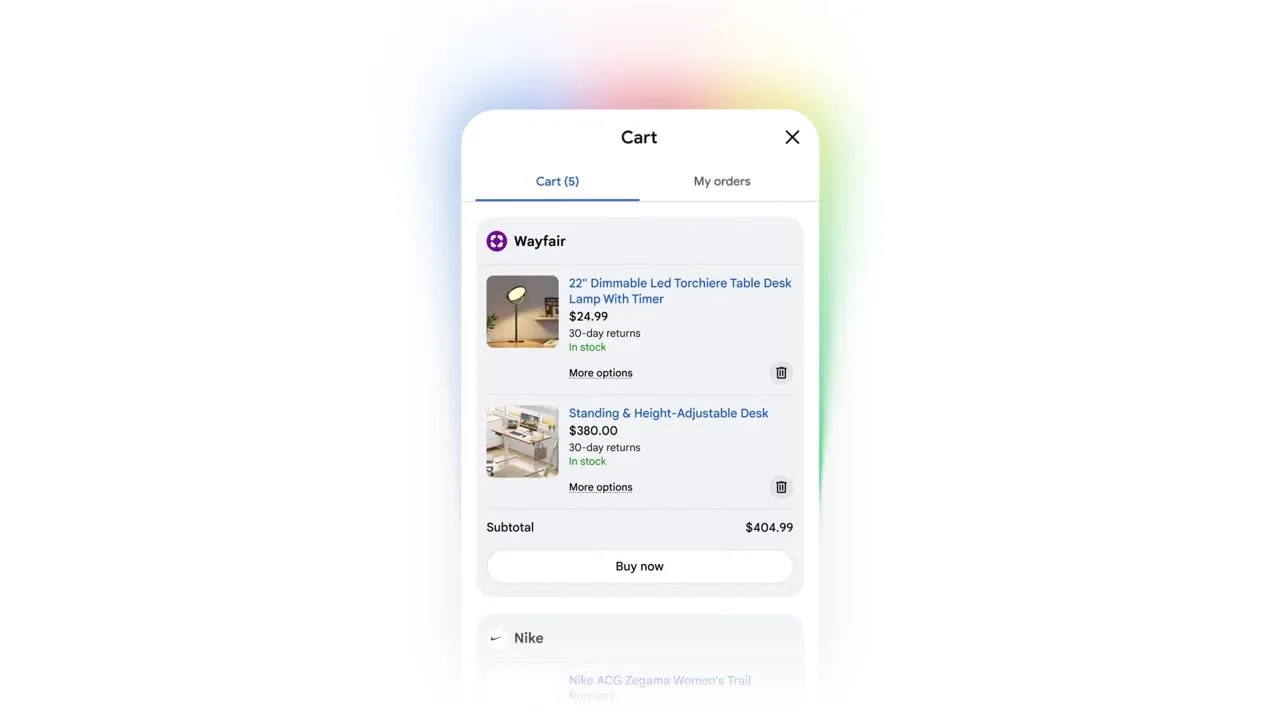
The Cart capability allows agents to add multiple items from a single store to a shopping cart in one operation: mirroring how shoppers naturally build orders rather than forcing single-item purchases. Catalogue allows agents to query real-time product details, including variants, inventory levels, and pricing, before completing a transaction, reducing errors that arise from stale data. Identity Linking is perhaps the most commercially significant addition: it lets shoppers who are logged in on UCP-integrated platforms receive the same loyalty pricing and free shipping thresholds they would on the retailer's own site, removing one of the chief objections to in-chat purchasing.
Google also confirmed it is simplifying the UCP onboarding process in Merchant Centre, rolling out over the coming months. Commerce Inc, Salesforce, and Stripe are listed as forthcoming UCP implementers. The protocol currently powers checkout experiences in AI Mode in Search and the Gemini app.
Why it matters for advertisers
For you, this means UCP is evolving from a basic checkout infrastructure to a loyalty-aware commerce layer. Retailers who delay onboarding will miss out on identity-linked personalisation as the ecosystem matures.
Perspective from the original PMC newsletter.Sources & contributor credit
- Newsletter coverage · Paid Media Collective newsletter
Original newsletter text, contributor labels and media for this update.
- Source referenced in newsletterGoogle Blog
Linked from the original newsletter. The source publication date has not been independently confirmed.

Original creator unverified
The original creator has not yet been verified. Newsletter curation and publication do not establish original authorship.
Attribution evidence and limitations
Full attribution review pending.
A source link alone does not establish original authorship.
Original image and video creators have not yet been verified.
- Published on this site
This update reflects the dated source reporting. Availability may have changed. Further coverage of this same development will be added to this page.
Original newsletter text and archive evidence
Universal Commerce Protocol adds Cart, Catalogue, and Identity Linking
Google has announced three new optional capabilities for the Universal Commerce Protocol, the open standard designed to enable AI agents to interact with retailer infrastructure without hard-coded integrations. The additions reflect feedback from the first wave of UCP adopters and address practical gaps in the initial release.
The Cart capability allows agents to add multiple items from a single store to a shopping cart in one operation: mirroring how shoppers naturally build orders rather than forcing single-item purchases. Catalogue allows agents to query real-time product details, including variants, inventory levels, and pricing, before completing a transaction, reducing errors that arise from stale data. Identity Linking is perhaps the most commercially significant addition: it lets shoppers who are logged in on UCP-integrated platforms receive the same loyalty pricing and free shipping thresholds they would on the retailer's own site, removing one of the chief objections to in-chat purchasing.
Google also confirmed it is simplifying the UCP onboarding process in Merchant Centre, rolling out over the coming months. Commerce Inc, Salesforce, and Stripe are listed as forthcoming UCP implementers. The protocol currently powers checkout experiences in AI Mode in Search and the Gemini app.
For you, this means UCP is evolving from a basic checkout infrastructure to a loyalty-aware commerce layer. Retailers who delay onboarding will miss out on identity-linked personalisation as the ecosystem matures.
Source captured . No explicit first-contributor label was provided for this update.