Google Ads · Status at source date: Spotted in the Wild
Performance Max asset A/B testing appears in additional Google Ads accounts
Google documents a Performance Max asset-testing beta comparing two sets in one asset group, while a new observation suggests visibility in more accounts.

What changed
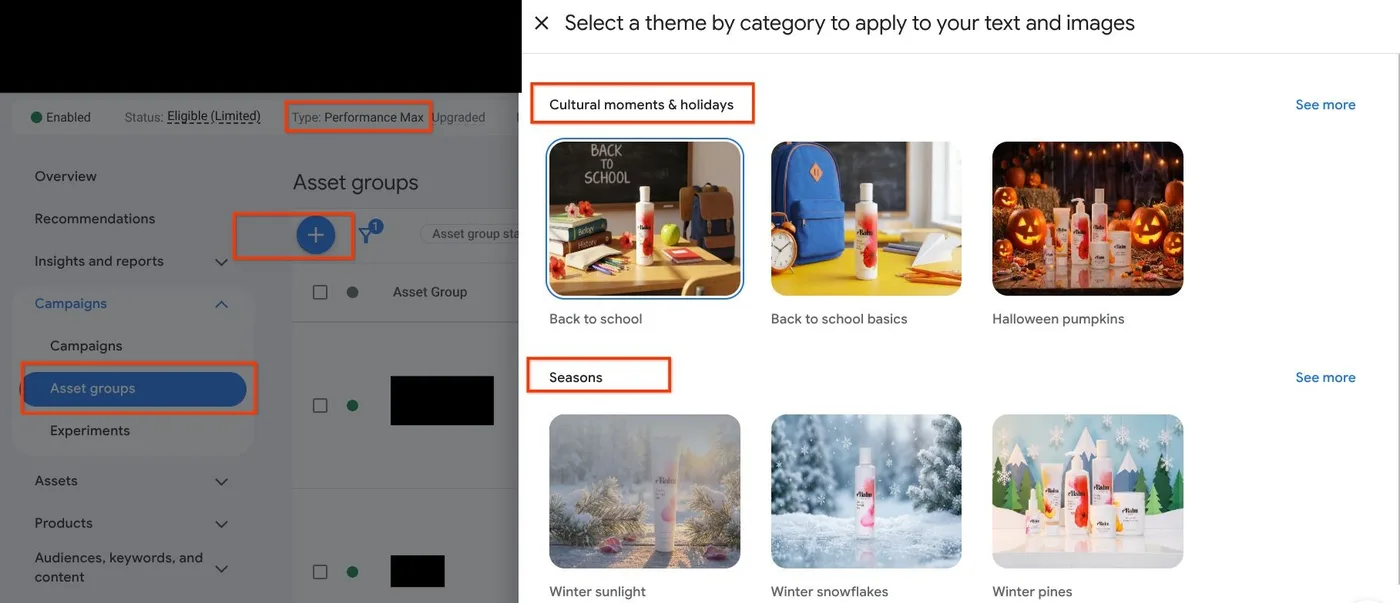
Bia Camargo has shown Performance Max asset A/B testing appearing in another account. Google documents a beta that compares two sets of assets within one Performance Max asset group and locks the assets while the test is running.
Existing beta and newer visibility
The beta is not a new Week 40 launch. PPC Land reported on 10 January that it had expanded to all Performance Max campaigns after Dario Zannon shared the documentation. Camargo’s later post demonstrates another account observation, but it does not independently confirm that every campaign or account can use the feature now. Eligibility should still be checked directly.
The phrase “all Performance Max campaigns” belongs to PPC Land’s January report. It should not be converted into an unsupported claim of universal present access, particularly while Google describes the workflow as a beta.
What the comparison can isolate
The format compares two defined asset sets within one asset group. This is more controlled than reading a before-and-after movement when creative changes alongside budgets, audience signals, feeds or seasonality. Because assets are locked during the test, teams need to settle approvals and final files before starting.
Editorial suggestion: use the test to answer one creative question. For example, compare two coherent asset sets that differ principally in how the product is demonstrated, while keeping the commercial proposition and other campaign settings stable. Write the hypothesis and success measure before launch. If several meaningful creative ideas change together, the result may identify a winning set without revealing which element caused the difference.
Reading the result
Check whether the available reporting and test duration are adequate for the chosen business outcome. A statistically or operationally favoured set may still be unsuitable if it weakens brand compliance, margin quality or lead value. Conversely, a neutral result does not prove that the assets are equivalent in every context.
Record changes outside the experiment, including promotions, feed updates and budget adjustments. The control is valuable only to the extent that the treatment remains interpretable. Treat the account sighting as a prompt to check access, not as evidence of a new universal release.
Why it matters for advertisers
Creative changes in Performance Max are difficult to assess from ordinary trend lines. A structured comparison may provide a more credible test when the beta is available, although it cannot answer several creative questions at once.
What to check next
- Check whether asset A/B testing is available for the intended Performance Max asset group.
- Write one hypothesis, success measure and principal creative difference before starting.
- Complete approvals and record external campaign changes because tested assets are locked during the run.
Sources & contributor credit
- Original sourceGoogle Ads Help
Source cited in the published Week 40 newsletter. Article observation/reporting date is shown separately; this page’s original publication date is not inferred.
- Reporting or practitioner sourcePPC Land (10 January)
Source cited in the published Week 40 newsletter. Article observation/reporting date is shown separately; this page’s original publication date is not inferred.
- Reporting or practitioner sourceBia Camargo on LinkedIn
Source cited in the published Week 40 newsletter. Article observation/reporting date is shown separately; this page’s original publication date is not inferred.
- Newsletter coverage · Paid Media Collective Week 40
Published edition used for story selection, copy, source credits and media; curation is distinct from original authorship.

Original creator unverified
Contributor roles follow the published newsletter and its linked evidence. Reporting, official discussion and visual authorship are kept separate; no independently unverified first-reporting priority is awarded.
Attribution evidence and limitations
Published story and credit line reconciled with the expanded article.
Original post, primary documentation and secondary reporting links retained.
Visible image content inspected for story relevance; image credit retained separately from reporting credit.
Attribution checked . This is a review date, not the original publication date.
- Published on this site
- Article updated
This update reflects the dated source reporting. Availability may have changed. Further coverage of this same development will be added to this page.