Google Ads · Status at source date: Newsletter archive
A help page formalises Text Disclaimers in Search ads
Google published a help page for the Text Disclaimers asset, documenting the compliance feature first covered in Week 25. For you, this means official guidance now exists for regulated-industry disclaimers, so align existing setups with the documented behaviour.

What changed
Google’s Text Disclaimer asset places disclosure wording in responsive Search ads. This archive entry concerns the publication of help guidance, rather than the first launch of disclaimer assets. The original newsletter note remains available below.
What the documentation explains
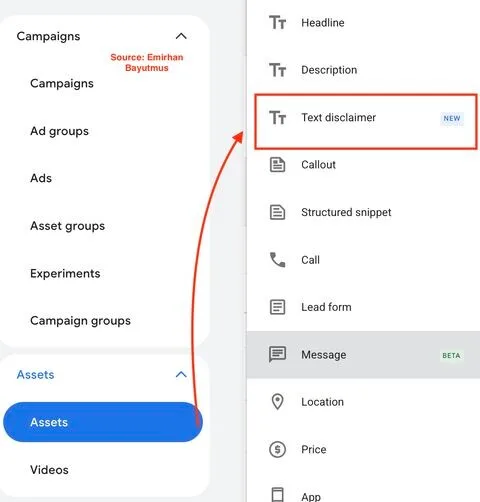
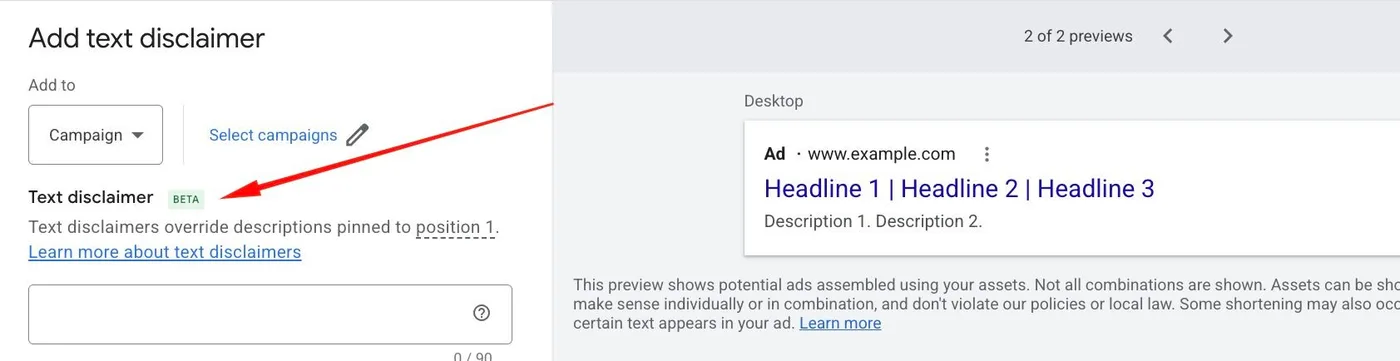
Google’s current help page describes a 90-character campaign asset, added after campaign creation through Assets. It is compatible with AI Max. An approved disclaimer occupies the first eligible description position and overrides text pinned to description position one. Asset reporting provides impression data.
There are important exceptions to the display promise: text can be truncated in rare language or accessibility situations, and a disapproved disclaimer does not necessarily stop the ad. Other description text can serve instead. Removing the disclaimer also restores the normal description behaviour.
Practical implications
Treat the disclosure and the rest of the ad as one reviewed message. A team that pins a promotion in description position one should assess the resulting copy when a disclaimer takes that position. Otherwise, the approved creative and the live message could communicate different things even though both assets remain in the account.
For example, record which campaigns need the disclosure, who owns the wording and how the asset’s approval status will be checked. Include that status in launch reviews and subsequent copy changes. A successful save in the interface is a different event from approval and delivery. If the disclosure is essential to an offer, the team needs a response procedure for disapproval rather than assuming the whole ad will automatically stop.
This is an operational reading of Google’s documented behaviour. It is not a determination that a particular disclosure satisfies a legal requirement. Check the current help page and actual asset status when applying this older archive item to a campaign.
Source and credit
Hannah Gillespie is the first contributor identified in the reviewed reporting: PPC News Feed explicitly credits her with sharing the help page, and Search Engine Land corroborates that credit. Her original individual post has not been recovered, so its exact date and wider first-reporting priority remain unresolved. PPC News Feed remains supporting coverage. The newsletter’s 3 August date is retained separately from the report dated 1 August.
Sources & contributor credit
- Newsletter coverage · Paid Media Collective newsletter
Original newsletter text, contributor labels and media for this update.
- Supporting coverage · PPC News Feed
Explicitly names Hannah Gillespie as the person who shared the Google help page. Reporting by PPC News Feed is retained separately from original observer credit.
- Official sourceGoogle Ads Help
Current official documentation checked 9 November 2026. Initial publication date is not shown; this does not establish the feature launch date.



Original creator unverified
Credits reflect the editor's latest changes. Original authorship has not been independently verified for this version.
Attribution evidence and limitations
Full attribution review pending.
A source link alone does not establish original authorship.
Original image and video creators have not yet been verified.
- Published on this site
- Article updated
This update reflects the dated source reporting. Availability may have changed. Further coverage of this same development will be added to this page.
Original newsletter text and archive evidence
A help page formalises Text Disclaimers in Search ads
Google published a help page for the Text Disclaimers asset, documenting the compliance feature first covered in Week 25. For you, this means official guidance now exists for regulated-industry disclaimers, so align existing setups with the documented behaviour.
Source captured . No explicit first-contributor label was provided for this update.