Google Ads API · Status at source date: Documentation or official announcement
Google Ads API v26.2 adds Demand Gen seasonality adjustments and overlay text, and Demand Gen display targeting changes in the API from 1 December
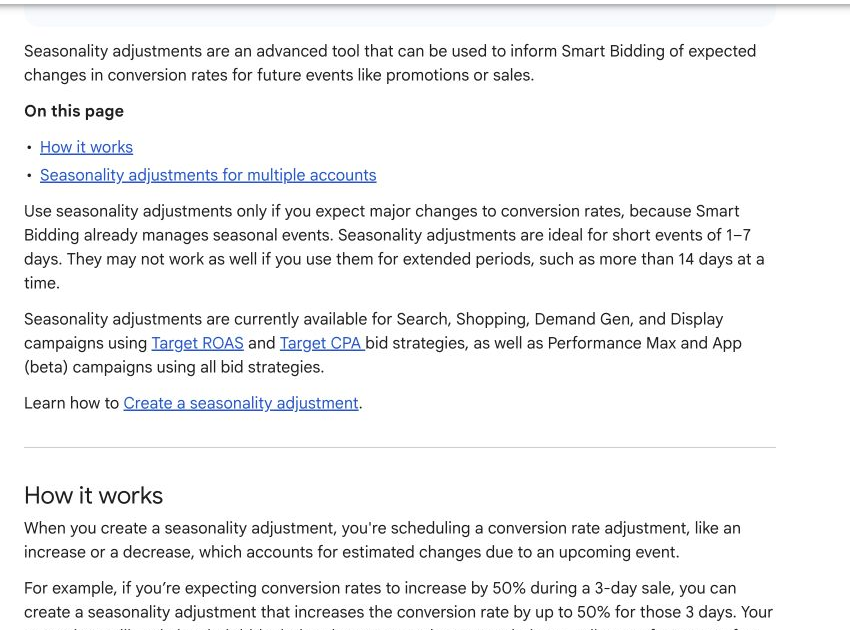
Version 26.2, released on 11 November, adds a beta BiddingSeasonalityAdjustment for Demand Gen campaigns, an OVERLAY_TEXT_ON_VIDEOS asset automation that defaults on for Demand Gen video ads created in v26, customer-level unique reach metrics, and two multi-party approval error codes.

What changed
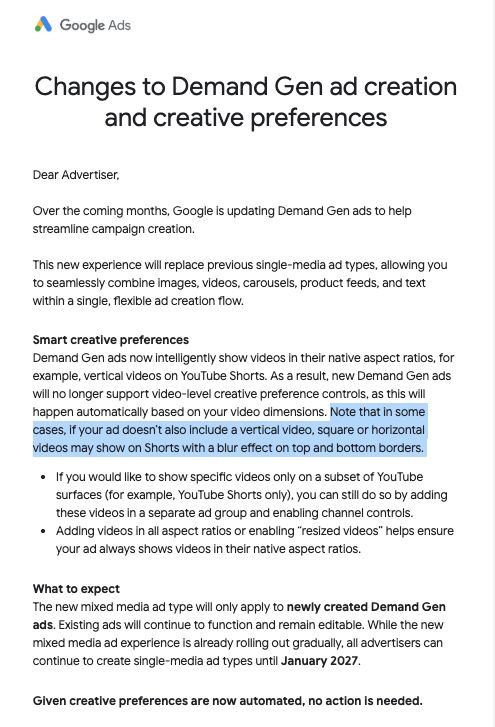
Separately, from the week of 1 December new Demand Gen campaigns can no longer set target_content_network to false; Display is controlled only through ad-group channel controls, existing settings are backfilled and display-only ad groups are paused, with Google saying serving does not change. The developer blog has also moved to developers.google.com/ads/blog. For you, this means tools that create Demand Gen campaigns need the channel-controls path before December, so audit integrations with the GAQL query Google provides.
API teams should separate the new v26.2 capabilities from the scheduled change to Demand Gen display targeting. A version release can add fields that an integration may choose to use, while a targeting behaviour change can affect existing assumptions. Combining them into a single upgrade ticket risks overlooking the date-sensitive part of the work.
Inventory the API jobs that create or update Demand Gen campaigns and ad groups. Identify where display targeting is set and which layer of the configuration is treated as authoritative. Test representative requests against the current documentation before the 1 December change, and inspect the resulting settings rather than relying only on a successful response.
Seasonality adjustments and overlay text serve different campaign purposes. The first concerns how a planned short-term change is represented to bidding; the second concerns creative presentation. Define who can set each and review the generated configuration in the account. Access to an API field does not establish that it is appropriate for every campaign.
Keep the previous request payloads and a record of the expected result for comparison. If a validation error or unexpected targeting value appears after an update, that history makes it easier to distinguish a client-library issue from a change in account settings. The developer-blog move is a reference-maintenance task: update saved links and monitoring subscriptions so future release notices reach the team responsible for the integration.
Why it matters for advertisers
Version 26.2, released on 11 November, adds a beta BiddingSeasonalityAdjustment for Demand Gen campaigns, an OVERLAY_TEXT_ON_VIDEOS asset automation that defaults on for Demand Gen video ads created in v26, customer-level unique reach metrics, and two multi-party approval error codes.
Sources & contributor credit
- Original source · Google Ads API release notes
Source retained from the reviewed final Week 46 edition.
- Supporting sourceGoogle Ads Developer Blog ; Demand Gen display targeting
Source retained from the reviewed final Week 46 edition.
- Supporting sourceGoogle Ads Developer Blog ; new home
Source retained from the reviewed final Week 46 edition.


Original creator unverified
Credits reflect the editor's latest changes. Original authorship has not been independently verified for this version.
Attribution evidence and limitations
Full attribution review pending.
A source link alone does not establish original authorship.
Original image and video creators have not yet been verified.
- Published on this site
- Article updated
This update reflects the dated source reporting. Availability may have changed. Further coverage of this same development will be added to this page.