Google Ads · Status at source date: Newsletter archive
Google Ads experiments add auto-apply setting, enabled by default
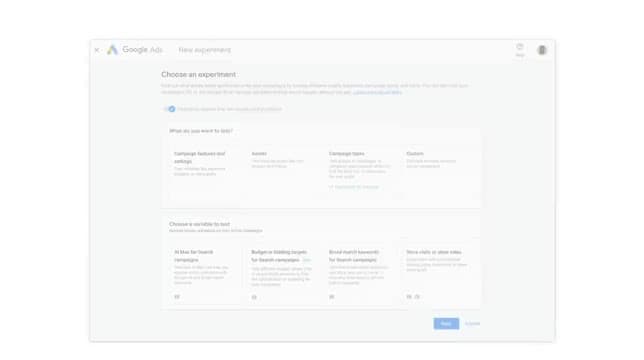
Bob Meijer has flagged that Google Ads experiments now include an auto-apply setting: enabled by default: that automatically applies experiment results to live campaigns. The setting offers configurable confidence thresholds: directional results (default), or statistical significance at 80%, 85%, or 95%.

What changed
A guard rail prevents auto-application if any chosen success metric performs significantly worse in the treatment arm. Meijer notes that with a two-metric cap on success metrics, auto-apply may optimise for those metrics while allowing others to deteriorate undetected.
Why it matters for advertisers
For you, this means checking your experiment settings immediately: if auto-apply is active on any running experiment, switching to manual review is advisable until you have reviewed the full data picture across all metrics.
Perspective from the original PMC newsletter.Sources & contributor credit
- Newsletter coverage · Paid Media Collective newsletter
Original newsletter text, contributor labels and media for this update.
- Source referenced in newsletterLinkedIn
Linked from the original newsletter. The source publication date has not been independently confirmed.

Original creator unverified
The names below are source credits. The original creator and first-reporting priority have not yet been independently verified.
Attribution evidence and limitations
Full attribution review pending.
A source link alone does not establish original authorship.
Original image and video creators have not yet been verified.
- Published on this site
This update reflects the dated source reporting. Availability may have changed. Further coverage of this same development will be added to this page.
Original newsletter text and archive evidence
Google Ads experiments add auto-apply setting, enabled by default
Bob Meijer has flagged that Google Ads experiments now include an auto-apply setting: enabled by default: that automatically applies experiment results to live campaigns. The setting offers configurable confidence thresholds: directional results (default), or statistical significance at 80%, 85%, or 95%. A guard rail prevents auto-application if any chosen success metric performs significantly worse in the treatment arm. Meijer notes that with a two-metric cap on success metrics, auto-apply may optimise for those metrics while allowing others to deteriorate undetected.
For you, this means checking your experiment settings immediately: if auto-apply is active on any running experiment, switching to manual review is advisable until you have reviewed the full data picture across all metrics.
Source captured . No explicit first-contributor label was provided for this update.