Google Ads · Status at source date: Newsletter archive
Google Ads synthetic keywords spotted in the wild for AI Max campaigns
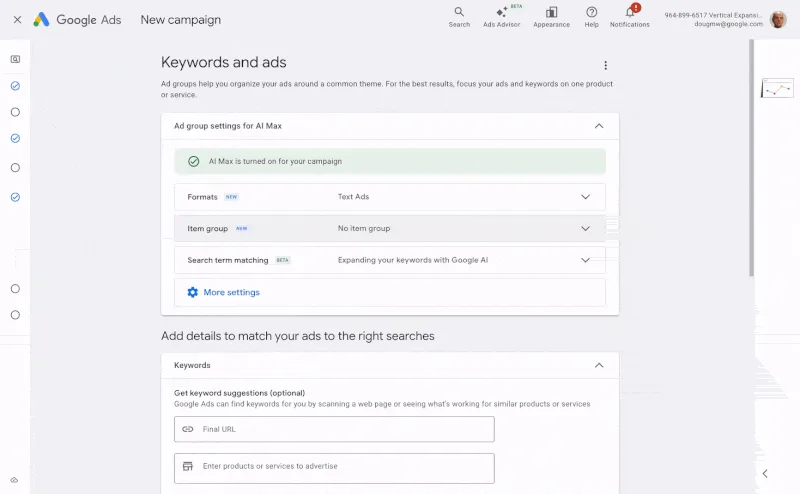
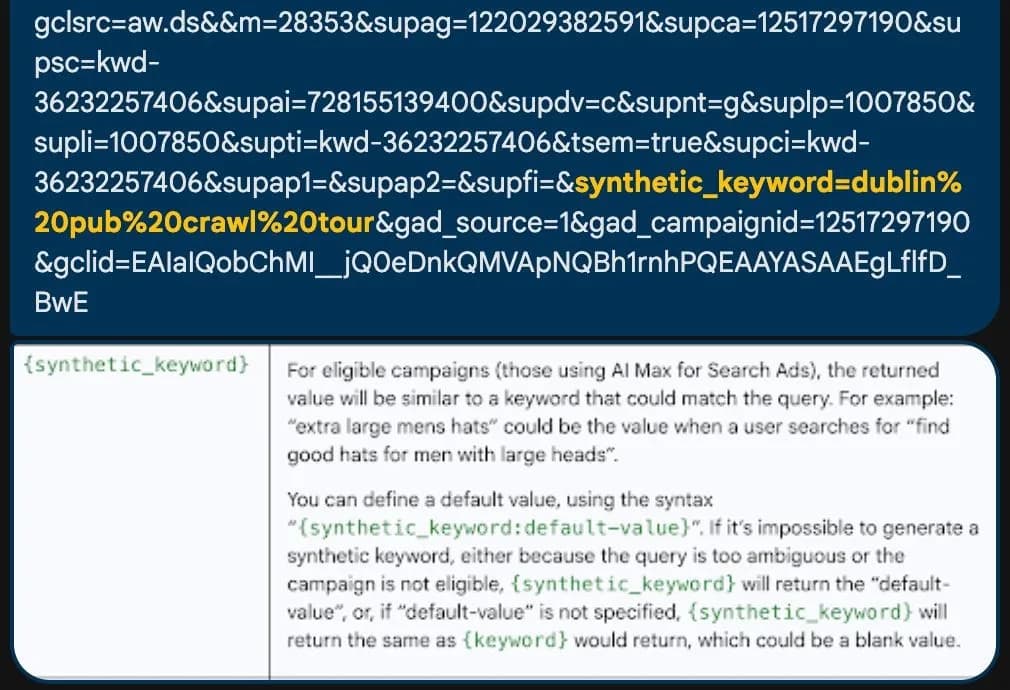
Google Ads is testing "synthetic keywords," a feature that condenses long search queries into shorter phrases for reporting. Currently available for AI Max only, the feature addresses two problems: cluttered search term reports from lengthy AI-generated queries and hidden search terms due to privacy thresholds.
What changed
Google has removed the documentation from its support page, and the feature appears not to be fully functional yet.
Why it matters for advertisers
For you, this means a potential solution to understanding search intent in complex queries, though implementation remains unclear.
Perspective from the original PMC newsletter.Sources & contributor credit
- Newsletter coverage · Paid Media Collective newsletter
Original newsletter text, contributor labels and media for this update.
- Source referenced in newsletterLinkedIn
Linked from the original newsletter. The source publication date has not been independently confirmed.

Original creator unverified
The names below are source credits. The original creator and first-reporting priority have not yet been independently verified.
Attribution evidence and limitations
Full attribution review pending.
A source link alone does not establish original authorship.
Original image and video creators have not yet been verified.
- Published on this site
This update reflects the dated source reporting. Availability may have changed. Further coverage of this same development will be added to this page.
Original newsletter text and archive evidence
Google Ads synthetic keywords spotted in the wild for AI Max campaigns
Google Ads is testing "synthetic keywords," a feature that condenses long search queries into shorter phrases for reporting. Currently available for AI Max only, the feature addresses two problems: cluttered search term reports from lengthy AI-generated queries and hidden search terms due to privacy thresholds. Google has removed the documentation from its support page, and the feature appears not to be fully functional yet. For you, this means a potential solution to understanding search intent in complex queries, though implementation remains unclear.
Source captured . No explicit first-contributor label was provided for this update.