ChatGPT Ads · Status at source date: Reporting update · conflicting rollout evidence
ChatGPT Ads reporting controls expand while product-feed bulk uploads remain unresolved
OpenAI documents attribution controls for ChatGPT Ads Insights, but reported product-feed bulk uploads conflict with the current campaign quickstart.

What changed
Reporting controls are documented
OpenAI’s Ads API documentation describes selectable attribution windows and reporting time bases for Insights. These settings affect the basis on which results are counted and dated, so two systems using the same conversion name can still produce different totals. Reporting controls do not, by themselves, establish which bidding, optimisation or catalogue capabilities are available to an advertiser.
Save the selected attribution window and time basis with each export or analysis. When reconciling ChatGPT Ads results with analytics or an internal reporting system, compare definitions and event timing before treating a difference as a tracking fault. No particular setting can be recommended from the available information.
Product-feed workflow needs verification
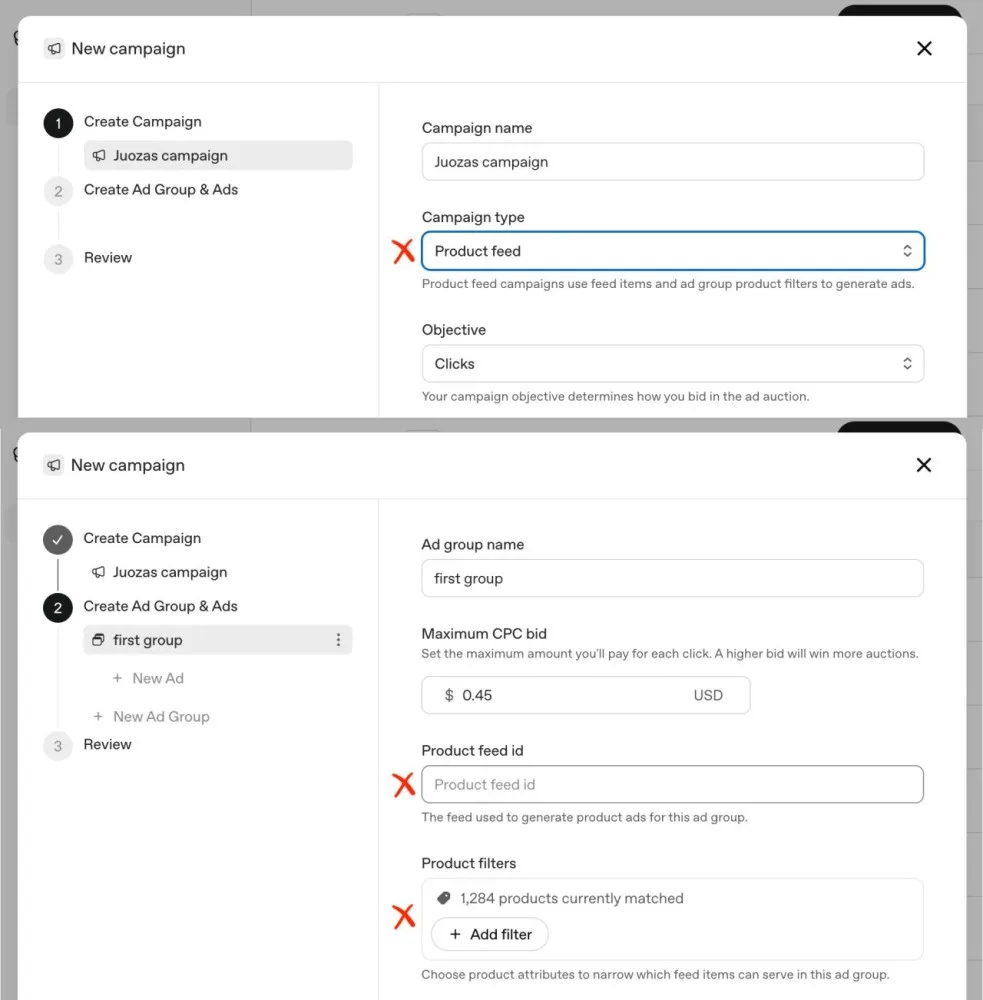
September reporting described spreadsheet creation for product-feed campaigns and product-level review status. OpenAI’s current campaign quickstart, however, explicitly says bulk upload does not support product-feed campaigns. Those accounts conflict. Product-feed bulk upload should therefore be treated as unresolved, not as an assured capability or a basis for catalogue planning.
A useful evaluation separates the two evidence streams. First, verify the current help guidance and the workflow visible in the relevant account. If an apparently eligible product-feed option is present, test it with a small non-production example where permitted and record the result, date and account context. The existence of product-level review information would not independently prove that bulk creation is supported.
For a reconciliation test, hold the conversion definition constant and compare results under explicitly recorded time and attribution settings. For a catalogue test, define success as an accepted and reviewable upload rather than simply finding a spreadsheet control. These different tests prevent a confirmed reporting feature from being used to validate a disputed campaign-creation claim.
Why it matters for advertisers
Recorded attribution choices make reporting differences easier to explain. The unresolved bulk-upload conflict is operationally separate and makes it premature to design a product-feed workflow around the reported capability.
What to check next
- Store the attribution window and reporting time basis with every ChatGPT Ads Insights export.
- Check current help guidance and the relevant account before scheduling product-feed bulk uploads.
- Test reporting reconciliation and product-feed creation as separate questions with separate acceptance criteria.
Sources & contributor credit
- Original sourceOpenAI campaign quickstart
Source cited in the published Week 40 newsletter. Article observation/reporting date is shown separately; this page’s original publication date is not inferred.
- Reporting or practitioner sourceSearch Engine Land
Source cited in the published Week 40 newsletter. Article observation/reporting date is shown separately; this page’s original publication date is not inferred.
- Reporting or practitioner sourceSearch Engine Roundtable
Source cited in the published Week 40 newsletter. Article observation/reporting date is shown separately; this page’s original publication date is not inferred.
- Original sourceOpenAI Ads API
Source cited in the published Week 40 newsletter. Article observation/reporting date is shown separately; this page’s original publication date is not inferred.
- Newsletter coverage · Paid Media Collective Week 40
Published edition used for story selection, copy, source credits and media; curation is distinct from original authorship.

Original creator unverified
Contributor roles follow the published newsletter and its linked evidence. Reporting, official discussion and visual authorship are kept separate; no independently unverified first-reporting priority is awarded.
Attribution evidence and limitations
Published story and credit line reconciled with the expanded article.
Original post, primary documentation and secondary reporting links retained.
Visible image content inspected for story relevance; image credit retained separately from reporting credit.
- OpenAI campaign quickstart
- Search Engine Land
- Search Engine Roundtable
- OpenAI Ads API
- Paid Media Collective Week 40
Attribution checked . This is a review date, not the original publication date.
- Published on this site
- Article updated
This update reflects the dated source reporting. Availability may have changed. Further coverage of this same development will be added to this page.