OpenAI · Status at source date: Newsletter archive
OpenAI expands ChatGPT product-feed ads, citing 20% shopping-intent conversations
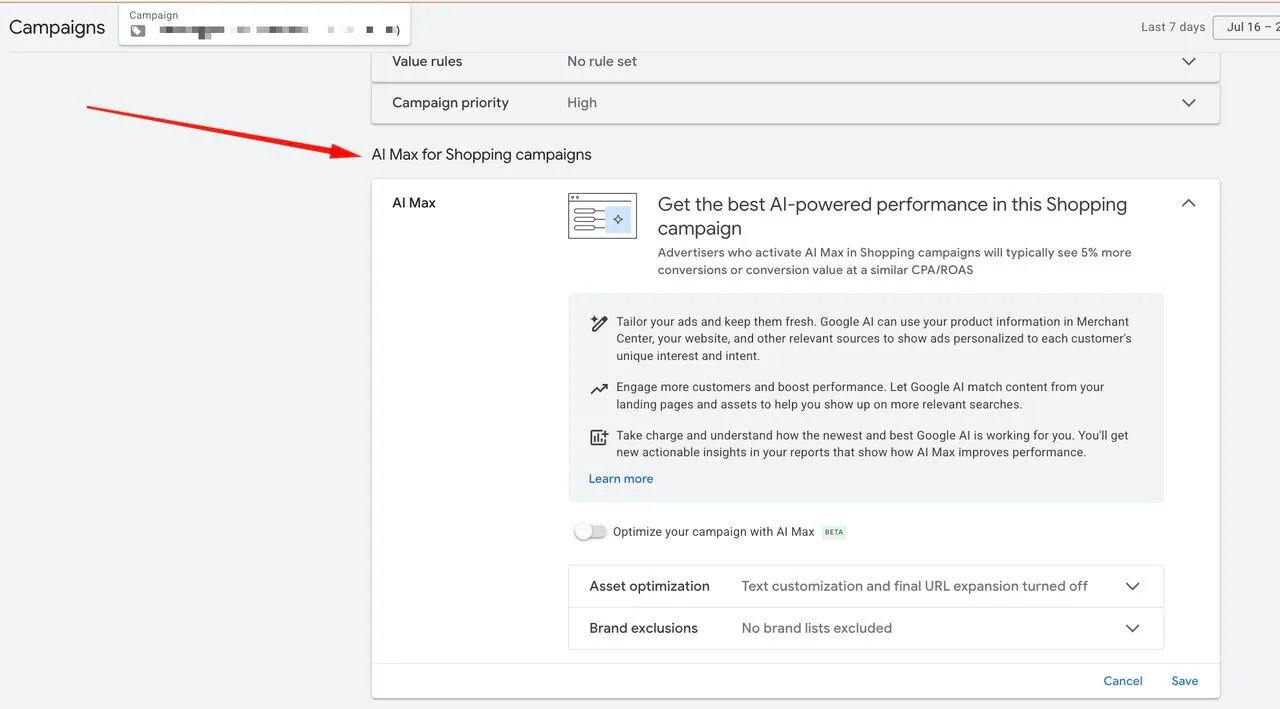
OpenAI has expanded product-feed ads in the ChatGPT Ads Manager, allowing retail advertisers to upload full product catalogues and auto-generate ads from individual items, rather than building campaigns one by one, as reported by Kat Sale, Todd Piechowski, and Juozas Kaziukėnas. OpenAI says feed-based ads have been among the strongest-performing formats in its beta, and the mechanic mirrors Google Shopping and Performance Max: the platform ingests the catalogue and builds ad units automatically rather than relying on keywords.

What changed
Feeds must contain roughly 1,000 to 2 million products, with a sample required before a full catalogue connects: a floor that excludes focused DTC brands with a handful of hero products.
Two details drew attention. Todd Piechowski highlighted fine print stating that feed products are eligible only for ads during the beta and "will not appear in organic ChatGPT conversations, though we may offer that capability in the future under separate terms": raising the prospect that organic product placement could one day become something brands buy. Separately, Juozas Kaziukėnas noted OpenAI's own data that around 20% of ChatGPT conversations now carry shopping intent, most of it product discovery, comparison, and evaluation.
Why it matters for advertisers
For you, this means ChatGPT is maturing into a scalable, feed-driven shopping channel for large catalogues, while the line between paid and organic placement starts to look negotiable. Worth preparing a clean, sizeable product feed if you qualify, and watching closely how OpenAI treats organic product surfacing.
Perspective from the original PMC newsletter.Sources & contributor credit
- Newsletter coverage · Paid Media Collective newsletter
Original newsletter text, contributor labels and media for this update.
- Source referenced in newsletterLinkedIn
Linked from the original newsletter. The source publication date has not been independently confirmed.


Original creator unverified
The names below are source credits. The original creator and first-reporting priority have not yet been independently verified.
Attribution evidence and limitations
Full attribution review pending.
A source link alone does not establish original authorship.
Original image and video creators have not yet been verified.
- Published on this site
This update reflects the dated source reporting. Availability may have changed. Further coverage of this same development will be added to this page.
Original newsletter text and archive evidence
OpenAI expands ChatGPT product-feed ads, citing 20% shopping-intent conversations
OpenAI has expanded product-feed ads in the ChatGPT Ads Manager, allowing retail advertisers to upload full product catalogues and auto-generate ads from individual items, rather than building campaigns one by one, as reported by Kat Sale, Todd Piechowski, and Juozas Kaziukėnas. OpenAI says feed-based ads have been among the strongest-performing formats in its beta, and the mechanic mirrors Google Shopping and Performance Max: the platform ingests the catalogue and builds ad units automatically rather than relying on keywords. Feeds must contain roughly 1,000 to 2 million products, with a sample required before a full catalogue connects: a floor that excludes focused DTC brands with a handful of hero products.
Two details drew attention. Todd Piechowski highlighted fine print stating that feed products are eligible only for ads during the beta and "will not appear in organic ChatGPT conversations, though we may offer that capability in the future under separate terms": raising the prospect that organic product placement could one day become something brands buy. Separately, Juozas Kaziukėnas noted OpenAI's own data that around 20% of ChatGPT conversations now carry shopping intent, most of it product discovery, comparison, and evaluation.
For you, this means ChatGPT is maturing into a scalable, feed-driven shopping channel for large catalogues, while the line between paid and organic placement starts to look negotiable. Worth preparing a clean, sizeable product feed if you qualify, and watching closely how OpenAI treats organic product surfacing.
Source captured . No explicit first-contributor label was provided for this update.