Google Ads · Status at source date: Spotted in the Wild
Google Shopping test places sponsored products in an organic-style grid
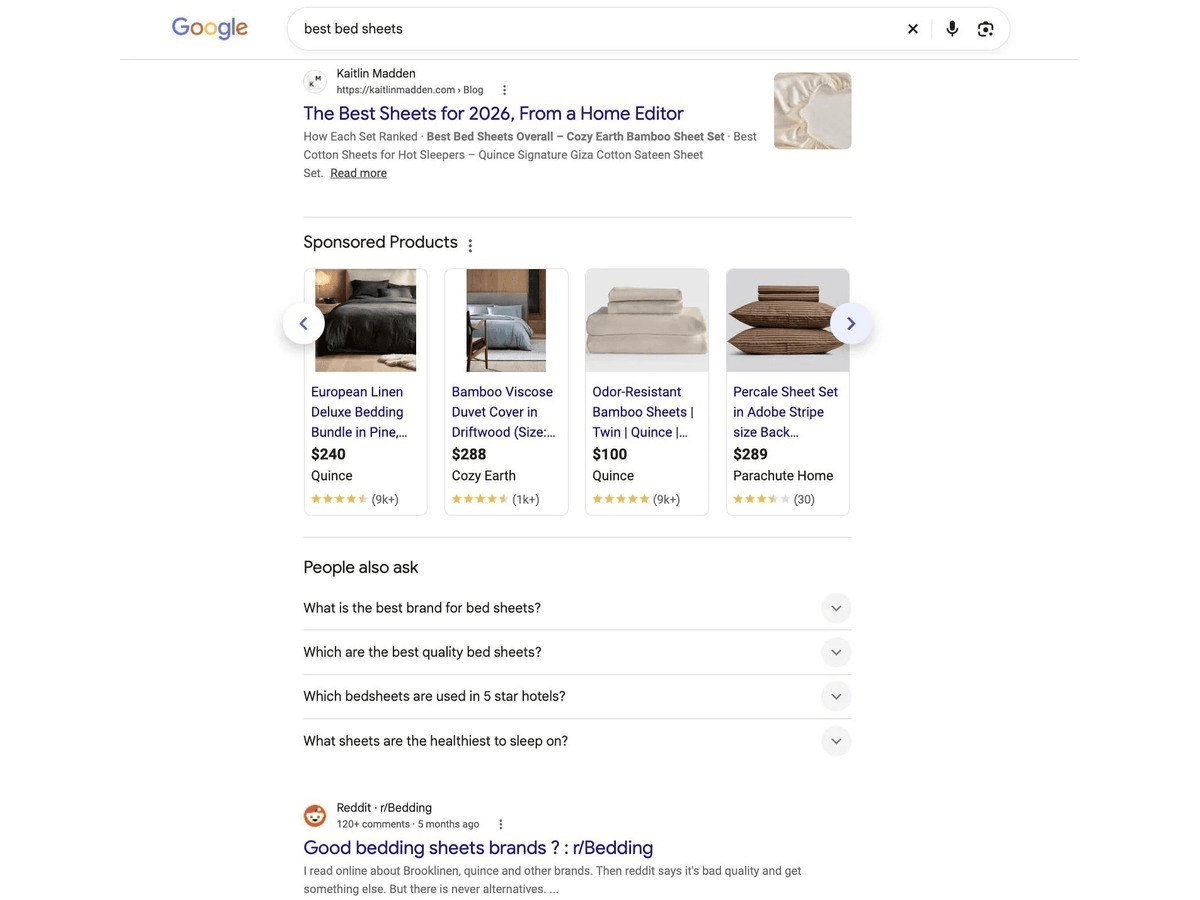
A reported Google Shopping test replaces the top carousel with a grid headed “Sponsored products”, bringing paid and free-looking presentations closer together.
What changed
Brodie Clark documented a Google Shopping test in which the top product carousel was replaced by a grid styled like organic listings under a “Sponsored products” title. Search Engine Roundtable and PPC News Feed subsequently covered his report.
Observed layout, not confirmed rollout
Clark considers the disclosure weak. That is his assessment of the observed design, not evidence that users failed to recognise the paid placement. The sources establish a reported test and the wording visible in that example. They do not establish a universal interface change, user comprehension, eligibility or a rollout plan, and no Google confirmation is identified.
The visual resemblance between sponsored and free-looking listings is relevant to measurement, but it should not be turned into a definitive claim that the formats are indistinguishable. The heading still identified the products as sponsored in the reported example.
Measurement implications
A change in click-through rate during a layout test may have several causes. Placement, query mix, product availability, prices, imagery and competitive activity can all change at the same time. Paid Shopping and free-listing traffic should therefore be separated before a movement is attributed to disclosure or design.
Editorial suggestion: create a like-for-like diagnostic using stable product and query groups. Compare paid and free-listing traffic over equivalent periods, note any observed layout and exclude products whose price, stock or promotional status changed. This will not prove that the grid caused a movement, but it can prevent an obvious traffic-source mix shift from being mistaken for creative performance.
Recording first-party sightings
If the layout appears in your own searches, retain a dated screenshot together with query, device, location and signed-in state where known. Compare only observations collected under reasonably similar conditions. Search results can vary, so an isolated screenshot is useful evidence of an appearance, not its frequency.
Continue reviewing product titles, images and prices for clarity across both paid and free contexts. That is a durable merchandising check and does not depend on the reported test becoming generally available.
Why it matters for advertisers
A more organic-looking paid grid could affect how advertisers interpret traffic changes and how shoppers encounter product placements. Careful segmentation is needed before assigning changes to the test or its disclosure.
What to check next
- Separate paid Shopping and free-listing traffic before analysing click-through-rate movements.
- Capture dated first-party sightings with query, device and location context where known.
- Compare stable product groups and exclude price, stock or promotion changes from any layout analysis.
Sources & contributor credit
- Reporting or practitioner sourceBrodie Clark on X
Source cited in the published Week 40 newsletter. Article observation/reporting date is shown separately; this page’s original publication date is not inferred.
- Reporting or practitioner sourceSearch Engine Roundtable
Source cited in the published Week 40 newsletter. Article observation/reporting date is shown separately; this page’s original publication date is not inferred.
- Reporting or practitioner sourcePPC News Feed
Source cited in the published Week 40 newsletter. Article observation/reporting date is shown separately; this page’s original publication date is not inferred.
- Newsletter coverage · Paid Media Collective Week 40
Published edition used for story selection, copy, source credits and media; curation is distinct from original authorship.

Original creator unverified
Contributor roles follow the published newsletter and its linked evidence. Reporting, official discussion and visual authorship are kept separate; no independently unverified first-reporting priority is awarded.
Attribution evidence and limitations
Published story and credit line reconciled with the expanded article.
Original post, primary documentation and secondary reporting links retained.
Visible image content inspected for story relevance; image credit retained separately from reporting credit.
Attribution checked . This is a review date, not the original publication date.
- Published on this site
- Article updated
This update reflects the dated source reporting. Availability may have changed. Further coverage of this same development will be added to this page.