Google Merchant Center · Status at source date: Documentation
Google documents build-to-order vehicle ads in nine markets
Google documentation describes limited build-to-order vehicle-ad serving and eligibility requirements across nine named markets.
What changed
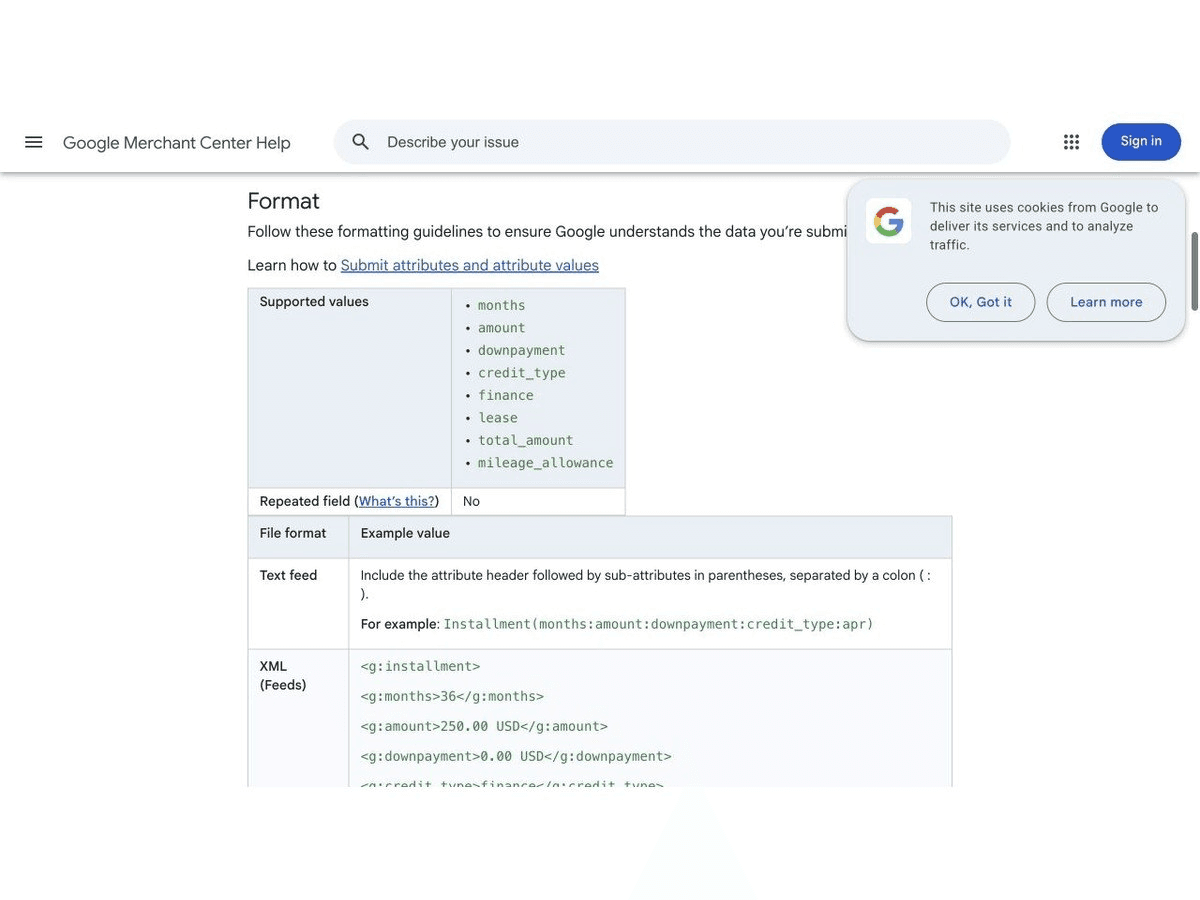
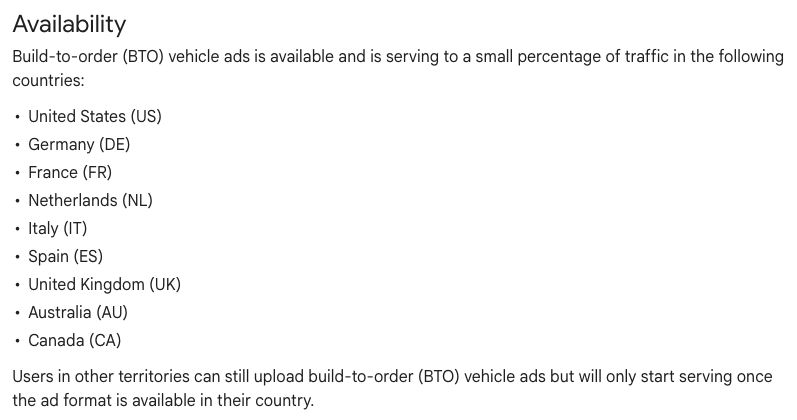
What the evidence shows: Google Merchant Center documentation describes build-to-order OEM vehicle ads as a beta requiring participation in online fulfilment. It says ads serve to a small percentage of traffic in the US, Germany, France, Netherlands, Italy, Spain, UK, Australia and Canada. The documentation describes a starting price and a route into a configurator, rather than a listing for existing dealer inventory. It specifies build_to_order availability and vehicle_fulfillment set to online, and says the starting price and base-version image must match. No document publication, revision or market-expansion date is established.
PMC advertiser perspective: this is an eligibility and feed-readiness reference, not evidence of a newly launched nine-market rollout. For automotive advertisers, the distinction between factory-configured orders and dealer-stock listings matters because the customer journey, price presentation and fulfilment promise may differ materially.
Consider a manufacturer promoting a configurable electric vehicle. A shopper may begin with a base version and starting price, then enter a configurator where colour, battery and trim choices alter the final specification. If the feed uses an image showing a higher trim while presenting the base price, the information could be misleading and may fail the documented matching requirement. Similarly, claiming online fulfilment without a journey that supports it would not align with the stated eligibility condition.
Advertisers should check whether their country, account and programme participation meet the documented conditions before planning media activity around the format. Feed owners can verify the availability value, vehicle fulfilment value, base-model image and displayed starting price against the consumer-facing configurator. Legal, product and dealer-network teams should examine how delivery timing, local inventory availability, finance disclosures and reservation language appear after the ad click. These checks are especially important where an OEM and retailers share responsibility for the buying journey.
Performance evaluation should remain conservative. Limited serving means account-level observations may be sparse and are not a basis for broad market conclusions. Compare outcomes against a defined objective such as qualified configurator starts or completed order enquiries, while keeping inventory-led vehicle campaigns separate from build-to-order analysis. This documentation sits alongside earlier coverage of the build-to-order availability attribute; it does not establish that the underlying feature was introduced this week.
Why it matters for advertisers
The documentation clarifies market scope and feed requirements for a limited vehicle-ad beta, helping OEMs judge eligibility and avoid mismatched product presentation.
What to check next
- Verify online-fulfilment participation and market eligibility with the documented requirements.
- Audit build-to-order feed values, base-version images and starting prices.
- Review the post-click configurator journey for accurate fulfilment and pricing disclosures.
Sources & contributor credit
- Official SourceGoogle
Secondary coverage date only; original publication, revision and launch dates unresolved. Google owns official documentation; original person/spotter not established.
- Discovery source · PPC News Feed
Secondary discovery; not proof of feature launch.
- Related coveragePaid Media Collective: earlier related coverage
Live article compared 17 October. Different scope: March availability attribute coverage. Retain this as a separate undated practical reference, not a launch claim.

Original creator unverified
Credits reflect the editor's latest changes. Original authorship has not been independently verified for this version.
Attribution evidence and limitations
Full attribution review pending.
A source link alone does not establish original authorship.
Original image and video creators have not yet been verified.
- Published on this site
- Article updated
This update reflects the dated source reporting. Availability may have changed. Further coverage of this same development will be added to this page.