Google Tag Manager · Status at source date: Reported customer notice
Server-side GTM IP-processing change reported for 11 January
A Google-branded notice shared by Matteo Zambon specifies 11 January 2027 for changes to server-side GTM network-signal processing. Google documents per-tag IP redaction controls, but the affected accounts and transition scope remain unconfirmed.
What changed
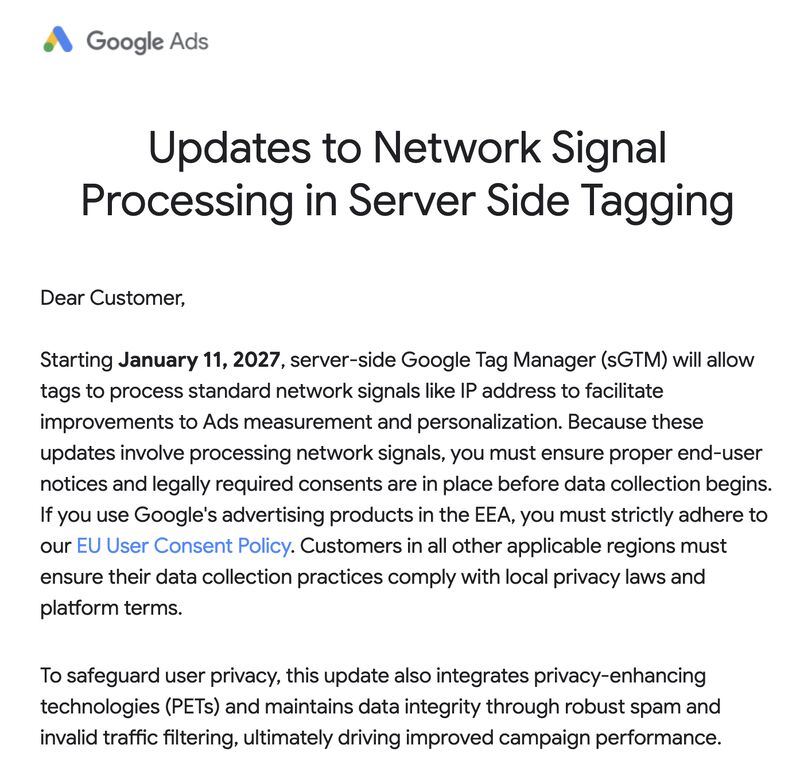
Matteo Zambon shared a Google-branded notice describing an update to network-signal processing in server-side Google Tag Manager. The image explicitly states a start date of 11 January 2027 and says tags will be able to process signals such as IP addresses for advertising measurement and personalisation. It also reminds customers about notices and required consent.
This is a reported customer notice. The visible image does not show its recipient or email headers, so it does not establish which accounts received it. Zambon dates the email to 2 November; the post is recorded here under 3 November based on its identifier, with the original absolute timestamp still unverified. The January date comes from the visible notice, not a guessed documentation revision date.
What Google’s documentation confirms
Google’s current server-side tagging help page describes using Transformations to modify an IP address before selected tags receive it. It describes an anonymisation variable and an override of the ip_override field. Google Analytics server tags already apply partial IP redaction by default. Third-party tags may read a different field, so their behaviour needs checking separately.
That documentation corroborates a way to control the data sent to tags. It does not independently establish the notice’s effective date or affected-account population. The earlier regional changes to advertising personalisation are a separate story; this report concerns the server-container workflow.
An operational review before January
Start by locating your own notice and recording the containers, destinations and responsible owners that it affects. Compare the current event fields with what each destination actually receives. Do not assume that a configuration applied to one tag automatically covers a different vendor’s template.
Any proposed change should be checked in Preview against the intended data flow before publication. A useful handover records the existing behaviour, the proposed transformation, the tags it affects and the test result. This is a technical review prompt, not a conclusion that a particular setup meets privacy obligations.
First contributor
Matteo Zambon is credited for the account report reviewed here. Google is the owner of the notice and documentation. The source screenshot is reproduced with those distinctions; no claim of first-ever discovery or universal rollout is made.
Sources & contributor credit
- Original observationMatteo Zambon
Notice image inspected: 11 January 2027 is visible. Recipient, email headers and affected-account scope are not shown. Wider first-reporting priority is unresolved.
- Official sourceGoogle Tag Manager Help
Corroborates redaction controls, not notice date or recipient scope.


Original creator unverified
Credits reflect the editor's latest changes. Original authorship has not been independently verified for this version.
Attribution evidence and limitations
Full attribution review pending.
A source link alone does not establish original authorship.
Original image and video creators have not yet been verified.
- Published on this site
- Article updated
This update reflects the dated source reporting. Availability may have changed. Further coverage of this same development will be added to this page.