Google Ads · Status at source date: Announcements
Google expands destination-not-working examples without changing enforcement
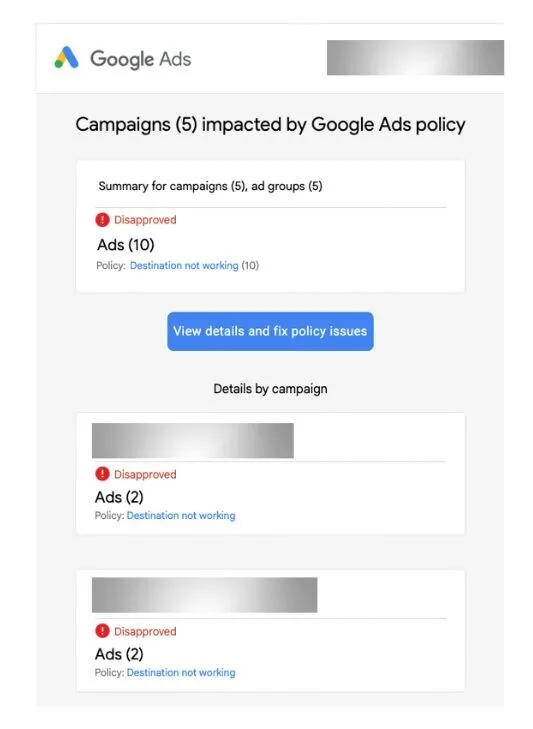
Google added examples to its destination-not-working policy while saying enforcement is unchanged, helping separate technical faults from some structural errors.
What changed
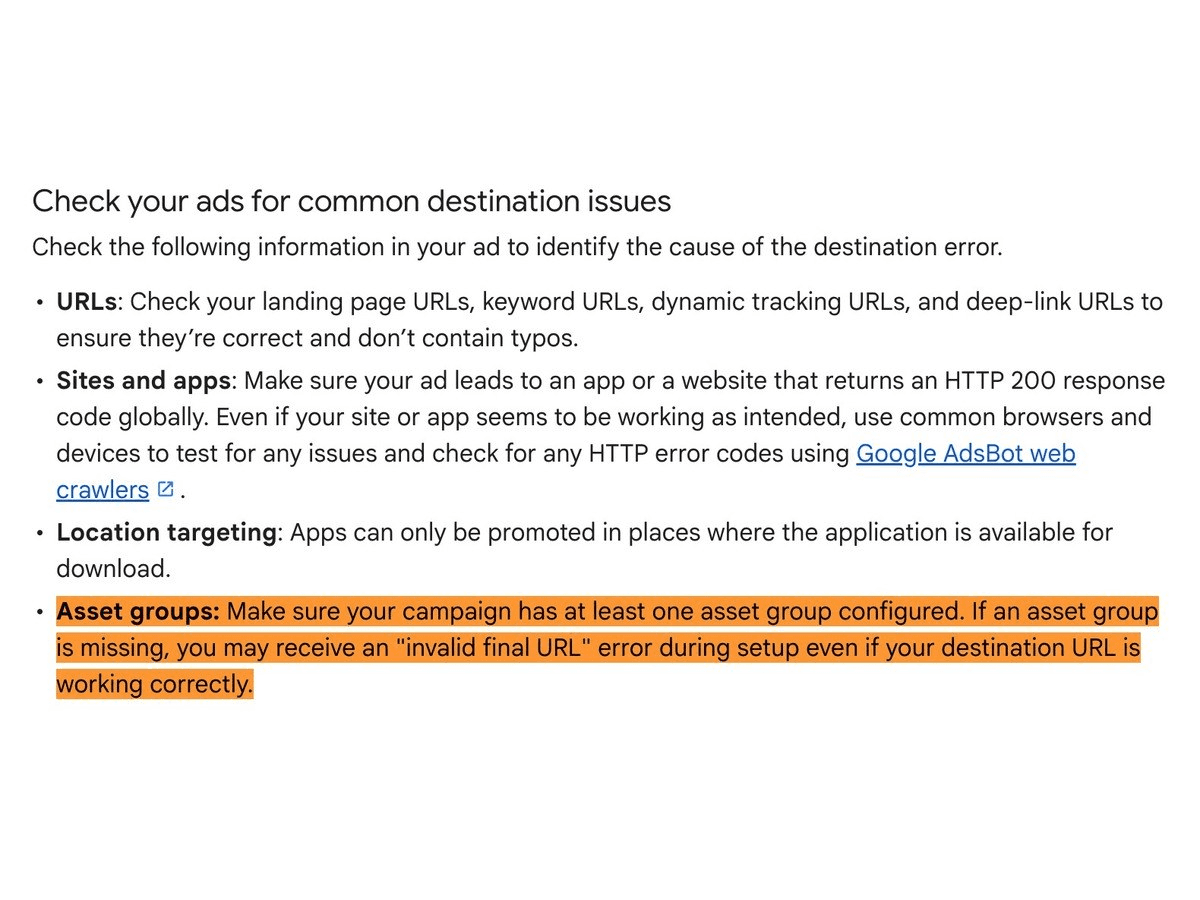
Google has added examples to its “Destination not working” policy article and says enforcement is unchanged. Search Engine Land reports covered issue types including 4xx and 5xx errors, DNS failures, redirect loops, AdsBot errors and timeouts.
More diagnostic detail, not a new standard
The added examples can make a disapproval easier to investigate, but Google says they do not introduce a new enforcement approach. A destination can fail at several layers, including server response, domain resolution, redirect handling, crawler access and page responsiveness.
The listed examples should not be treated as an exhaustive technical specification. Nor does a URL loading successfully for one user prove that AdsBot can reach it consistently under the conditions Google evaluates.
Check campaign structure as well as the page
Search Engine Roundtable also reported that a campaign without an asset group can show an “invalid final URL” error even when the URL itself works. That scenario means a browser test alone may not identify the cause. Campaign structure should be reviewed before concluding that the destination page is broken.
This reported structural case should also remain bounded. It does not show that every invalid-final-URL message is caused by a missing asset group, or that adding one will resolve unrelated DNS, response or crawler failures.
A staged investigation
Editorial suggestion: begin by preserving the exact disapproval message and affected campaign context. Reproduce the destination path, inspect response codes and redirect chains, check DNS and timeouts, then verify AdsBot access. If the page works, review whether the campaign structure is complete, including the presence of an asset group where relevant.
Change one layer at a time and record the result. Rebuilding a page before testing campaign structure can create unnecessary work, while adding structural elements will not cure an actual server failure. The goal is to isolate the failing layer before requesting review.
Keep evidence of corrections and retest the complete destination path. The clearer examples improve diagnosis, but they do not guarantee approval after a particular fix.
Why it matters for advertisers
Clearer examples can reduce unnecessary page changes and help teams distinguish server, DNS, redirect, crawler and campaign-structure issues before seeking another review.
What to check next
- Preserve the exact error, then test response codes, DNS, redirects, timeouts and AdsBot access.
- Review campaign structure, including whether a required asset group is present.
- Record each isolated fix and retest the full destination path before requesting review.
Sources & contributor credit
- Original sourceGoogle Ads Policy
Source cited in the published Week 40 newsletter. Article observation/reporting date is shown separately; this page’s original publication date is not inferred.
- Reporting or practitioner sourceSearch Engine Roundtable
Source cited in the published Week 40 newsletter. Article observation/reporting date is shown separately; this page’s original publication date is not inferred.
- Reporting or practitioner sourceSearch Engine Land
Source cited in the published Week 40 newsletter. Article observation/reporting date is shown separately; this page’s original publication date is not inferred.
- Newsletter coverage · Paid Media Collective Week 40
Published edition used for story selection, copy, source credits and media; curation is distinct from original authorship.

Original creator unverified
Contributor roles follow the published newsletter and its linked evidence. Reporting, official discussion and visual authorship are kept separate; no independently unverified first-reporting priority is awarded.
Attribution evidence and limitations
Published story and credit line reconciled with the expanded article.
Original post, primary documentation and secondary reporting links retained.
Visible image content inspected for story relevance; image credit retained separately from reporting credit.
Attribution checked . This is a review date, not the original publication date.
- Published on this site
- Article updated
This update reflects the dated source reporting. Availability may have changed. Further coverage of this same development will be added to this page.