Google Ads · Status at source date: Documentation update
Google documents possible filtering of brand queries in Performance Max
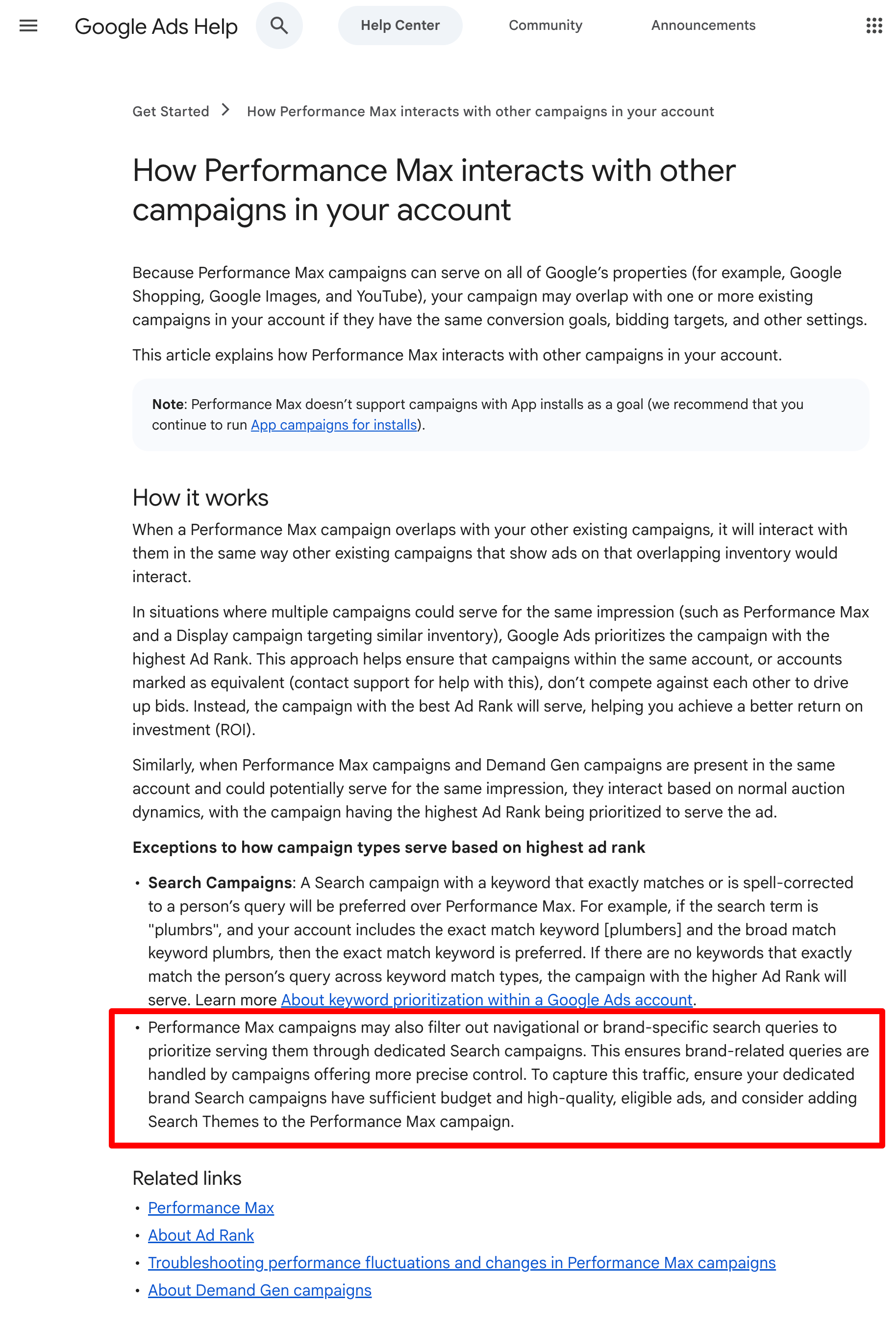
Google’s current help page says Performance Max may filter navigational or brand-related searches so that dedicated Search campaigns can serve them. This is conditional wording, rather than a promise that all branded traffic will leave Performance Max.
What changed
The paragraph appears in Google’s explanation of how campaigns in the same account interact. It sits alongside the separate prioritisation rule for Search keywords that match a query exactly or after spell correction. Those rules should not be conflated: the new wording describes possible filtering, while keyword prioritisation describes which eligible campaign is preferred in a specified situation.
Google recommends keeping dedicated brand Search campaigns adequately funded and their ads eligible. It also mentions Search Themes for Performance Max. The documentation does not give a numerical filtering threshold, a country list or a dated rollout schedule. It therefore supports a review of campaign overlap, but not a claim that Google has switched off every advertiser’s brand traffic.
For account analysis, compare brand-query coverage across Search and Performance Max over the same period. Look at eligibility, budget constraints and actual search-term evidence before attributing a traffic shift to this paragraph. A change in reported branded conversions alone cannot establish which mechanism caused it.
Hana Kobzová identified the documentation update in PPC News Feed on 2 November. Barry Schwartz subsequently showed a comparison with an earlier version. Google is the source for the current behaviour; the coverage date is not a verified engineering-release date. The accompanying image is the documentation screenshot reproduced by Search Engine Roundtable, with the source’s highlighting retained. The wording does not identify an advertiser-controlled switch.
Sources & contributor credit
- Official sourceGoogle
Coverage date; exact product launch or documentation revision date is unconfirmed.
- Supporting coveragePPC News Feed
Coverage date; exact product launch or documentation revision date is unconfirmed.
- Supporting coverageSearch Engine Roundtable
Coverage date; exact product launch or documentation revision date is unconfirmed.



Original creator unverified
Credits reflect the editor's latest changes. Original authorship has not been independently verified for this version.
Attribution evidence and limitations
Full attribution review pending.
A source link alone does not establish original authorship.
Original image and video creators have not yet been verified.
- Published on this site
- Article updated
This update reflects the dated source reporting. Availability may have changed. Further coverage of this same development will be added to this page.