Google Ads · Status at source date: Account observation and documentation
Performance Max sourced videos become an opt-out setting
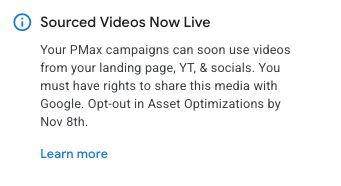
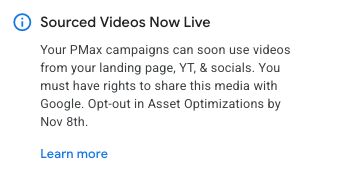
Google’s sourced-video setting is enabled by default for new Performance Max campaigns and may have been activated on some existing campaigns. It can add up to ten videos per asset group from approved landing-page, social and YouTube sources. Anthony Higman shared an account notice giving an 8 November opt-out date. Google’s help page also requires source approval and describes a staged rollout. Check both the toggle and approved URLs, especially where organic clips use music, talent or material without paid-media rights.
What changed
Week 43 follow-up: 2026-10-20
Earlier coverage and context (2026-10-20)
Anthony Higman shared a Google Ads notice saying Performance Max campaigns could soon use video from landing pages, YouTube and social accounts. The inspected screenshot tells the recipient to opt out in Asset Optimizations by 8 November and says advertisers must have the rights to share the media with Google. That deadline is evidence for the displayed notice, not a confirmed deadline for every account.
Google's sourced-video documentation explains that the setting is enabled by default for new campaigns and may have been activated on some existing campaigns. Crucially, advertisers still need to approve the source URLs. The documentation describes a phased rollout, campaign-level controls and up to ten crawled videos per asset group. It does not support saying Google can freely use any social video.
The operational issue is the difference between an existing asset library and a library cleared for advertising. A video suitable for an organic post may contain music, footage or other material that has different commercial-use conditions. A default setting is therefore a useful trigger to review approved sources and responsibility for their contents.
PMC's suggested check is to inspect the specific PMax campaign, open its asset-optimisation controls and record which source URLs have been approved. Review the actual notice in that account before relying on the 8 November date. If a source mixes commercial assets with unrelated organic content, confirm the intended permissions before leaving it available for sourcing.
Keep a record of the setting and the assets that appear afterward. That makes later creative reviews more useful than relying on memory about whether a video was uploaded manually or sourced. It also helps separate delivery changes from changes to the available creative. Higman's observation is credited as the account report reviewed here; the original post's absolute timestamp and the documentation's historical revision date remain unconfirmed. This article reports the notice and current documented behaviour, not a newly verified worldwide launch.
Sources & contributor credit
- Original reportAnthony Higman
20 October post-identifier estimate; original timestamp unconfirmed; screenshot and Google documentation checked 21 October
- Official sourceGoogle
20 October post-identifier estimate; original timestamp unconfirmed; screenshot and Google documentation checked 21 October
- Newsletter coveragePaid Media Collective
Published Week 43 edition; source for the approved credit, image and wording reconciliation.

Original creator unverified
Credits reflect the editor's latest changes. Original authorship has not been independently verified for this version.
Attribution evidence and limitations
Full attribution review pending.
A source link alone does not establish original authorship.
Original image and video creators have not yet been verified.
- Published on this site
- Article updated
This update reflects the dated source reporting. Availability may have changed. Further coverage of this same development will be added to this page.