Google Ads · Status at source date: Newsletter archive
Uploaded display banners now serve through Demand Gen on the Google Display Network
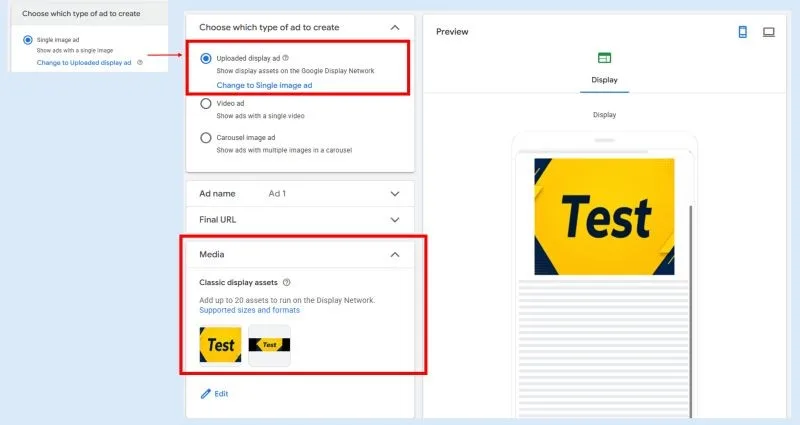
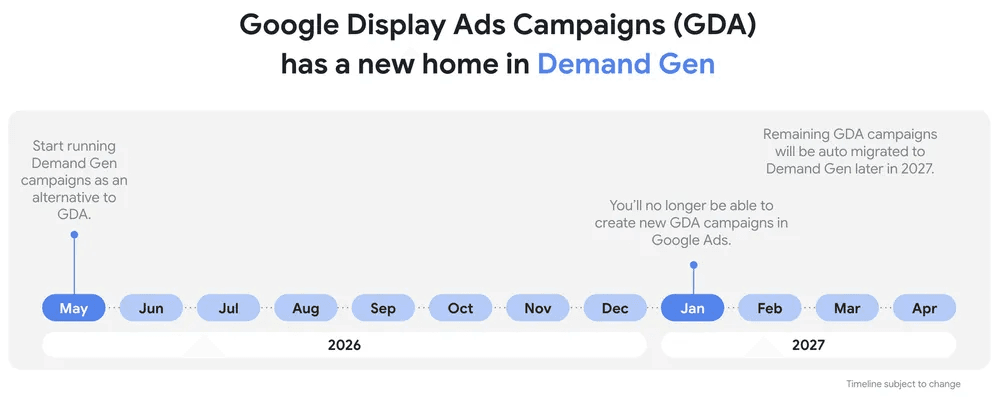
Google has extended Demand Gen campaigns to accept uploaded GIF, JPG and PNG banners directly, with the banners serving on the Google Display Network from within the same Demand Gen campaign. Thomas Eccel has flagged the rollout (with Dario Zannoni credited for the initial sighting) and frames the strategic significance: this is the latest signal of an ongoing Display-to-Demand-Gen migration, with a formal "upgrade" path no longer looking far-fetched.

What changed
The structural shift matters for brand-safety-conscious advertisers. Demand Gen's responsive image format slices and recombines uploaded assets through Google's algorithm: useful as a default for variety, but a meaningful constraint for brands whose standards require banners to run exactly as designed. The new uploaded-banner path removes that constraint: assets serve as designed, reporting shows them under the Classic display image in the asset details table, and the same campaign can carry a video, a responsive image, and an uploaded display banner side by side.
The case for Display-to-Demand-Gen migration tightens. Demand Gen already carries cross-surface reach (YouTube, Discover, Gmail) plus the Google Display Network's full inventory: and now ships with full brand control for advertisers who need it.
Why it matters for advertisers
For you, this means brands that have held off on Demand Gen pilots because of brand-safety concerns can revisit the platform using their existing display banner library. Worth setting up a Demand Gen campaign anchored on existing GDN-tested banners as the baseline, then layering responsive image and video assets to compare performance across formats inside the same campaign.
Perspective from the original PMC newsletter.Sources & contributor credit
- Newsletter coverage · Paid Media Collective newsletter
Original newsletter text, contributor labels and media for this update.
- Source referenced in newsletterLinkedIn
Linked from the original newsletter. The source publication date has not been independently confirmed.


Original creator unverified
The names below are source credits. The original creator and first-reporting priority have not yet been independently verified.
Attribution evidence and limitations
Full attribution review pending.
A source link alone does not establish original authorship.
Original image and video creators have not yet been verified.
- Published on this site
This update reflects the dated source reporting. Availability may have changed. Further coverage of this same development will be added to this page.
Original newsletter text and archive evidence
Uploaded display banners now serve through Demand Gen on the Google Display Network
Google has extended Demand Gen campaigns to accept uploaded GIF, JPG and PNG banners directly, with the banners serving on the Google Display Network from within the same Demand Gen campaign. Thomas Eccel has flagged the rollout (with Dario Zannoni credited for the initial sighting) and frames the strategic significance: this is the latest signal of an ongoing Display-to-Demand-Gen migration, with a formal "upgrade" path no longer looking far-fetched.
The structural shift matters for brand-safety-conscious advertisers. Demand Gen's responsive image format slices and recombines uploaded assets through Google's algorithm: useful as a default for variety, but a meaningful constraint for brands whose standards require banners to run exactly as designed. The new uploaded-banner path removes that constraint: assets serve as designed, reporting shows them under the Classic display image in the asset details table, and the same campaign can carry a video, a responsive image, and an uploaded display banner side by side.
The case for Display-to-Demand-Gen migration tightens. Demand Gen already carries cross-surface reach (YouTube, Discover, Gmail) plus the Google Display Network's full inventory: and now ships with full brand control for advertisers who need it.
For you, this means brands that have held off on Demand Gen pilots because of brand-safety concerns can revisit the platform using their existing display banner library. Worth setting up a Demand Gen campaign anchored on existing GDN-tested banners as the baseline, then layering responsive image and video assets to compare performance across formats inside the same campaign.
Source captured . No explicit first-contributor label was provided for this update.