Google Ads · Status at source date: Update
A new {search_term_matchtype} ValueTrack parameter separates AI Max expansions from keyword matches
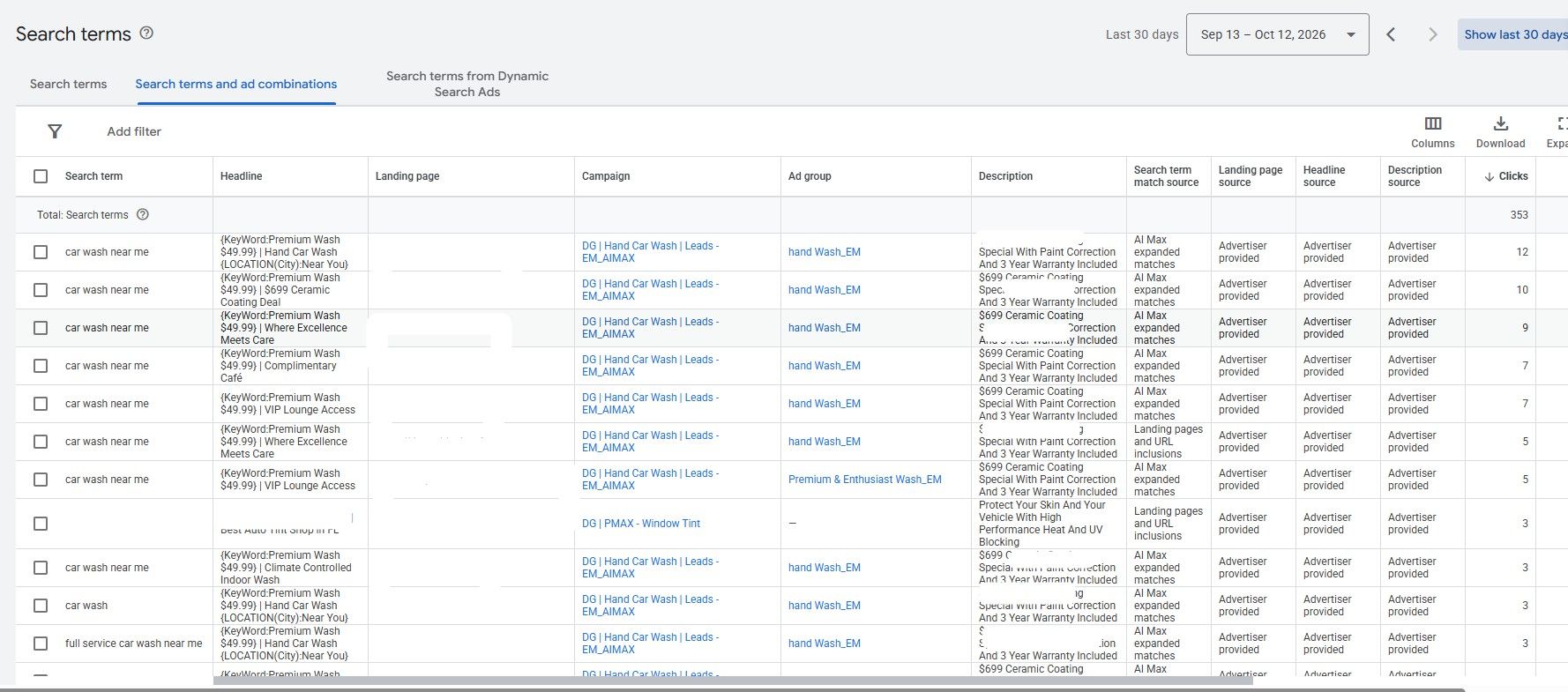
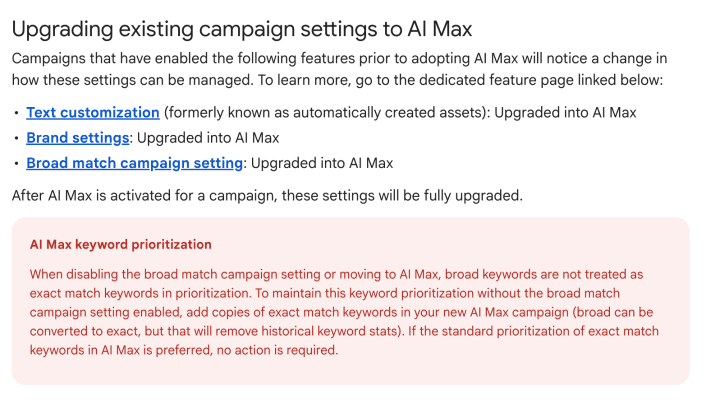
Google's ValueTrack page lists a new {search_term_matchtype} parameter that records how the search term was matched, with the values e, p and b for exact, phrase and broad and a for AI Max broad expansions and keywordless matches, so a click with {matchtype} set to e, p or b and {search_term_matchtype} set to a indicates AI Max expansion traffic; keywordless AI Max can return a in both parameters.
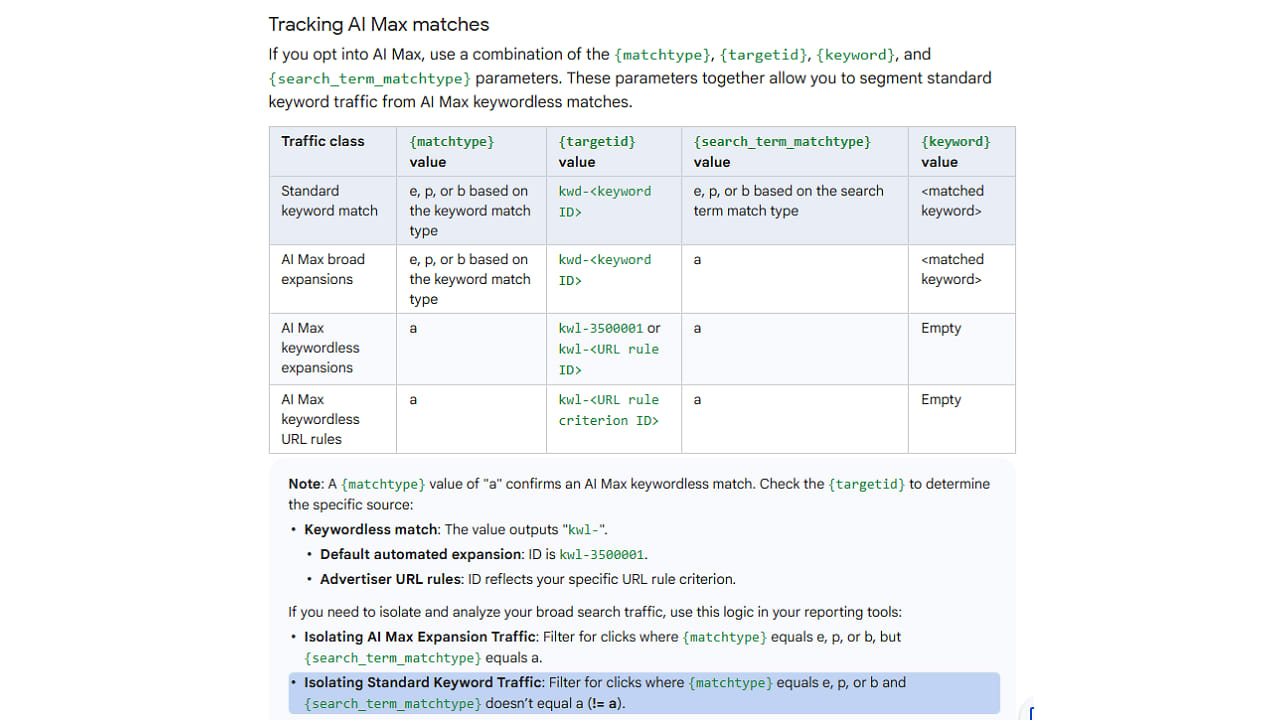
What changed
It is the URL-tracking counterpart of the reporting fields the Ads Liaison explained last week. For you, this means AI Max traffic can be split out in GA4 or your CRM without the search-terms report, so add the parameter to tracking templates before judging AI Max on blended numbers.
Separating an AI Max expansion from a keyword match can make click-level analysis easier to interpret. The parameter is a way to carry information through the tracking URL; it is not itself a new targeting rule or a new conversion measure. Its value depends on whether the destination and reporting systems capture and preserve it correctly.
Before adding it widely, review the tracking template, final URL suffix and any redirects used by the account. Check that the resulting URL remains valid and that the receiving analytics system stores the value in a usable field. A parameter that disappears during a redirect cannot support the intended comparison.
Define the reporting question before building a dashboard. For example, a team may want to compare the traffic identified as expansions with other matched traffic under the same conversion definitions. Keep differences in query intent, landing pages and campaign setup in view rather than treating the label alone as the cause of a performance difference.
Retain a test example and document how the field is interpreted in reporting. Avoid retroactively assigning a value to historical clicks that did not carry the parameter. The new visibility can improve diagnosis, but it does not establish that one match route is inherently better or that the parameter replaces the account's search-term and conversion reporting.
Sources & contributor credit
- Original sourcePPC News Feed
- Supporting sourceGoogle Ads Help



Original creator unverified
Credits reflect the editor's latest changes. Original authorship has not been independently verified for this version.
Attribution evidence and limitations
Full attribution review pending.
A source link alone does not establish original authorship.
Original image and video creators have not yet been verified.
- Published on this site
- Article updated
This update reflects the dated source reporting. Availability may have changed. Further coverage of this same development will be added to this page.