Google Ads · Status at source date: Update
Three documentation changes: URL exclusions in AI Max, a clearer page-feeds explanation and global brand entities
This week’s coverage highlighted three Google Ads help pages.
What changed
Their revision dates remain unresolved. For you, this means the rules behind AI Max landing-page selection and brand lists are now written down, so check your exclusions against them.
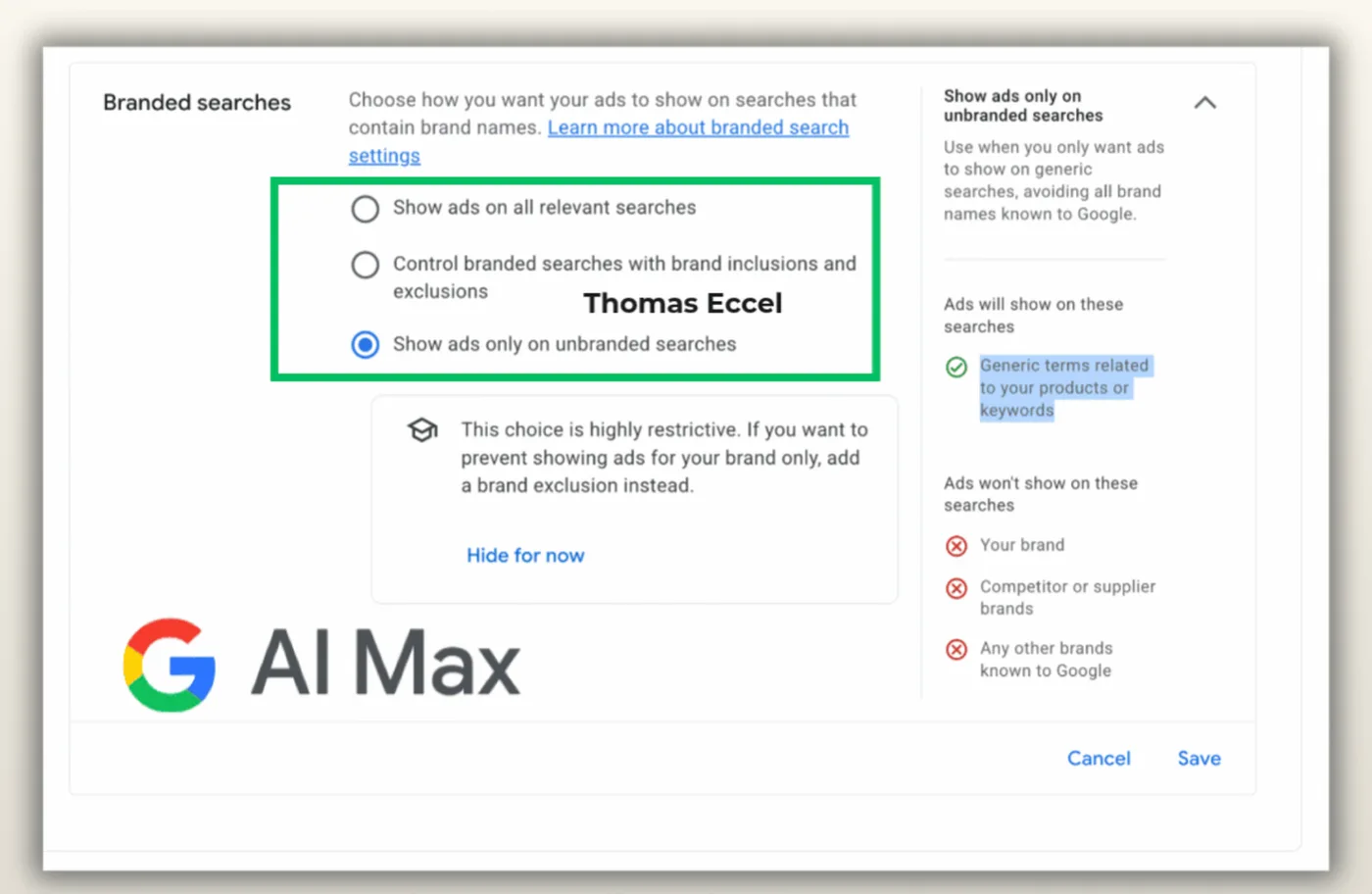
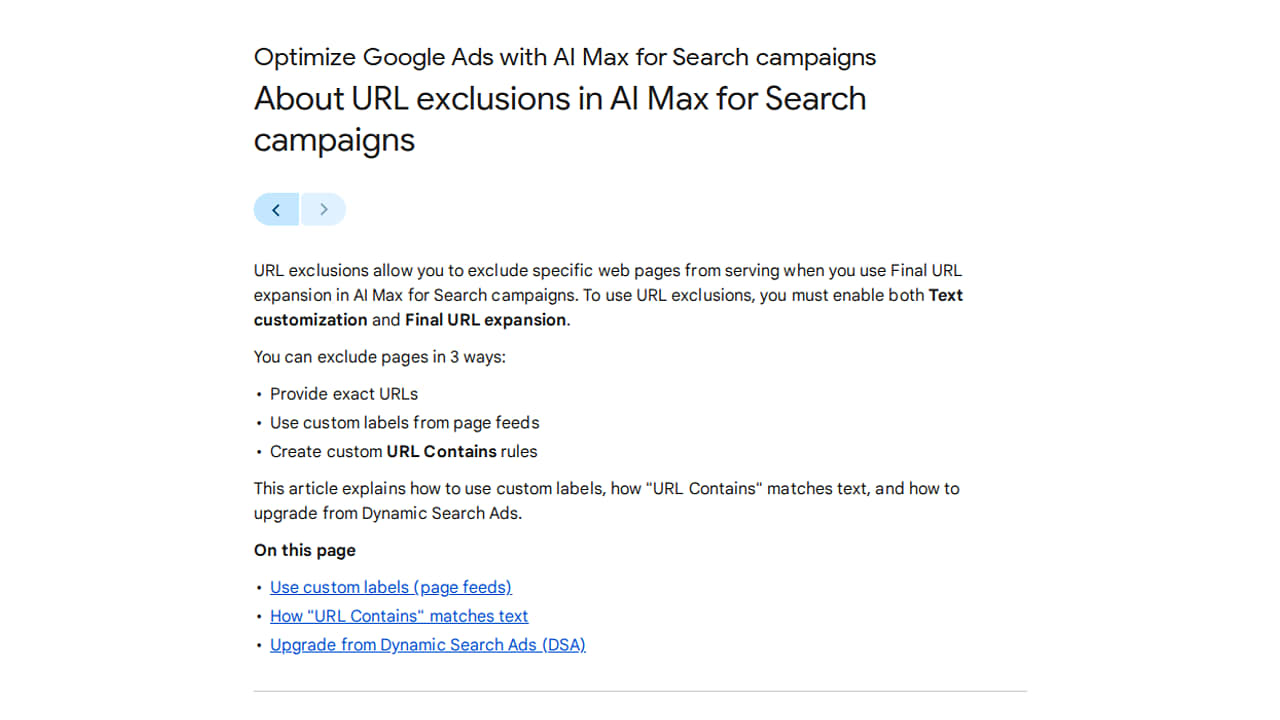
- "About URL exclusions in AI Max for Search campaigns" explains that "URL contains" rules match whole tokens, that exclusions need both Text customisation and Final URL expansion on, and that legacy dynamic-search rules become read-only after the upgrade. 15 November. Reported by: Hana Kobzová. - Performance Max page feeds now spell out that with Final URL expansion on, ads can use any URL Google knows plus the feed, and with it off, feed URLs only. Spotted by Arpan Banerjee; 10–11 November. - Brand lists use "single, global canonical brands rather than individual localized or regional variants"; if a localised brand request stays under review, add the canonical brand. 11 November.
These three documentation points address distinct controls. URL exclusions concern destinations that should not be used. Page feeds describe a set of pages supplied to the system. Global brand entities concern how a brand is represented. Their relationship should be understood without assuming that changing one automatically changes the others.
For URL exclusions, compare the documented scope with the pages the business intends to keep out of advertising. Review existing patterns and test representative destinations rather than assuming a broad rule covers every variant. Keep a record of the exclusions approved by the account owner.
For page feeds, verify what the feed is intended to influence and how it interacts with other campaign settings. A list of URLs should not be treated as a universal restriction unless the current documentation explicitly describes that behaviour. Check that the pages remain live, relevant and consistent with the offer.
For brand entities, use the platform's current definitions when reviewing brand controls across accounts or markets. Similar names do not necessarily represent the same configuration. These are documentation clarifications, not evidence of three simultaneous new launches. Update internal operating notes where the revised explanations resolve an ambiguity, while preserving uncertainty about any rollout date the sources do not establish.
Sources & contributor credit
- Original sourcePPC News Feed
- Supporting sourceSearch Engine Roundtable ; page feeds
- Supporting sourceSearch Engine Roundtable ; brand lists




Original creator unverified
Credits reflect the editor's latest changes. Original authorship has not been independently verified for this version.
Attribution evidence and limitations
Full attribution review pending.
A source link alone does not establish original authorship.
Original image and video creators have not yet been verified.
- Published on this site
- Article updated
This update reflects the dated source reporting. Availability may have changed. Further coverage of this same development will be added to this page.