INDEPENDENT MINDS. SHARED AMBITION.
PRODUCT UPDATES

AI Max news and updates

Follow AI Max developments, keyword-priority guidance and campaign controls through dated reporting and original evidence.

Industry

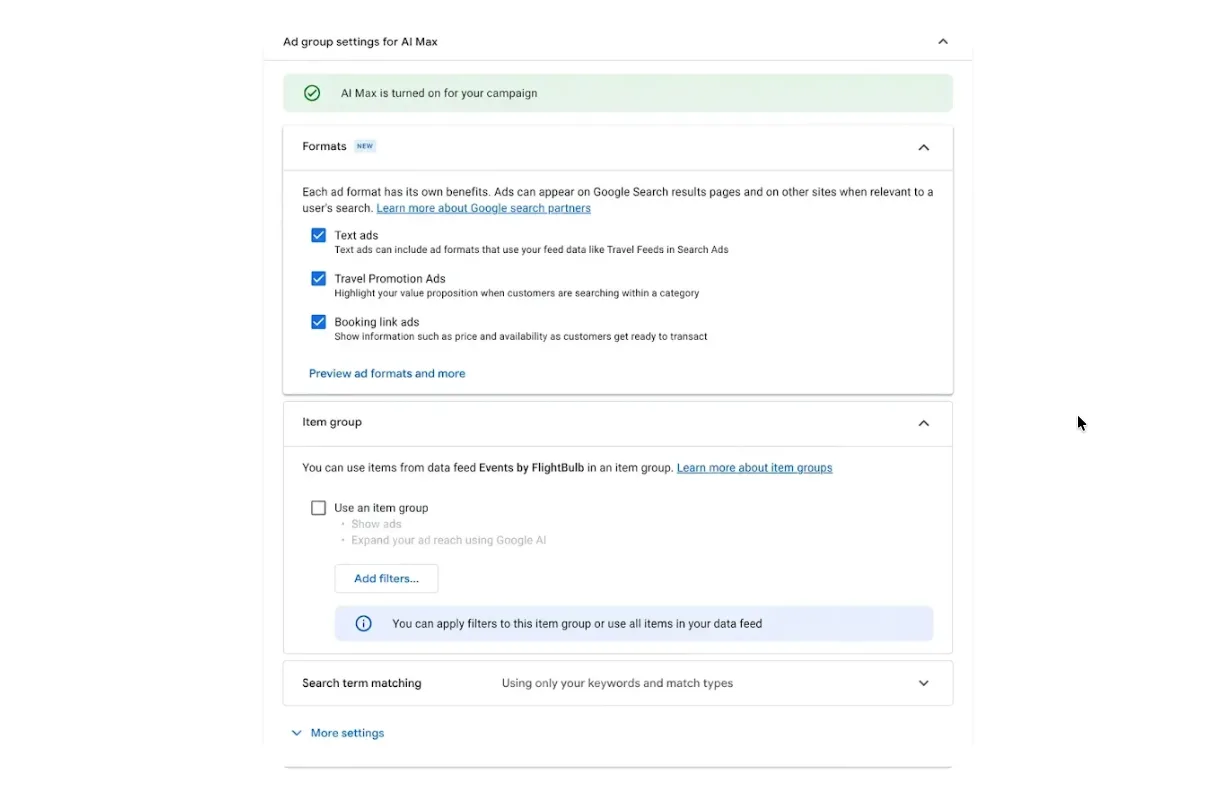
Search campaigns for travel unify travel ad formats with AI Max

Search campaigns for travel bring travel ad formats: Travel Promotion Ads, Booking Links, travel feeds: directly into the Search ecosystem with AI Max. The change consolidates what previously required multiple campaign types into a single buying door for all travel formats, with full access to AI Max's targeting and creative automation and a unified performance view across the SERP.

Industry

Demand-led budget pacing, Smart Bidding Exploration, and Campaign total budgets land in Search

Three Search-side budget and bidding upgrades land alongside the AI Max GA. Demand-led budget pacing uses Google AI to optimise spend toward consumer demand peaks: capturing more volume on high-demand days and reducing spend on slow days, while respecting daily and monthly limits.

Google Ads

Google Ads API v24.1 ships with AI Max experiments, classic display images, and passkey support

Google has released Google Ads API v24.1 on 13 May, with five practitioner-relevant additions. Mobile Device Platform segmentation lets queries segment campaign and customer reports by iOS or Android: a feature previously requiring workarounds for bid adjustments and OS-level performance analysis.

Google Ads

AI Max URL controls clarified ahead of DSA migration

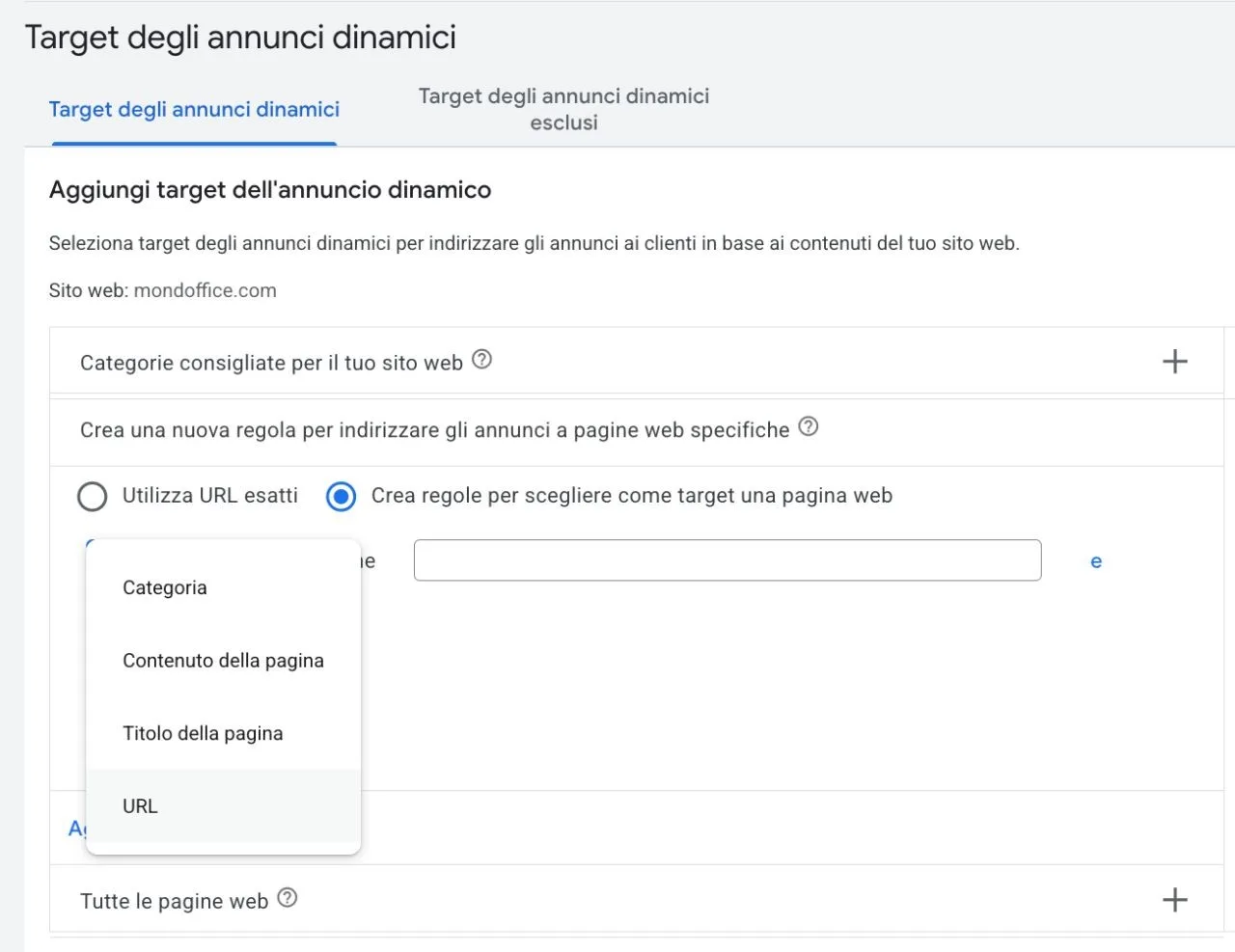
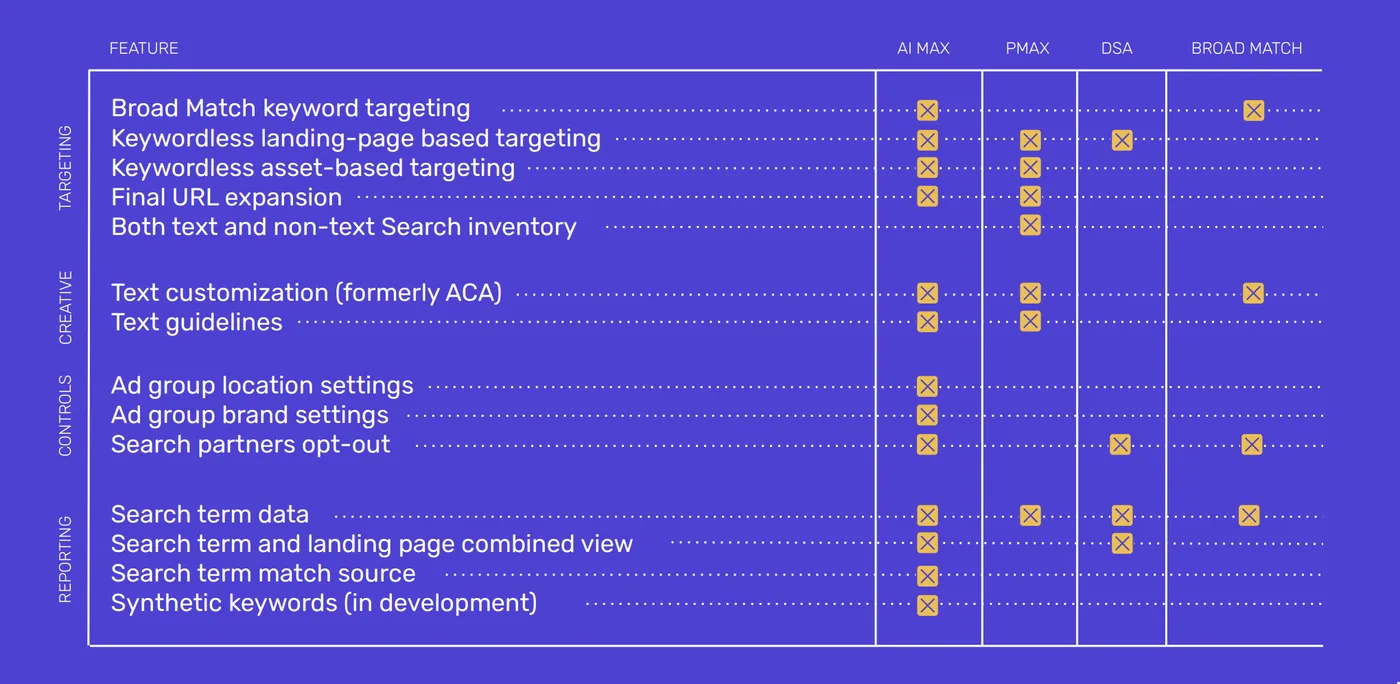
Ginny Marvin (Google Ads Product Liaison) has detailed AI Max's URL-targeting capabilities in reply to Gabriele Benedetti's question about parity with DSA campaigns. The clarification corrects the assumption that AI Max lacks landing-page targeting: AI Max does support a combination of URL rule types: URLs, custom labels in page feeds, and URL combo rules: similar to DSA.

SourceLinkedIn

Google Ads

Search campaigns for Travel consolidate fragmented travel formats into AI Max

Google has launched Search campaigns for Travel, consolidating previously fragmented travel campaign types into a single AI Max-powered workflow. Travel advertisers had been managing different campaign types across separate interfaces: Hotel campaigns, Search ads with travel-specific feeds, and other vertical-specific formats: each with their own setup, reporting and optimisation patterns.

Google Ads

AI Max introduces AI Brief and text disclaimers as the product turns one

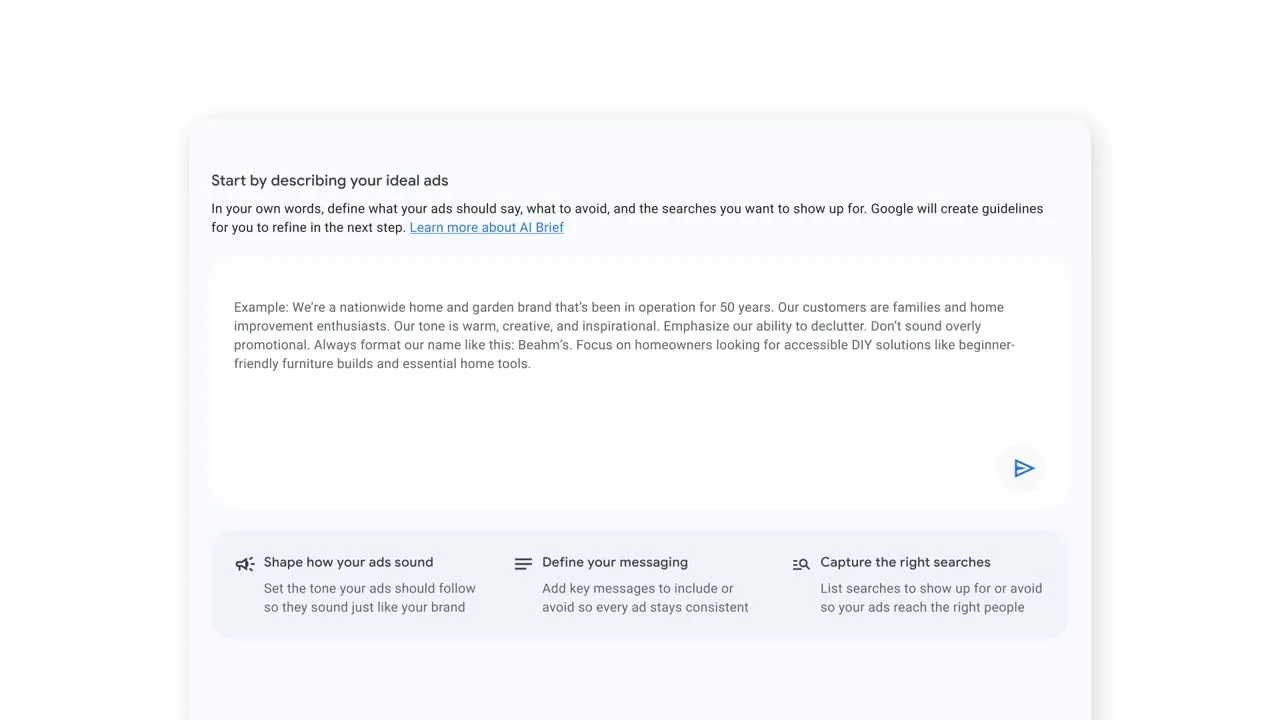
Google has marked AI Max for Search's first anniversary with two practitioner-facing additions. AI Brief is a Gemini-powered control layer that lets advertisers steer AI Max in plain English across three dimensions: Messaging Guidelines (what ads should and should not say, e.g. "never mention prices"), Matching Guidelines (which searches to capture or avoid, e.g. "prioritise searches for healthy pantry staples"), and Audience Guidelines (tailored messages for specific cohorts).

Google Ads

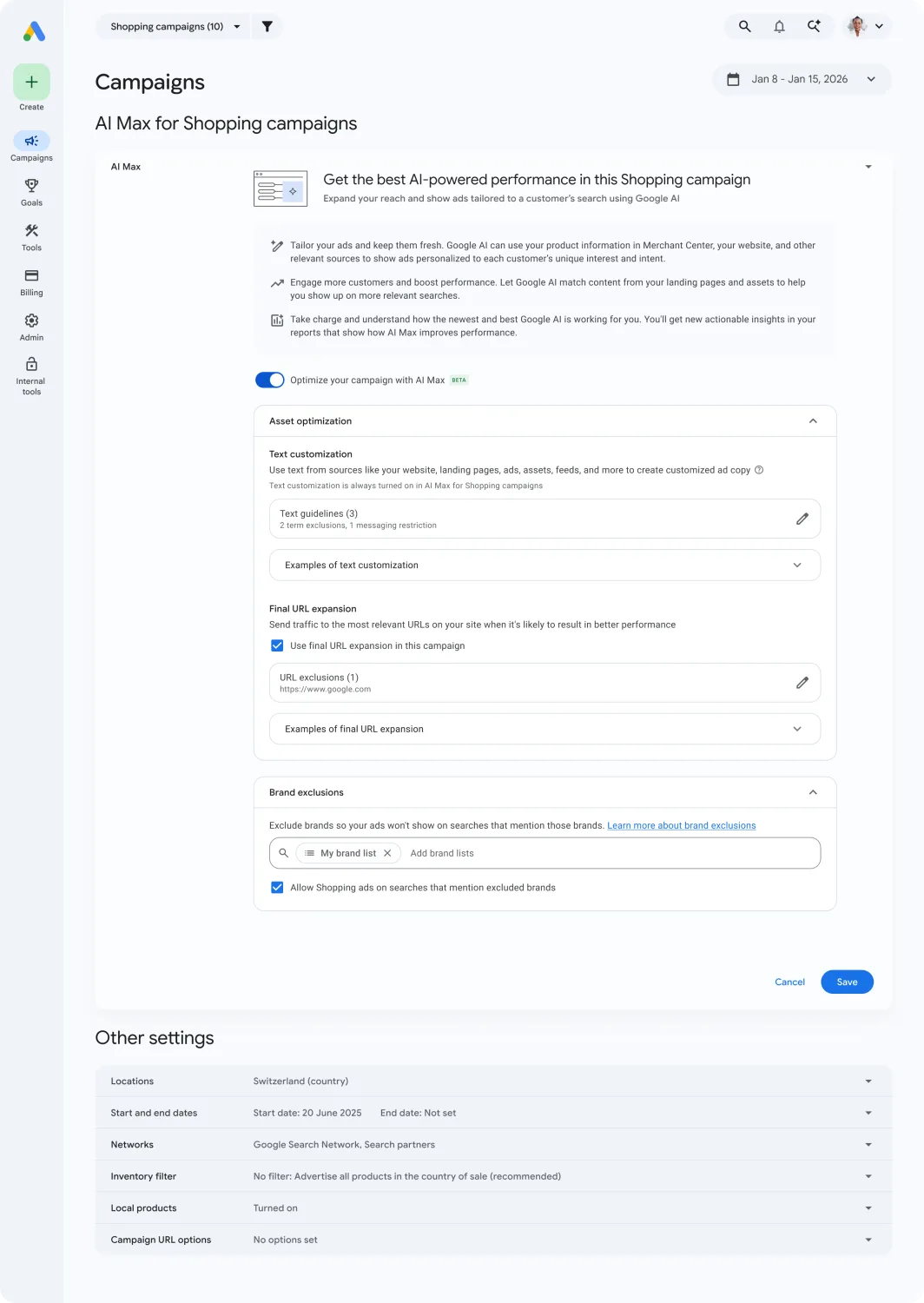
AI Max expands to Shopping campaigns to capture conversational queries

Google has launched AI Max for Shopping, extending the AI Max model from Search into the Shopping campaign type. The system uses Merchant Centre feeds to transform product data into dynamic Shopping ads that answer conversational queries: capturing the long-tail searches that standard Shopping campaigns historically miss because they fall outside literal product keyword matches.

Google Ads

Google Ads API v24 product reporting changes for upgraded Shopping campaigns

Google has detailed product reporting changes in the Google Ads API for advertisers running upgraded Shopping campaigns. The changes affect how product-level data flows through the API once Shopping campaigns are migrated into Performance Max or AI Max, and adjust the resource model for product segmentation in reporting queries.

Microsoft Advertising

Microsoft launches AI Max for Search, Offer Highlights, and Audience generation at Spring Summit

Microsoft has unveiled a major round of advertising updates at its Spring Summit, framed around what it calls the "three eras of the web": the human web ("help me find it"), the LLM web ("help me choose"), and the agentic web ("do it for me").

Google Ads

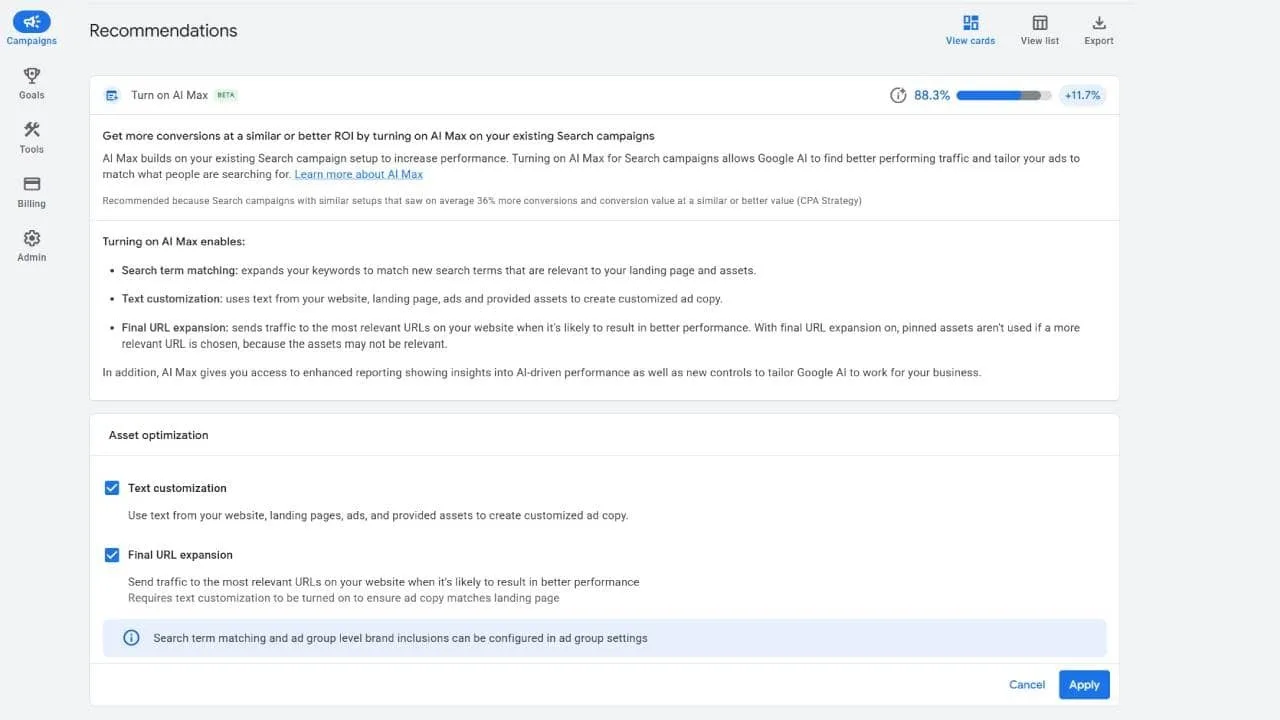
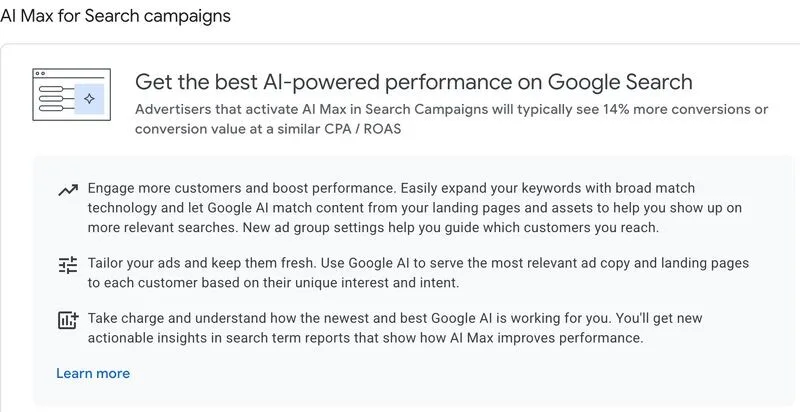
Google Ads displays a large AI Max recommendation card

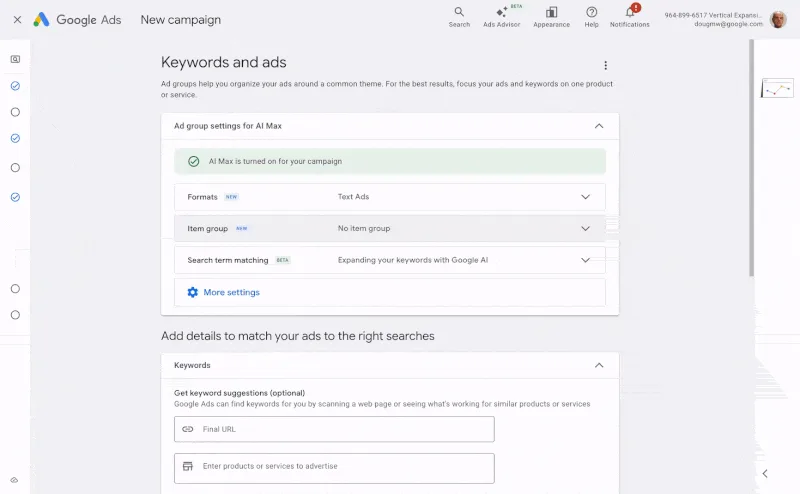
A large recommendation card promoting AI Max is now appearing in the Recommendations tab in Google Ads. The panel highlights the potential benefits of enabling AI-driven optimisation for Search campaigns and allows advertisers to activate AI Max, Text customisation, and Final URL expansion directly from the recommendation.

Industry

AI Max Guide: 18-page report published

Miles Ryan at Smarter Ecommerce has published an 18-page report on AI Max for Search Campaigns, covering 10 topics including feature comparisons with legacy tech, automation overlap, why AI Max will officially replace DSA, real-world performance data, and known pitfalls. The report includes a new script, designed with Ivan Petrov, that filters and scores the AI Max search term and landing page report data, from best to worst performers.

SourceSMEC

Industry

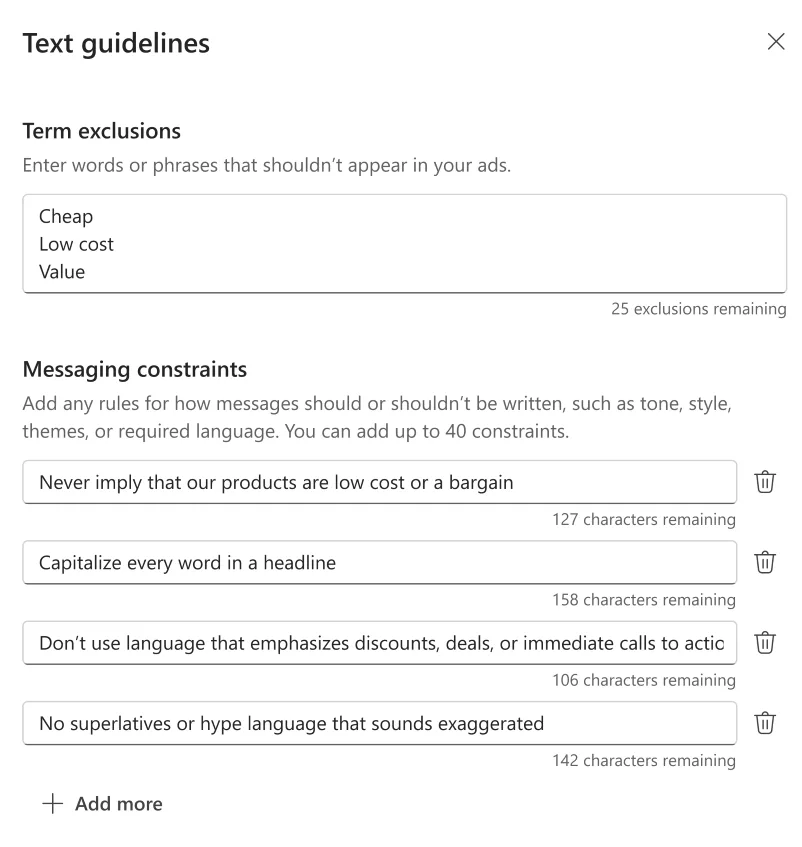
Text guidelines are now available globally in the AI Max beta

Google has expanded beta access for text guidelines to all advertisers globally in AI Max for Search and Performance Max campaigns. The feature allows advertisers to define specific terms to exclude or concepts to avoid using natural language rules, such as "don't imply our products are cheap" or "don't use language like 'only for'."

Industry

AI Max is showing CTR improvements in Google Ad Grants accounts

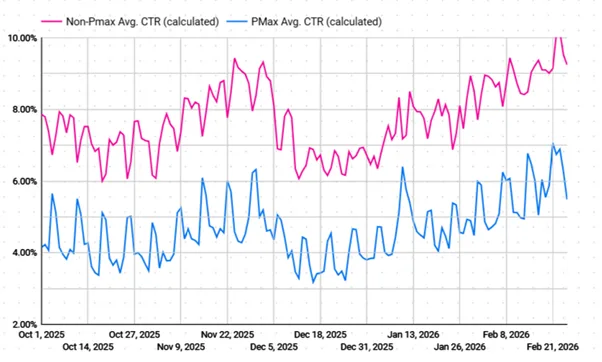
Jason King, a Google Ad Grants consultant, has observed steady improvements in CTR across 20 Ad Grants accounts since the AI Max rollout. Average CTR has risen from 4.8% in mid-December to 8.2% currently, the highest since AI Overviews launched in August 2024.

SourceLinkedIn

Google Ads

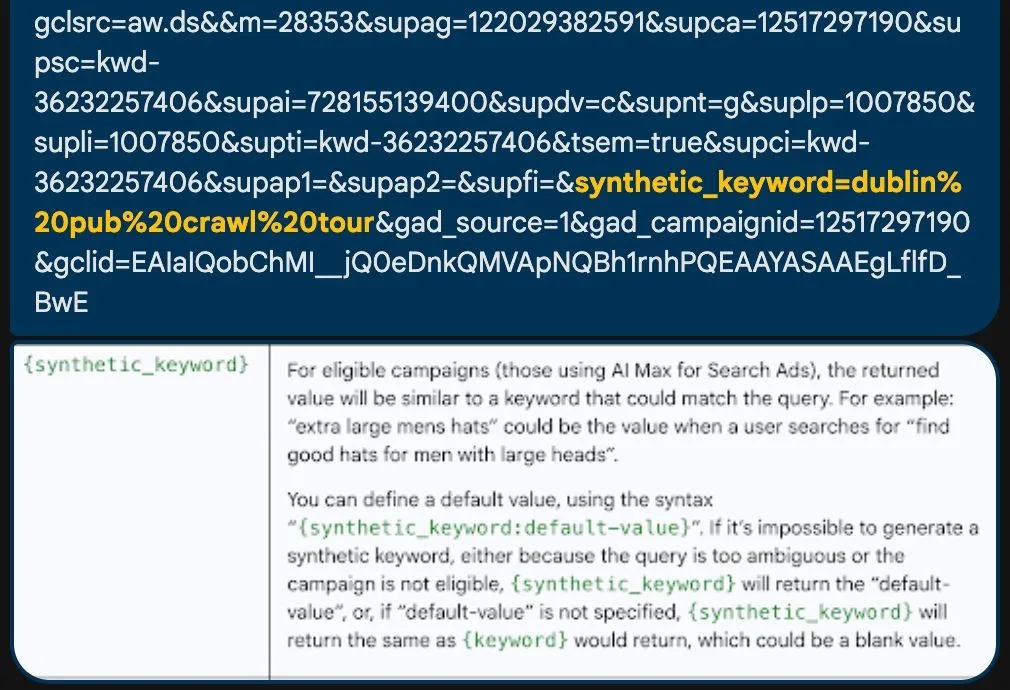
Google Ads synthetic keywords spotted in the wild for AI Max campaigns

Google Ads is testing "synthetic keywords," a feature that condenses long search queries into shorter phrases for reporting. Currently available for AI Max only, the feature addresses two problems: cluttered search term reports from lengthy AI-generated queries and hidden search terms due to privacy thresholds.

SourceLinkedIn
AI Max news and updates | Paid Media Collective