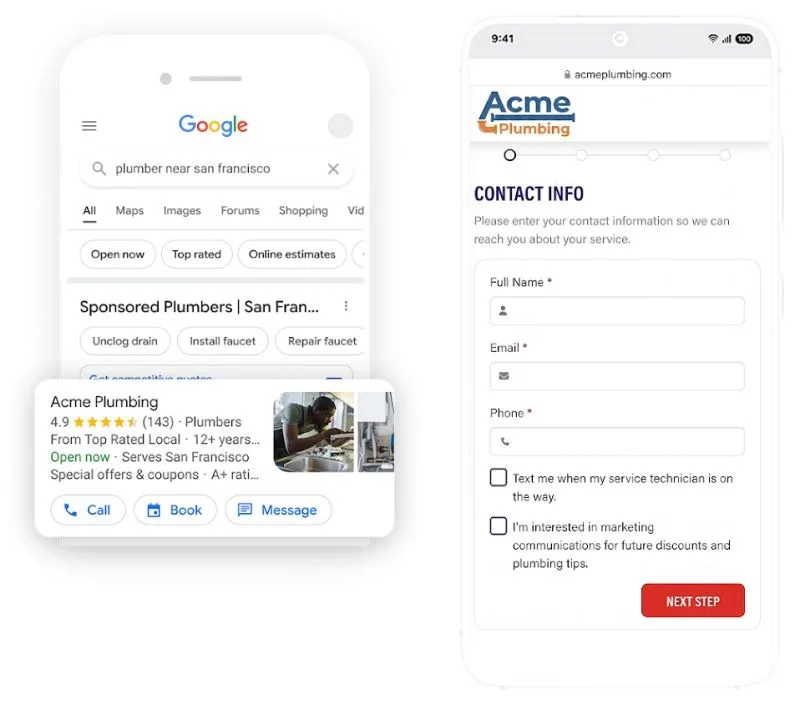
Google has expanded Reserve with Google support for Local Services Ads from 20 booking partners to more than 500. If a Google Business Profile already has an active partner booking link, Google can automatically enable it in the LSA and count completed bookings as paid leads.
Juozas Kaziukėnas demonstrated an experimental ChatGPT desktop flow that opened a Shopify store, found a red lipstick, added it to the basket, and navigated to the billing form via structured WebMCP calls. The system used functions exposed by the website rather than scraping pages and simulating every click, while the customer still completed payment details.
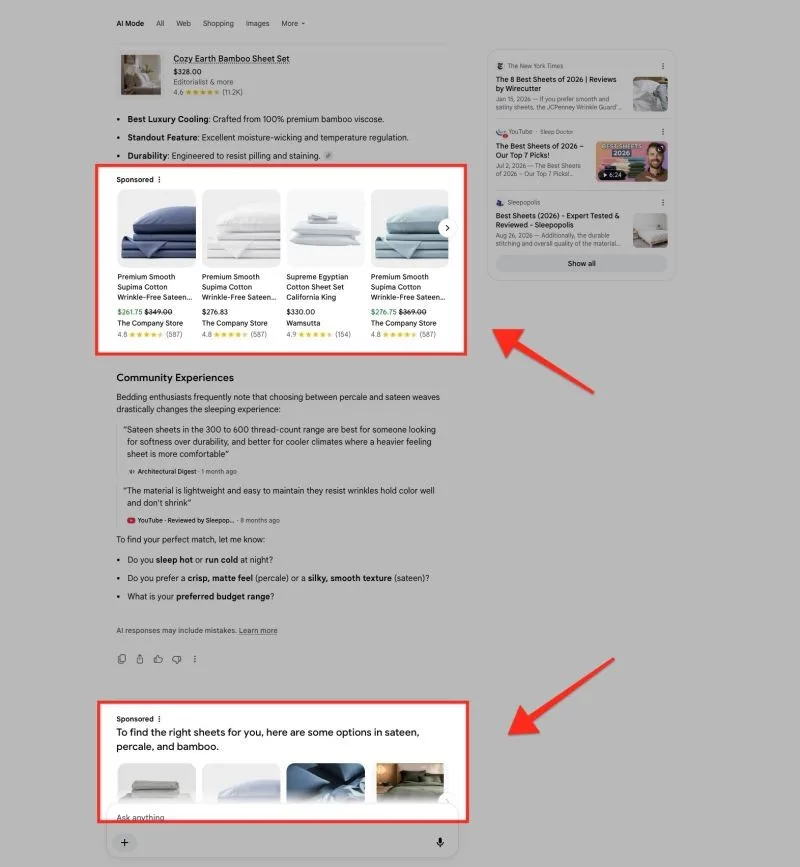
SERP Alert observed a Shopping ad carousel placed directly within the body of a Google AI Mode response, with another sponsored unit appearing at the bottom of the answer. The sighting indicates a new presentation test rather than a confirmed universal rollout.
Version 4.0 of Google's API Developer Assistant replaces the previous standalone project setup with a globally installed plugin architecture for AI coding environments including Antigravity and Claude Code. It adds specialised commands for GAQL validation, schema inspection, conversion troubleshooting, account lookup, code generation, and ad-hoc reports that can be saved to CSV.
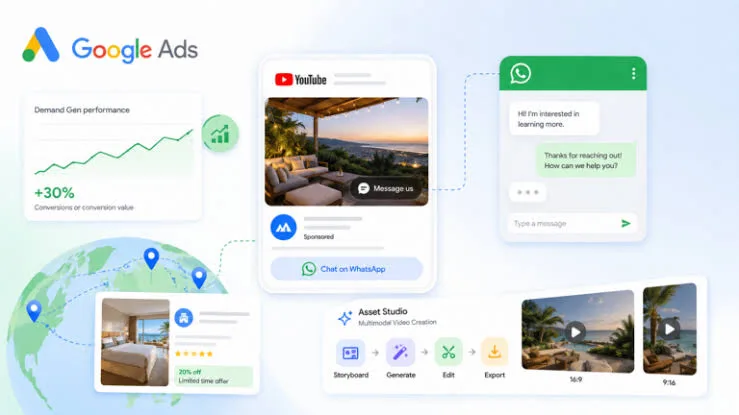
Google is testing Demand Gen ads on YouTube that let viewers start conversations with brands through messaging apps. It is also adding local activities, events, real-time offers, and more personalised hotel ads for travel advertisers.
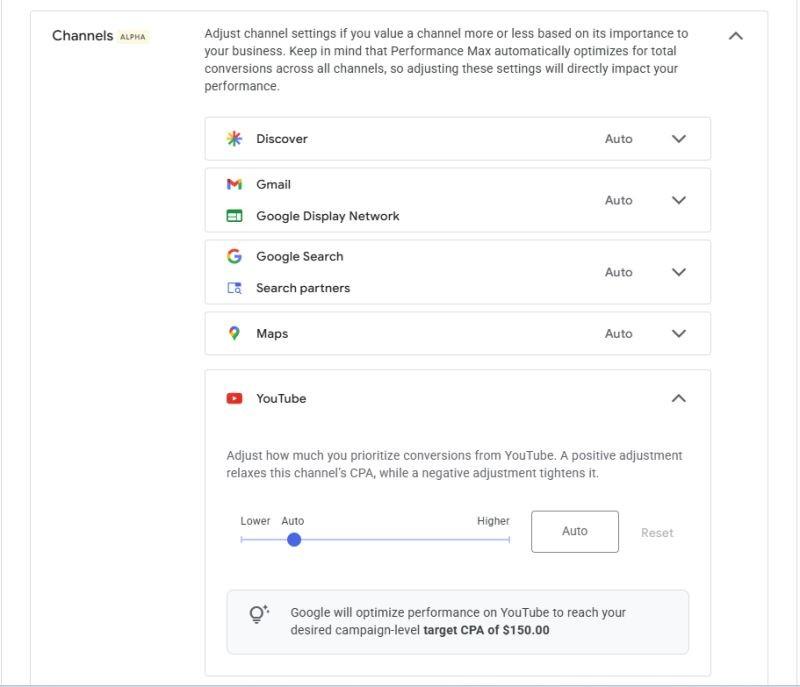
Google is testing channel-level conversion value adjustments in Performance Max. The alpha changes bidding signals without reserving a budget for each channel.
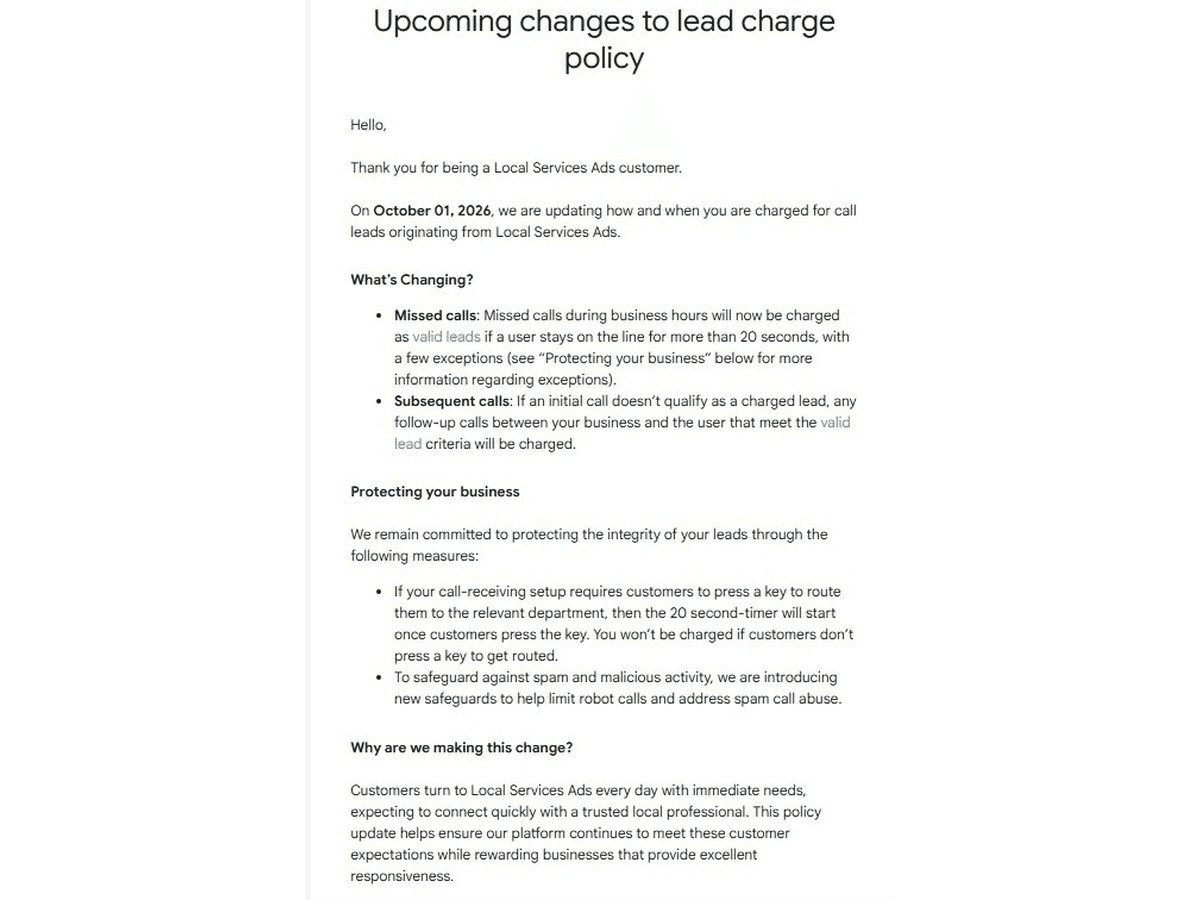
From 1 October, Local Services Ads may charge for missed business-hours calls over 20 seconds and certain follow-up calls, according to reported guidance.
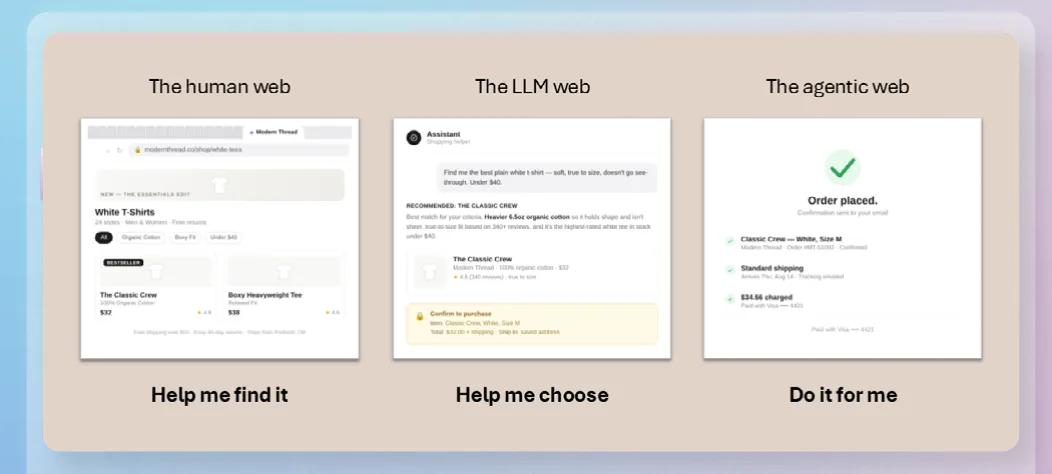
Microsoft Advertising published guidance for preparing product discovery and checkout for AI assistants and purchasing agents. It emphasises complete, structured product feeds, Merchant Centre data quality, AI-native ad formats, Copilot Checkout, Brand Agents, and visibility measurement within AI experiences.
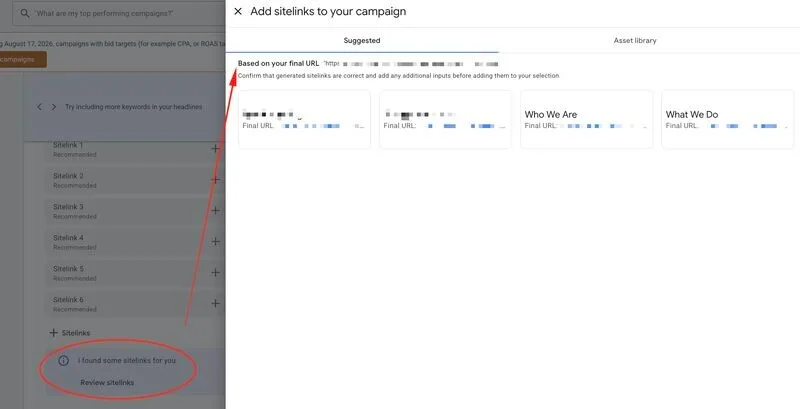
Arpan Banerjee reported that Google Ads is presenting suggested sitelinks inside campaign workflows. The suggestions can reduce setup time, but still require review for destination relevance, duplication, and approved messaging.
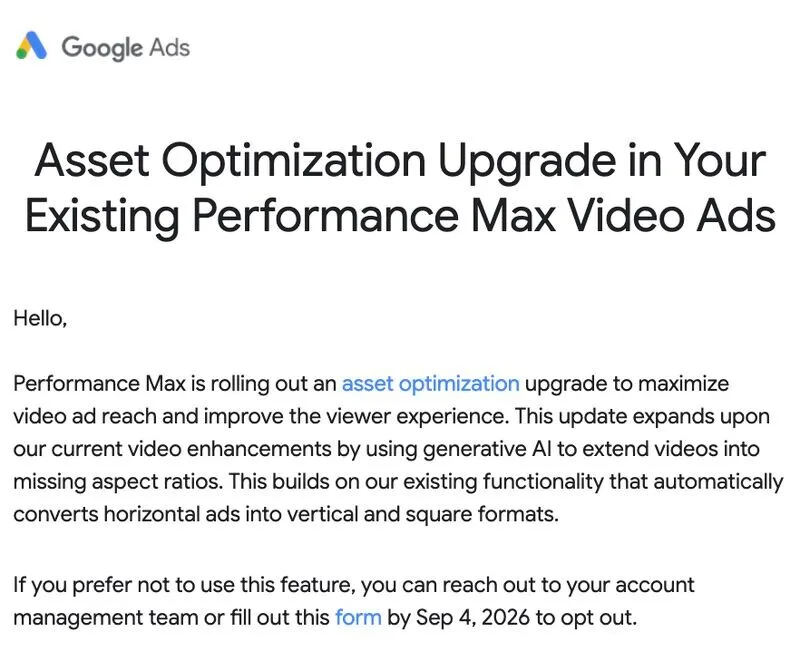
Arpan Banerjee reported that Performance Max is rolling out generative AI extensions that adapt existing video to missing aspect ratios. The setting may apply automatically, with an opt-out route and a reported 4 September deadline for requests.
Poland has asked the European Commission to impose a €250 million fine on Meta, alleging that the company failed to remove fraudulent advertisements after notification. CERT Polska identified 122 ads it classified as fraudulent; the minister said 10 were removed, 106 were left online, and 6 received no response, while Meta said it continues to invest in technology and partnerships to combat fraud.
Google has documented a “Save and Set Experiment” option that turns a Performance Max ad or asset-group edit into an A/B test while retaining the previous version as a holdback. The same release adds creative diagnostics in Ask Advisor and AI-led fixes for issues such as logo placement, video trimming, and aspect-ratio coverage in Demand Gen.
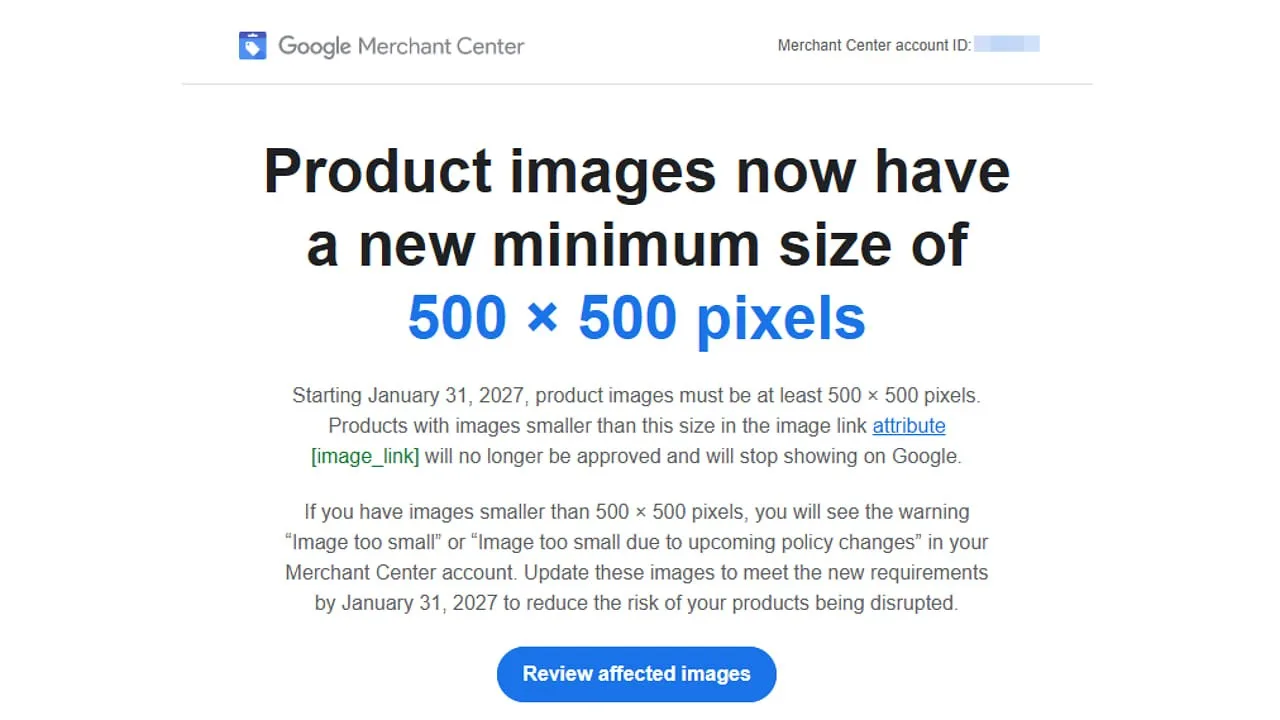
Google has notified advertisers that images supplied via image_link below 500 × 500 pixels will be disapproved as of 31 January 2027, with 1,500 × 1,500 pixels recommended. Hana Kobzová surfaced the notice first, with Thomas Eccel sharing the deadline in the contributor feed.
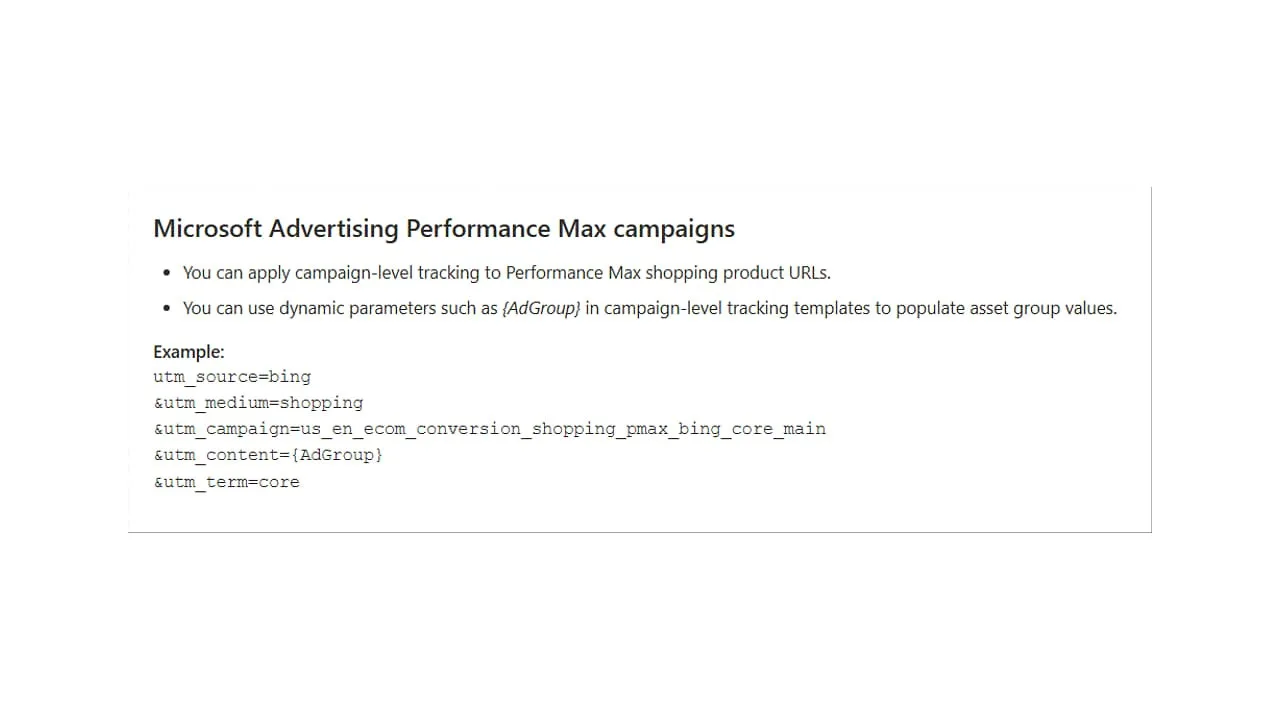
Microsoft has documented campaign-level tracking templates for Performance Max shopping product URLs, including the use of {AdGroup} to populate asset-group values. A separate rollout adds an aggregate Delivery status to the Campaigns grid, showing the highest-priority issue with clickable diagnostics and an immediate refresh after a fix.
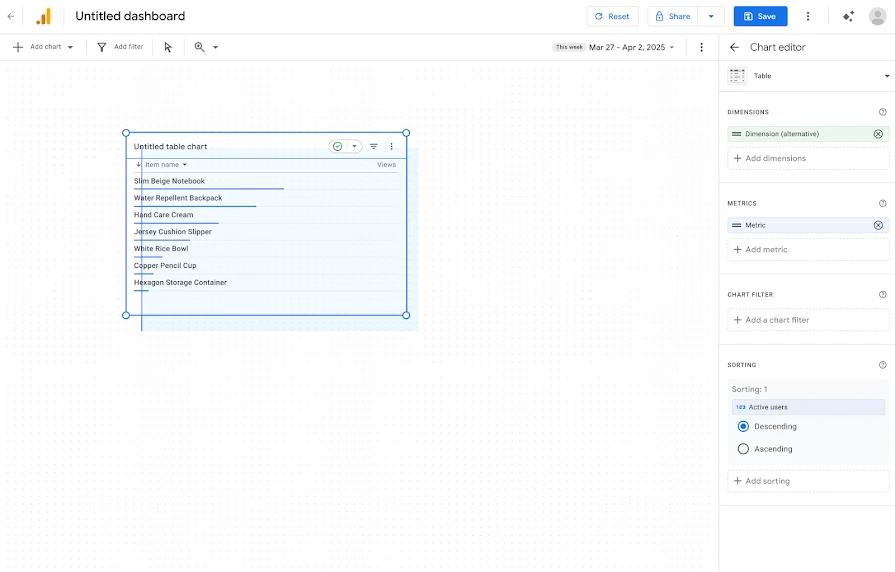
Google confirms native GA4 dashboards. Current limits exclude segments, API support and card-level comparisons; scorecards can still compare date ranges.
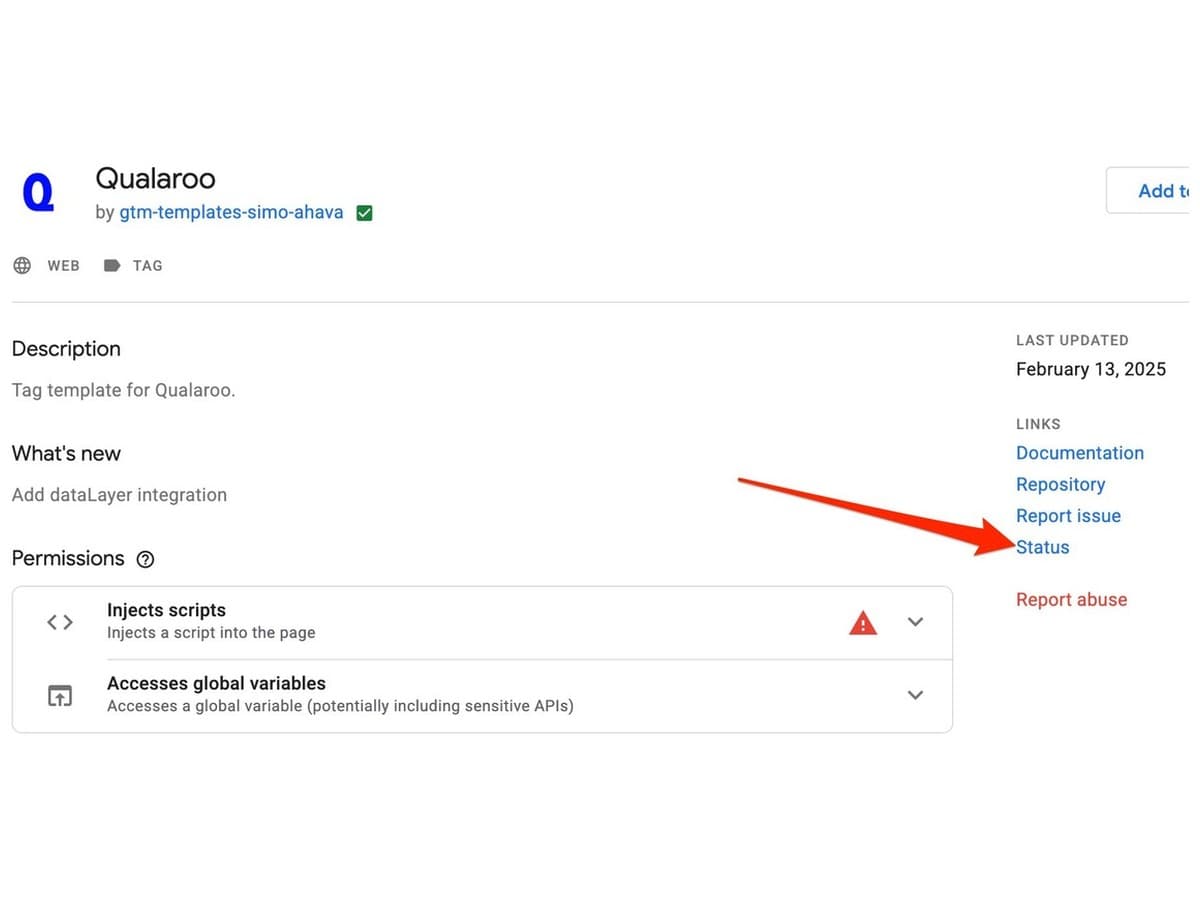
Simo Ahava’s 28 August guide explains the Status link in the Community Template Gallery. It shows imported GitHub commits and associated errors, helping template authors investigate missing updates. Some messages remain undocumented or inconsistent; the page is not a reliable diagnostic for an initial submission that never validated.
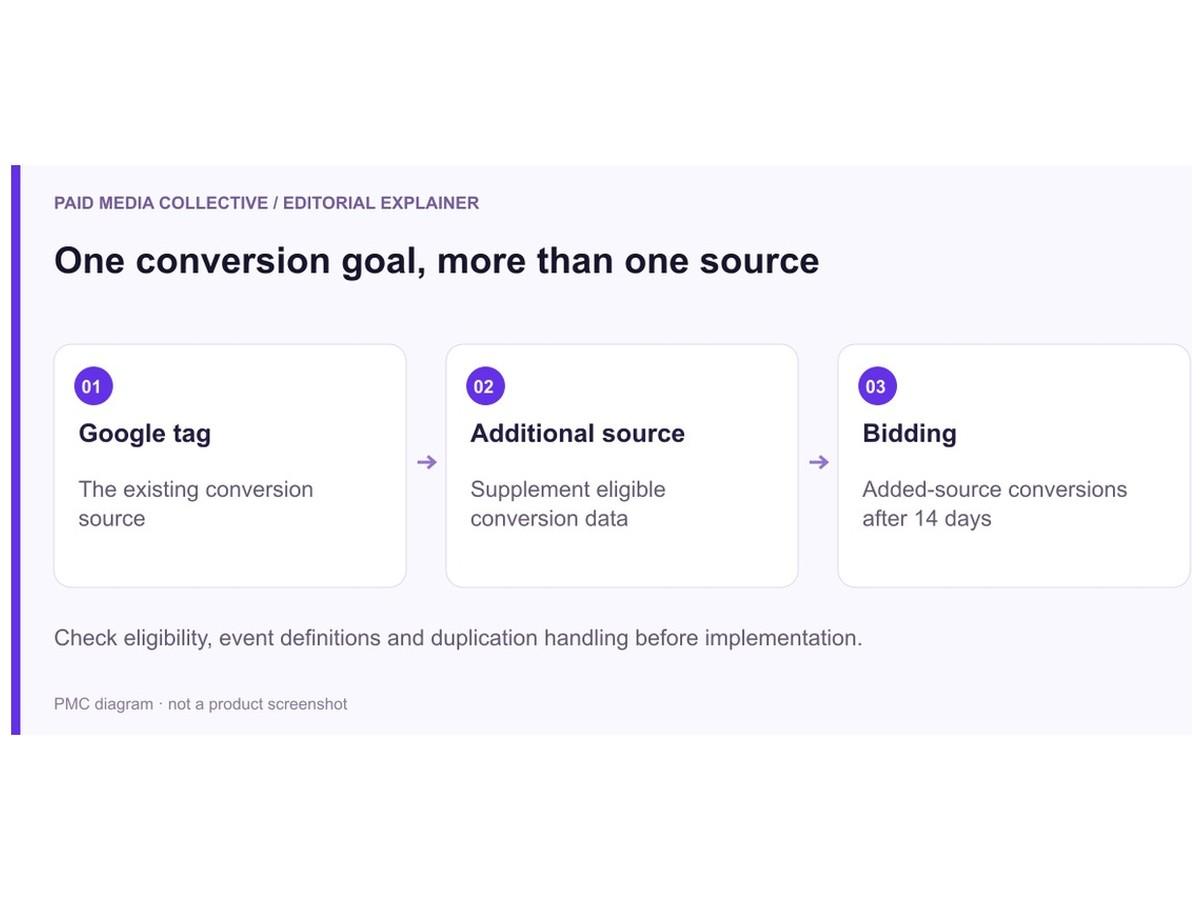
Google documents how an additional source can supplement Google-tag conversions. Its guide says conversions from the added source become biddable after 14 days. Review eligibility, event definitions and duplication handling before implementation. More recorded events are only useful if they represent the outcomes you intended to measure.
Google Cloud's Looker notes state that the new Explore and Merge Query Experience preview became enabled by default on 21 August. Because it remains a preview, interface behaviour and administrator controls may still change.
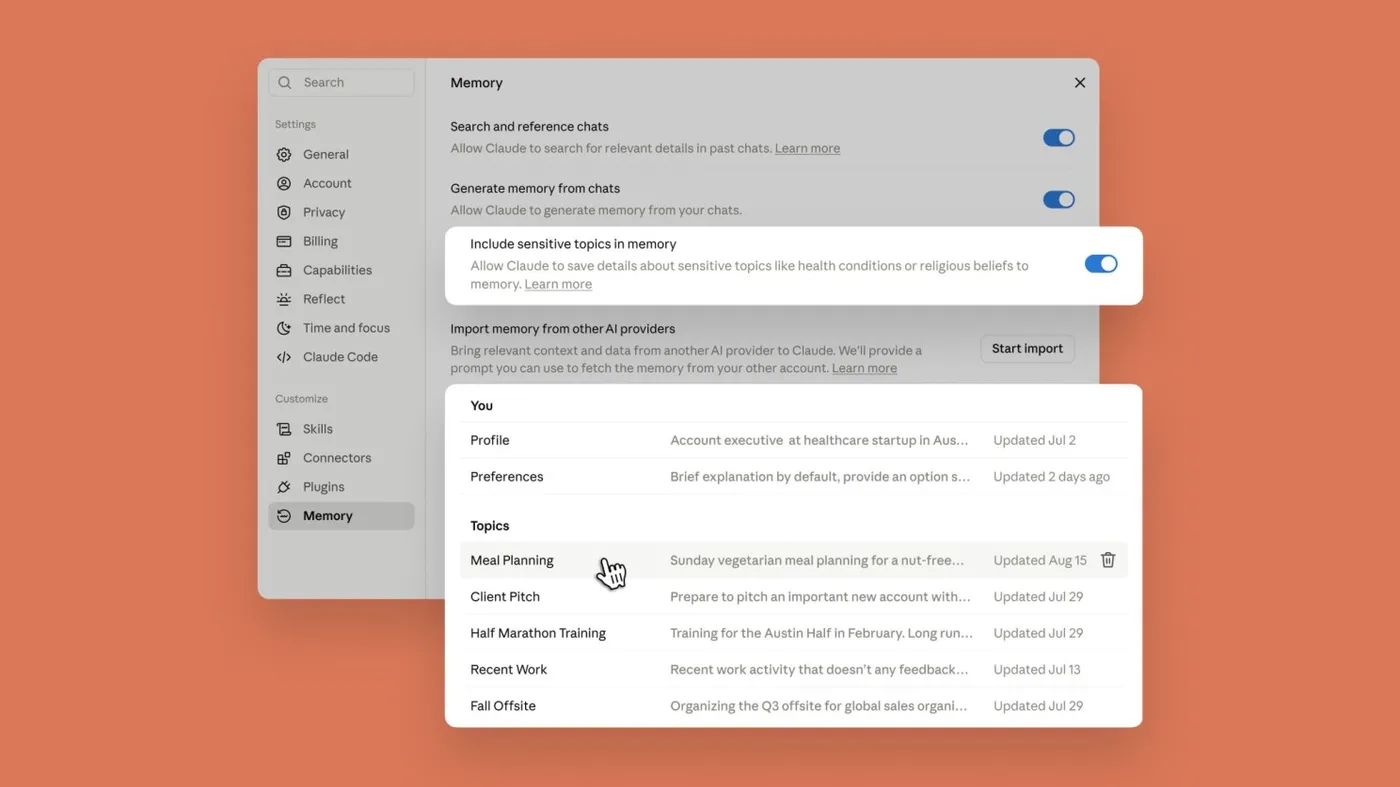
Anthropic has introduced one editable memory across Claude chat and cloud-based Cowork, allowing context learned in one surface to inform work in the other. Users can inspect, edit, or delete saved topics; memory is on by default for Free, Pro, and Max users, while Team and Enterprise administrators control availability and individual users opt in.
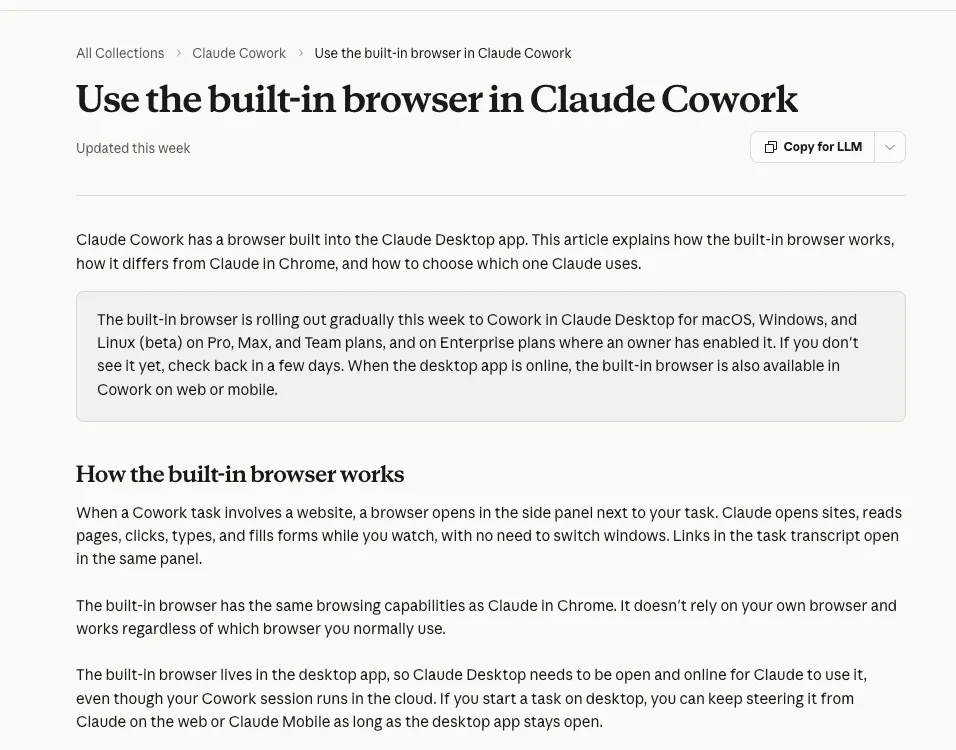
Claude Cowork is gradually adding a browser inside the Claude Desktop app for macOS, Windows, and Linux, with availability on Pro, Max, Team, and enabled Enterprise plans. It can open sites, read pages, click, type, and complete forms in a side panel without relying on the user's normal browser; existing Claude in Chrome users keep the extension as the default unless they switch.
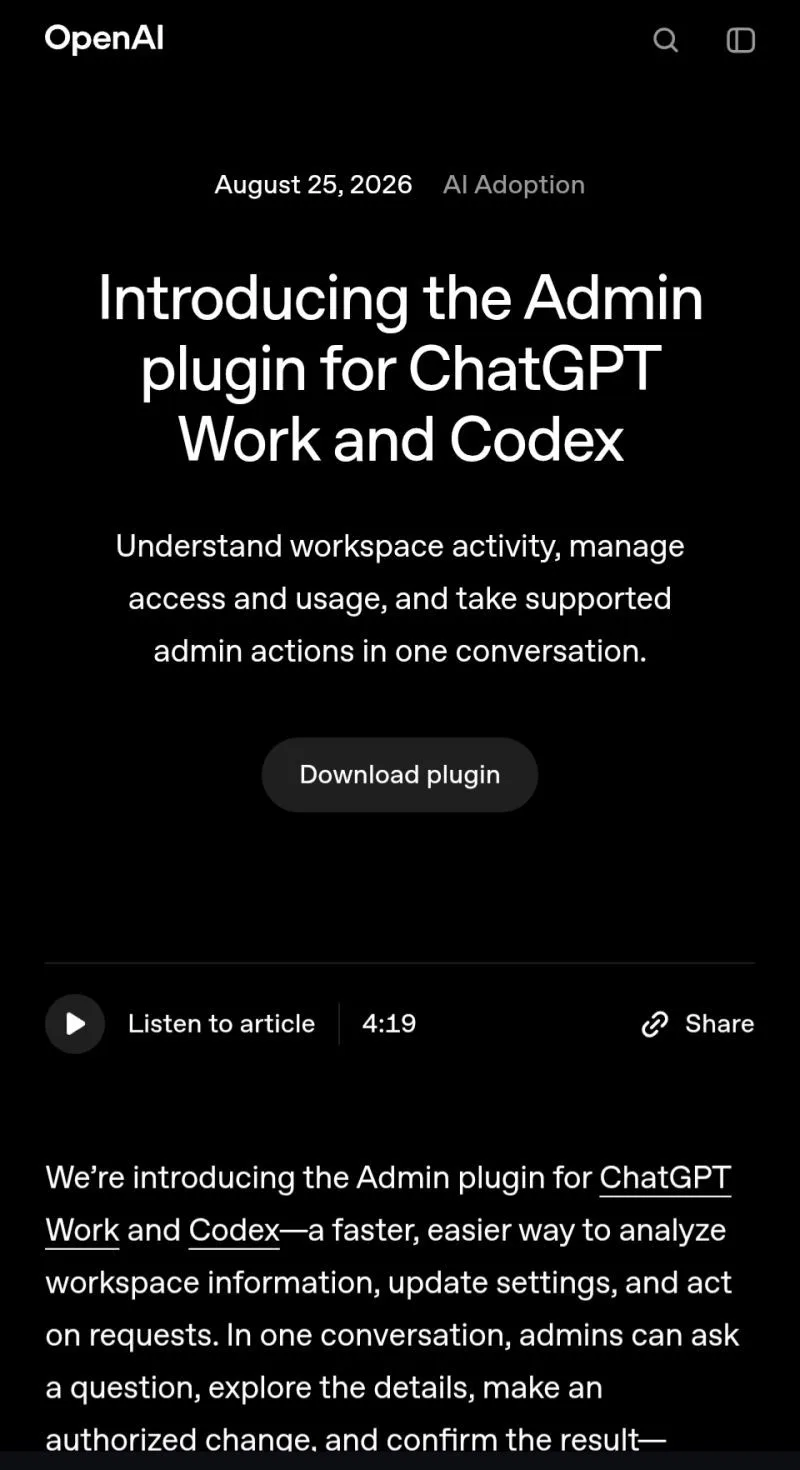
OpenAI's new Admin plugin lets authorised administrators review activity and credit usage, add or remove members, inspect effective permissions, and adjust limits through a ChatGPT conversation. It can route usage requests to Slack or Microsoft Teams and automate predefined approvals while remaining within each user's existing roles and permissions.
Google is testing a mobile loading state labelled “Evaluating sponsored results”, accompanied by Google and Gemini branding and placeholder bars. Google told reporters that Gemini is not selecting or loading the ads and that the visual is only signalling status to the user.
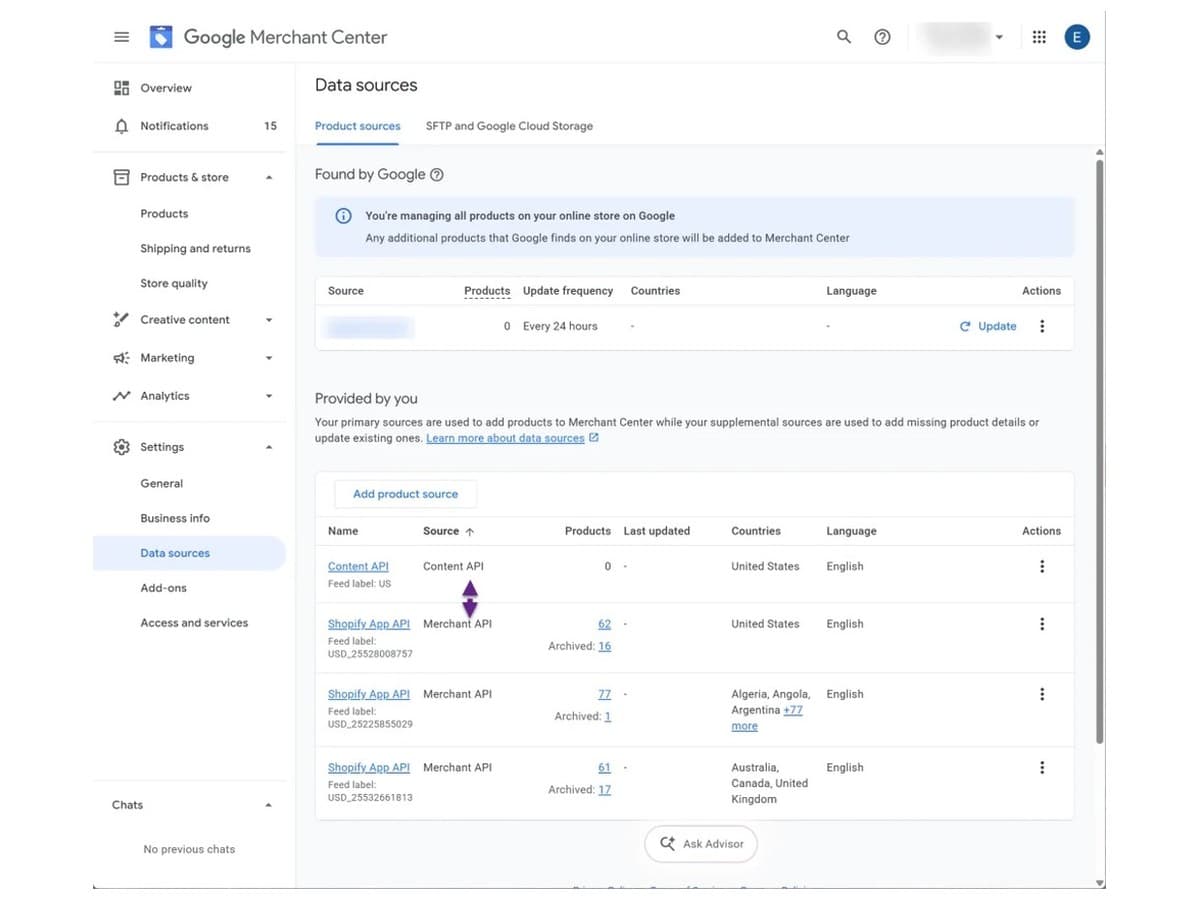
Emmanuel Flossie’s 26 August checklist covers product IDs, attribute rules, supplemental sources, feed labels, remarketing IDs and conversion cart data after migration. Compare identifiers and source relationships with your previous setup before changing campaigns. This is a practical troubleshooting reference, not evidence that every account has a migration fault.
Microsoft Clarity published five advanced query patterns for its MCP Server, including identifying pages with high scroll depth but low conversion rates and diagnosing mobile page friction. The examples are workflow guidance rather than a new advertising feature.
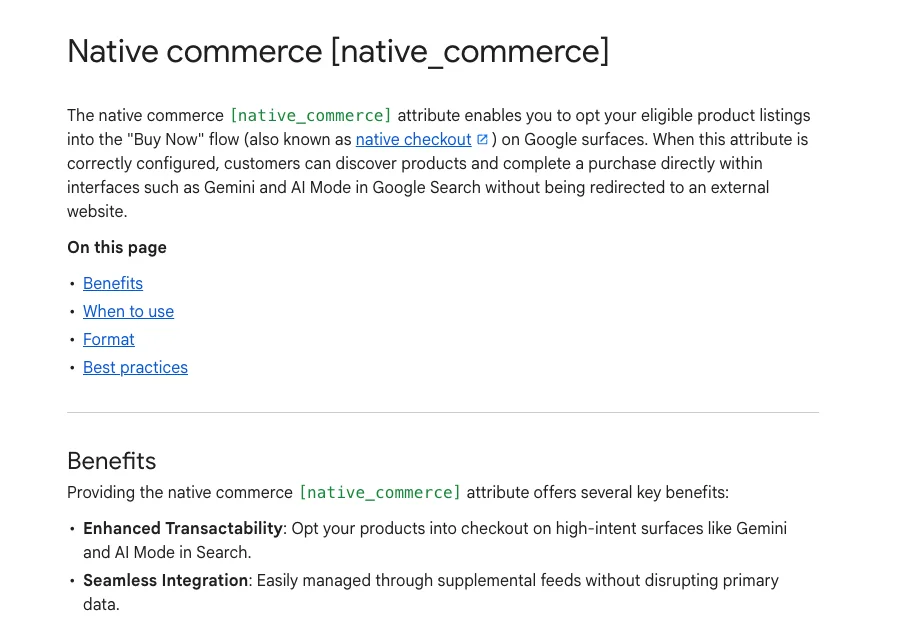
A new Merchant Centre help page reference documents a native commerce attribute intended to support checkout experiences within Google surfaces. The documentation does not establish universal activation for all merchants or markets.
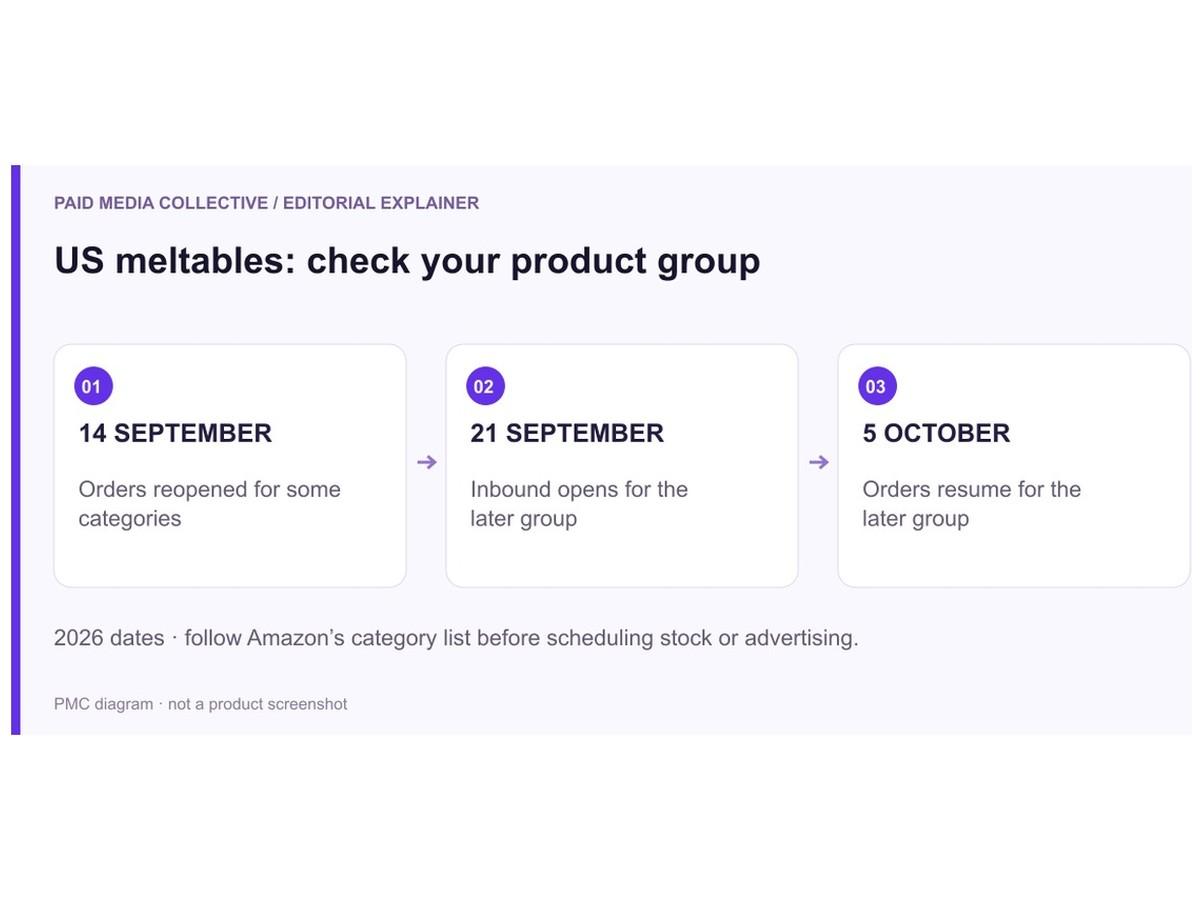
Amazon’s current US notice replaces the blanket autumn reopening date circulating in older posts. Some categories reopened for orders on 14 September. Chocolate and the other categories listed in the later group can be received from 21 September, with orders resuming on 5 October.
Kate Pavlenko reports the Full Funnel tab appearing in an account and explicitly distinguishes that rollout from the earlier announcement. Oleksandr Kovalov’s earlier beta commentary raises questions about the control advertisers retain.
Amazon introduced AWD in Germany, France, Italy, Spain, and the UK on 20 August. The programme offers bulk inventory storage and automated replenishment into FBA, reducing the need to manage every restock manually.
Amazon Ads detailed how it works with HUMAN to identify and block made-for-advertising networks by using site, traffic, supply chain, infrastructure, and operator signals, rather than relying solely on page-level quality. Amazon says its agentic scanning system filtered more than 10 trillion bid requests that failed verification standards in 2025, while HUMAN observed a fourfold rise in requests from one investigated network during the first half of 2026.
Each update has one permanent page. New evidence about the same development is added to that page. Dates identify the source report or newsletter coverage; article publication dates appear in the full view.
2026 newsletter archive: 38 editions and 1,562 distinct updates through Week 36. Source descriptions, credits and media are preserved; missing details remain marked.
Spotted an update worth sharing?
Share the original source and what changed. If it is already covered, help us improve the existing update.