What changed
The authors, Malavika Balachandran Tadeusz and Rohan Ranjan, distinguish this preview from Copilot Managed Runtime, which is a separate public-preview option. That distinction prevents the earlier Microsoft partnership announcement from being treated as the same release. Some capabilities are still being introduced during the Azure preview, and full feature parity is not claimed.
For agencies and in-house marketing teams, the practical relevance is internal tooling that must work with a company’s existing infrastructure. A reporting utility or client-operations app may have requirements about where its operational data resides. Whether this preview satisfies those requirements depends on the actual application, its connections and the organisation’s policies; the announcement alone cannot settle that decision.
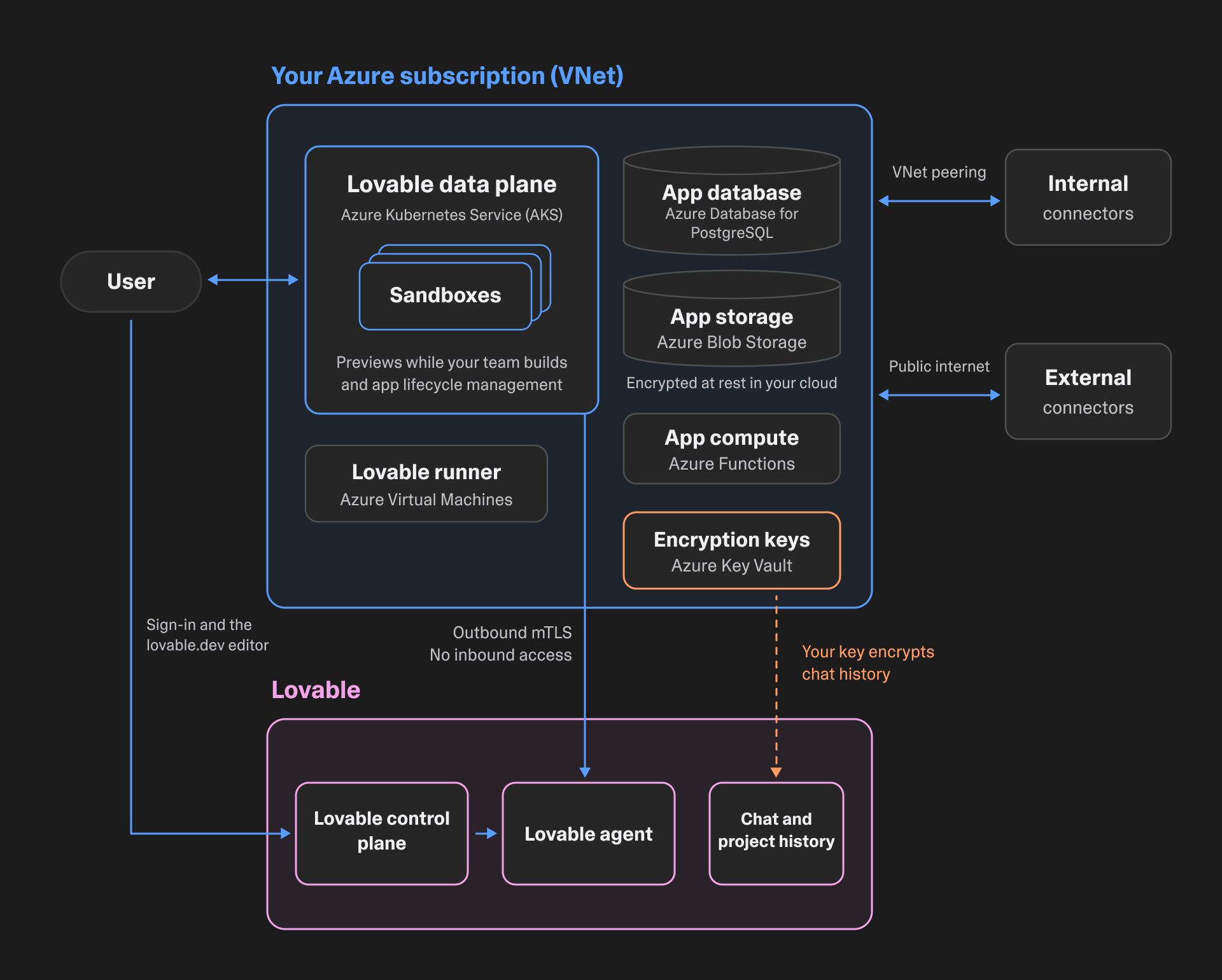
PMC suggests beginning with a data-flow review. Separate the information used while building from the data processed by the deployed application. Identify where prompts, project history, credentials, logs and connected records are handled. This makes the architecture discussion more useful than a general statement that an app runs in Azure.
Teams evaluating the preview should also assign ownership for infrastructure, updates, incident handling and usage costs. Test a non-sensitive workflow first, including how the application behaves when a connection fails or access is revoked. Check the available preview features against the intended design before making a client commitment.
The source includes an architecture diagram that is useful for this review. It should be read alongside the stated limits, particularly the services that remain with Lovable. The article is an availability and workflow update for a limited preview, not a certification that a particular deployment meets a customer’s security or compliance obligations.