Google's 10 September announcement describes Meridian GeoX as generally available globally. The update adds an availability milestone to earlier coverage of Google's open-source geographic experimentation library; it does not establish that GeoX first launched this week.
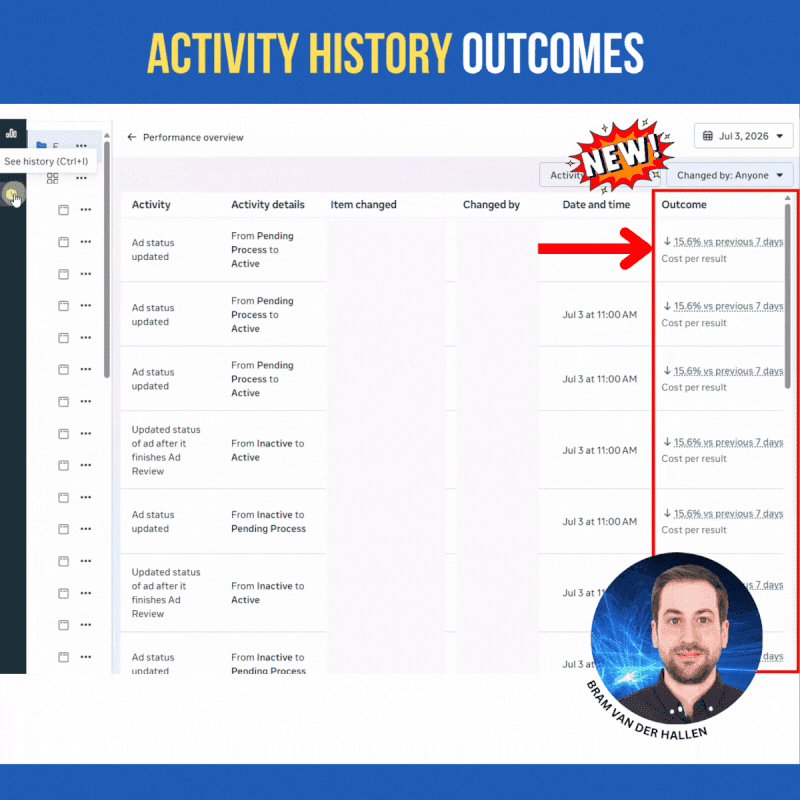
Meta’s activity history is showing performance outcomes alongside account changes, as first reported by Adam Gerber and subsequently shared by Bram Van der Hallen and Sarath Sadanandan.
Barry Schwartz reported additions to Google’s conversion-measurement help page covering call reporting, call-duration checks and offline-import troubleshooting. The current Google page includes the cited guidance. This is a documentation clarification, not evidence of a newly launched conversion feature or a new blanket requirement.
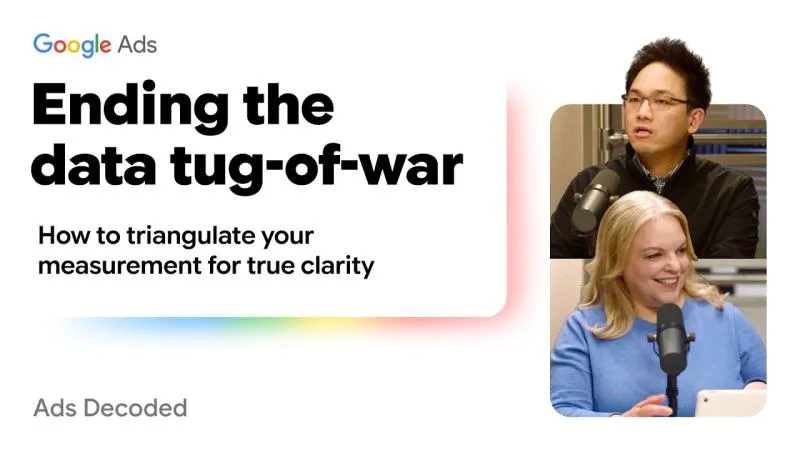
Google’s latest Ads Decoded announcement introduces a discussion of how attribution, incrementality tests and media mix modelling can inform campaign decisions together. A companion episode covers practical experience implementing Meridian. The pair offers advertisers a starting point for reviewing conflicting measurement signals and planning further tests.
Meridian’s documentation describes brand-equity signals, including branded query volume, and an agentic toolkit for modelling tasks and troubleshooting. The official version 2.0.0 changelog is dated 2 September; the overview says available as of 3 September. This is a follow-up to that release.
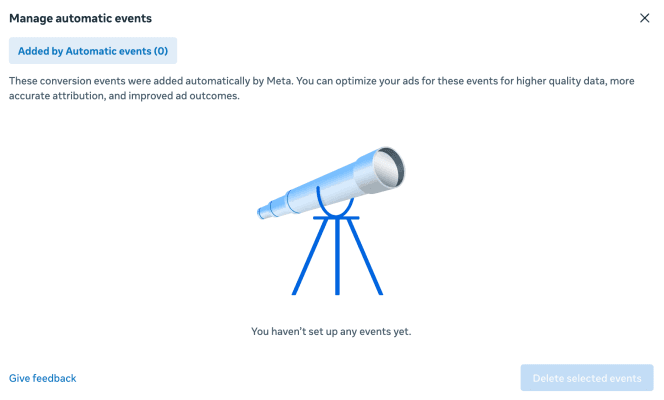
Jon Loomer’s 1 September walkthrough distinguishes the management interface from older automatic tracking. Check the events being detected, their meaning and potential duplication before relying on them for optimisation. A simpler interface does not itself establish better event detection.
Google's 8 October release note says GTM containers initialise on load independently of gtag('config'). Configuration commands also appear as gtag.config events, which may activate wildcard custom-event triggers.
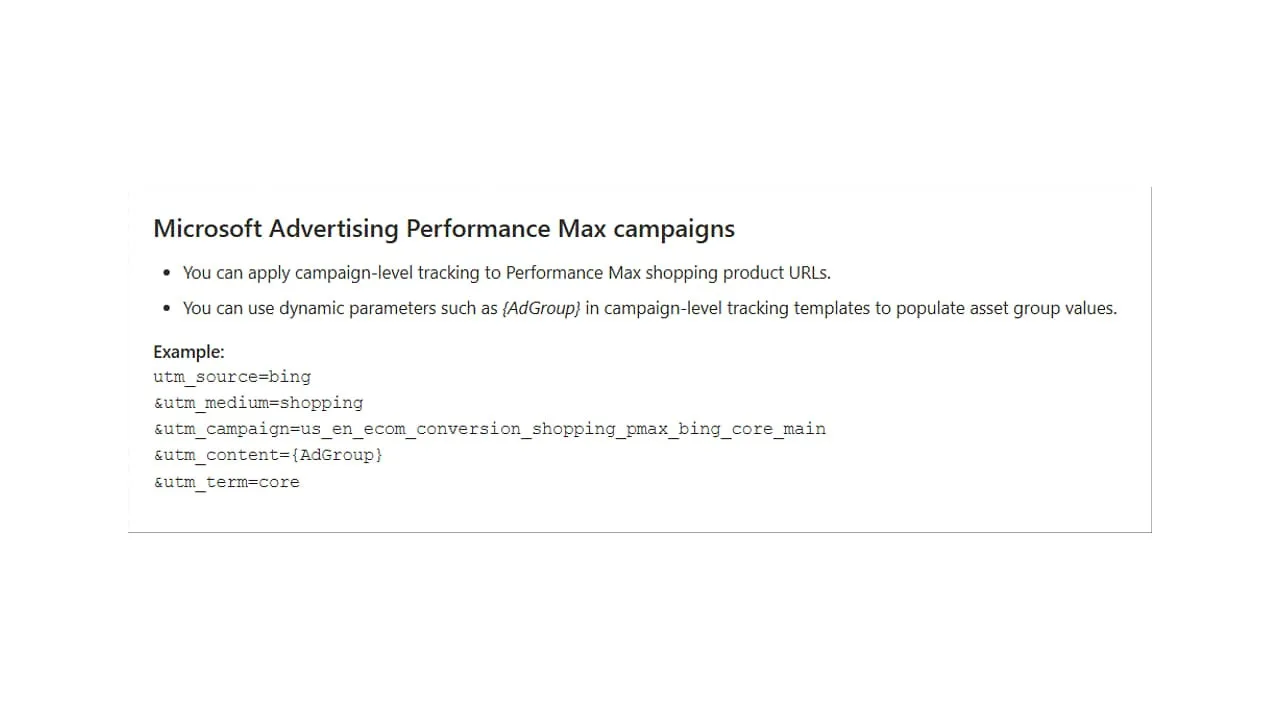
Microsoft has documented campaign-level tracking templates for Performance Max shopping product URLs, including the use of {AdGroup} to populate asset-group values. A separate rollout adds an aggregate Delivery status to the Campaigns grid, showing the highest-priority issue with clickable diagnostics and an immediate refresh after a fix.
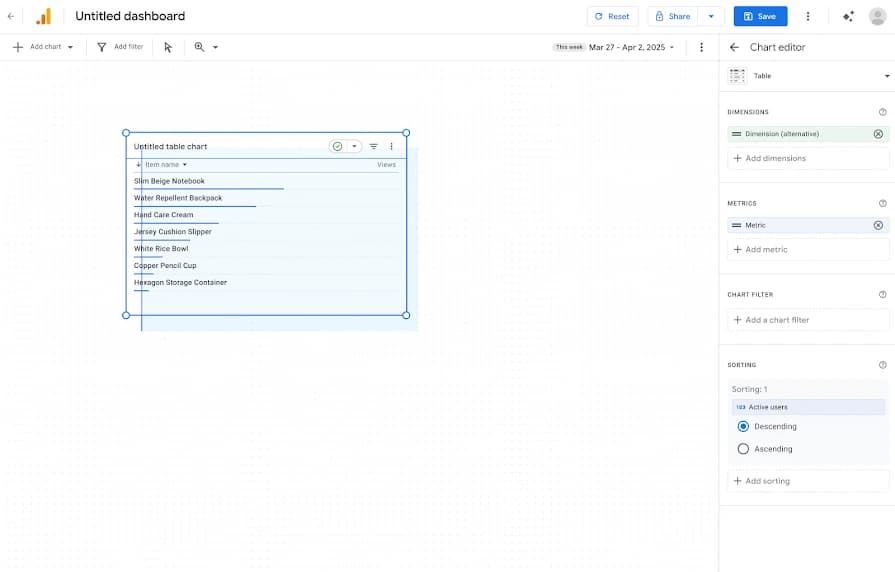
Google confirms native GA4 dashboards. Current limits exclude segments, API support and card-level comparisons; scorecards can still compare date ranges.
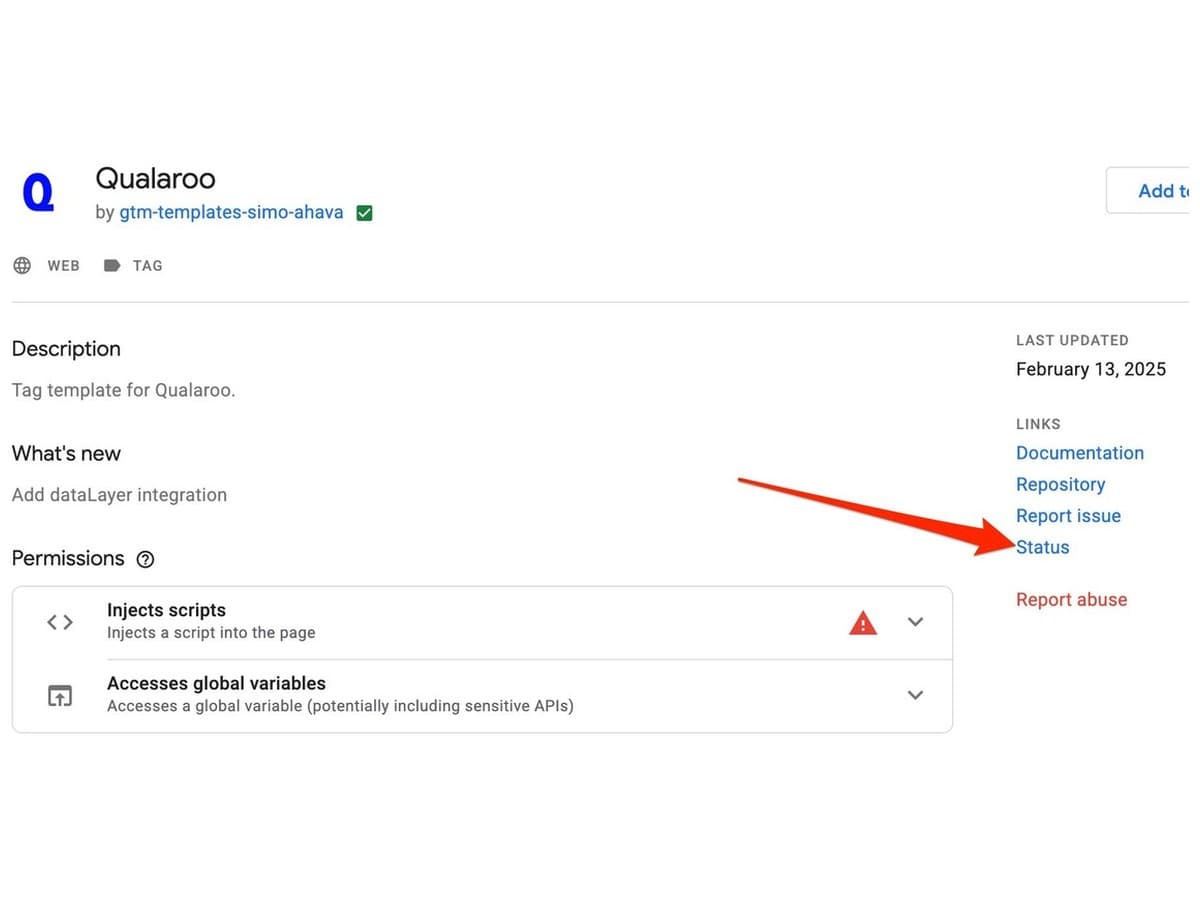
Simo Ahava’s 28 August guide explains the Status link in the Community Template Gallery. It shows imported GitHub commits and associated errors, helping template authors investigate missing updates. Some messages remain undocumented or inconsistent; the page is not a reliable diagnostic for an initial submission that never validated.
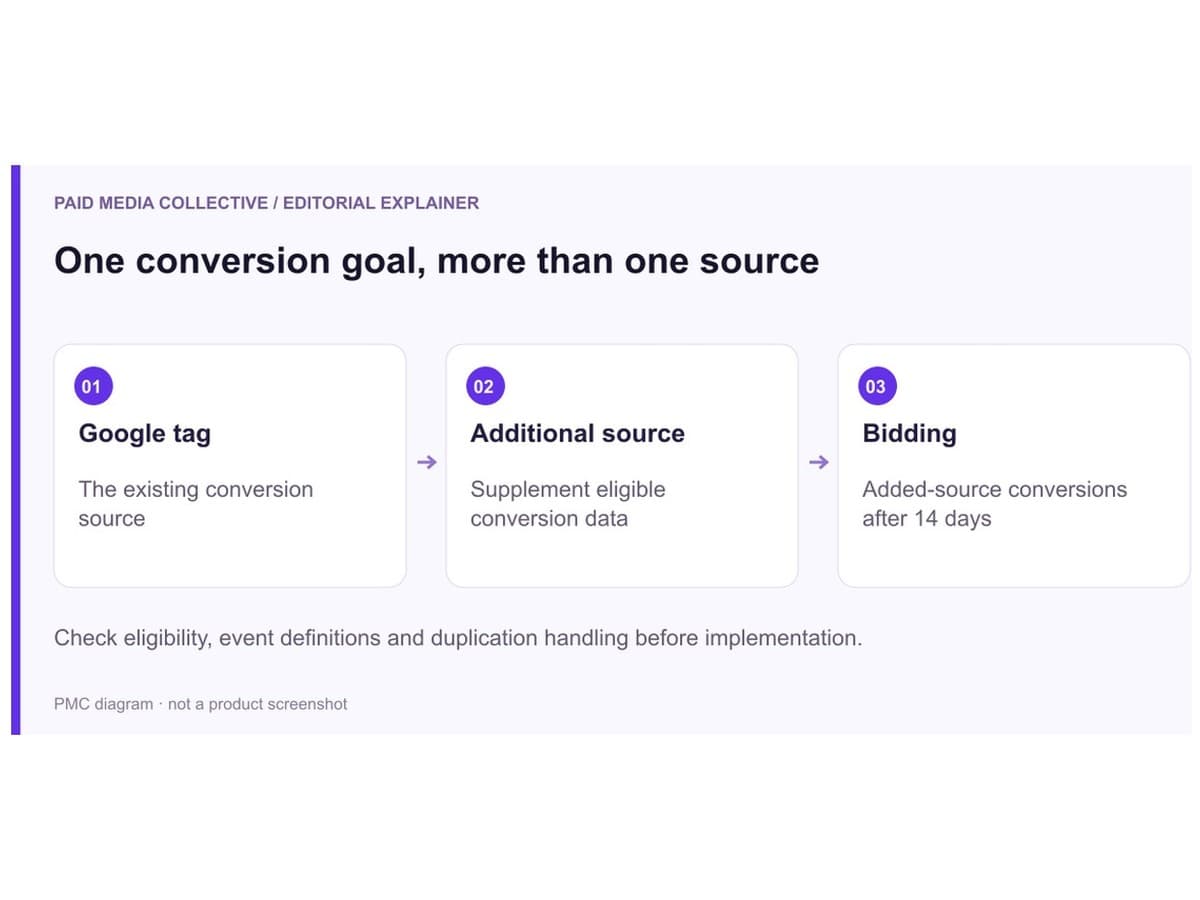
Google documents how an additional source can supplement Google-tag conversions. Its guide says conversions from the added source become biddable after 14 days. Review eligibility, event definitions and duplication handling before implementation. More recorded events are only useful if they represent the outcomes you intended to measure.
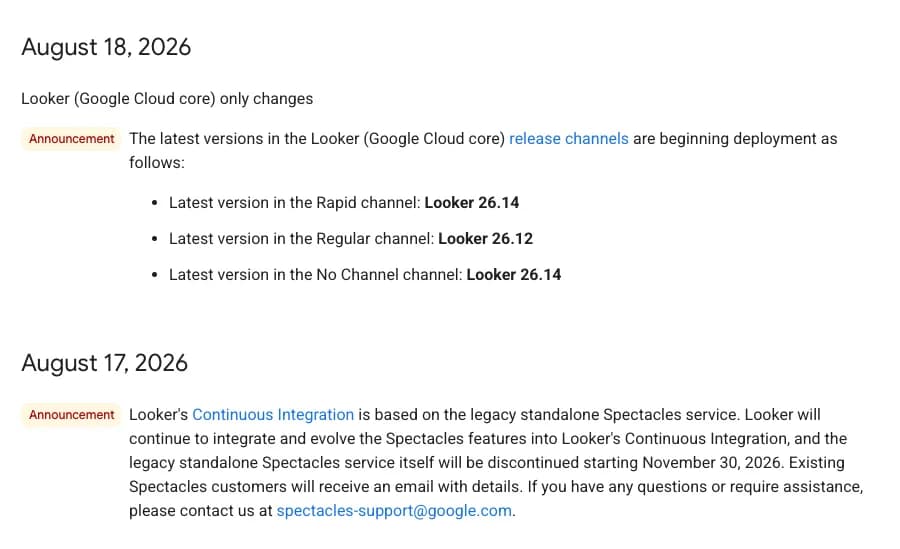
Google Cloud's Looker notes state that the new Explore and Merge Query Experience preview became enabled by default on 21 August. Because it remains a preview, interface behaviour and administrator controls may still change.
Google released the non-breaking v25.1 update with support for Brand Lift and Conversion Lift resources, new AI Max migration date fields, text-disclaimer assets, benchmark services, loyalty segmentation, and additional reporting dimensions. Client libraries must be upgraded before the new capabilities can be used.
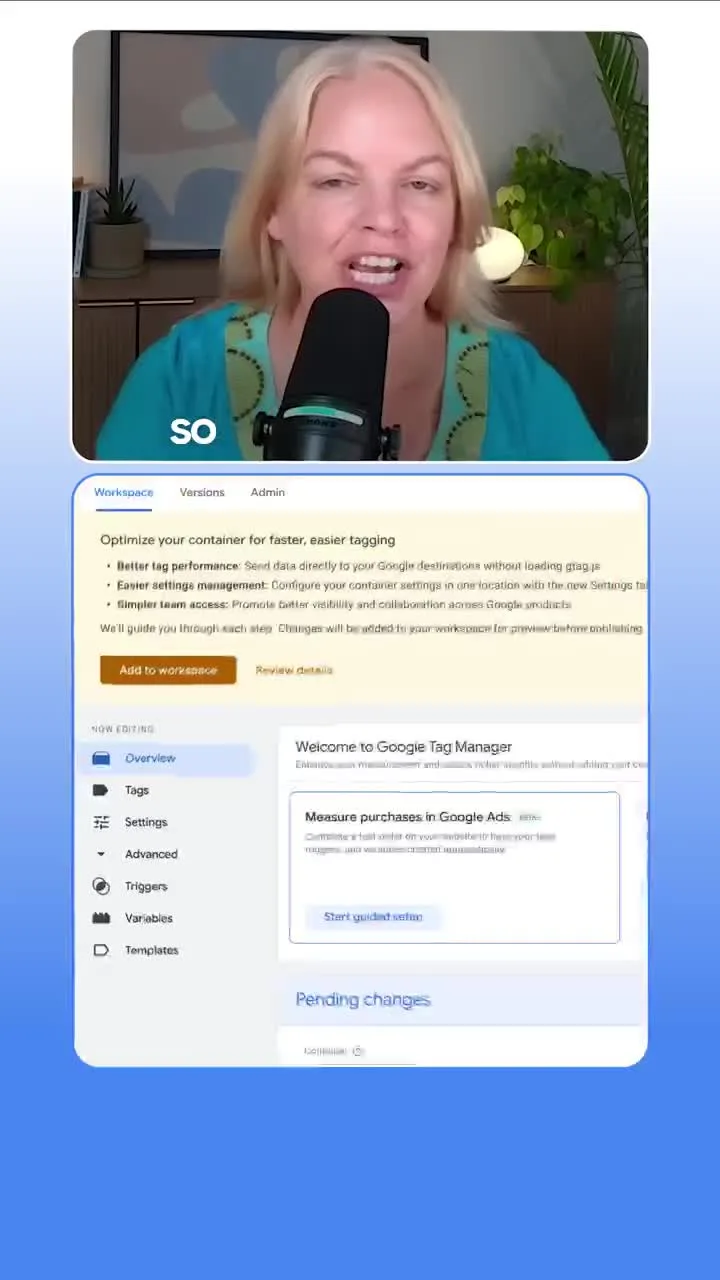
Google is consolidating Google Tag measurement settings with advanced Tag Manager capabilities, along with no-code event tracking, a visual map showing which platforms receive data, and an in-account container update guide. Google says the consolidation can simplify data transmission, while new integrations include Akamai, Cloudflare, Duda, Fastly, and Webflow.
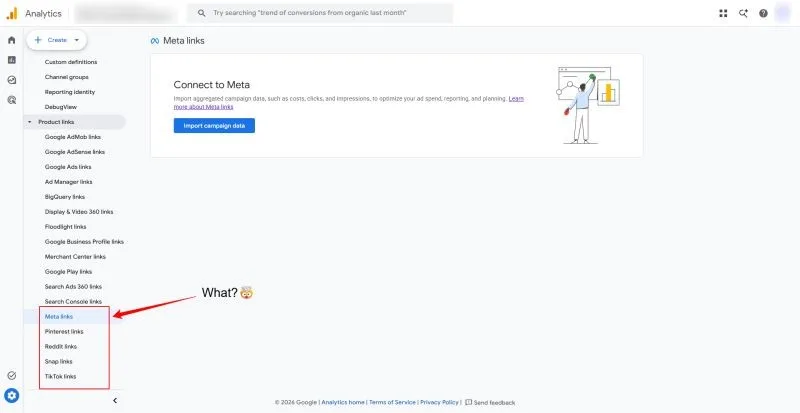
Darshak P. reported new GA4 Product Links for Meta, TikTok, Pinterest, Reddit, and Snap, bringing cost, click, and impression data into Analytics. He also warned that UTM values must match and that overlapping historic cost imports can duplicate spend because the sources are not automatically deduplicated.
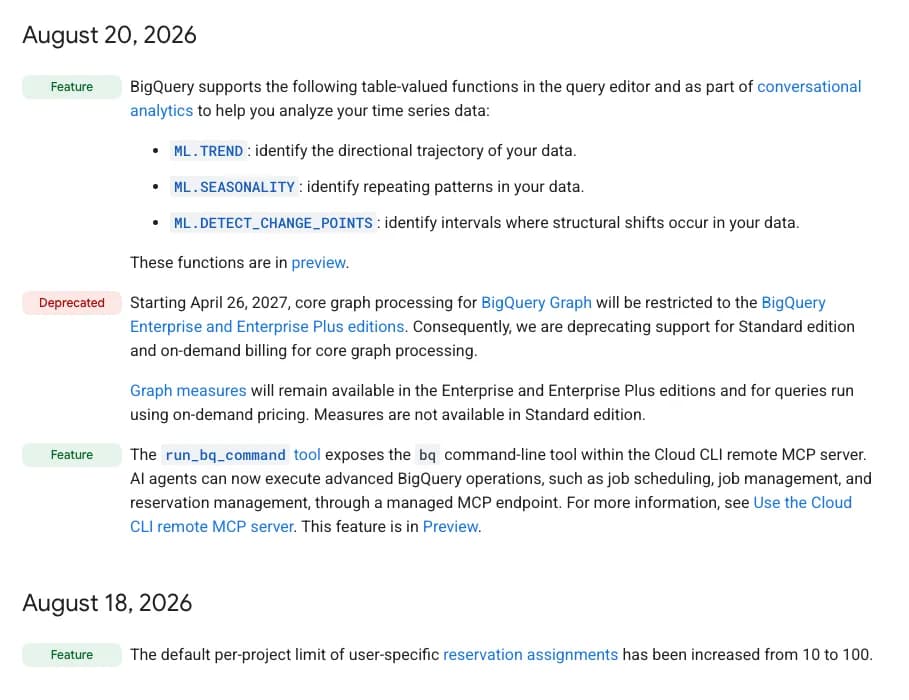
BigQuery's 20 August release notes added preview support for table-valued functions, including ML.TREND, ML.SEASONALITY, and ML.DETECT_CHANGE_POINTS in the query editor and conversational analytics. The functions are designed to expose patterns and anomalies in time-series data through reusable queries.
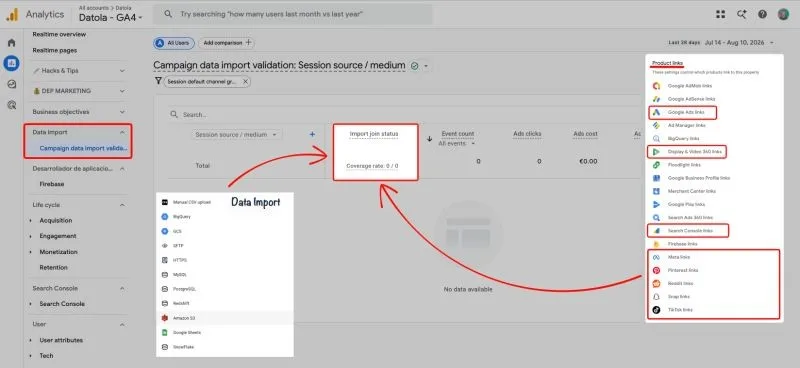
GA4's new report checks the quality of imported campaign data, flagging whether costs, clicks, and impressions from non-Google sources reconcile with Analytics via match rates.
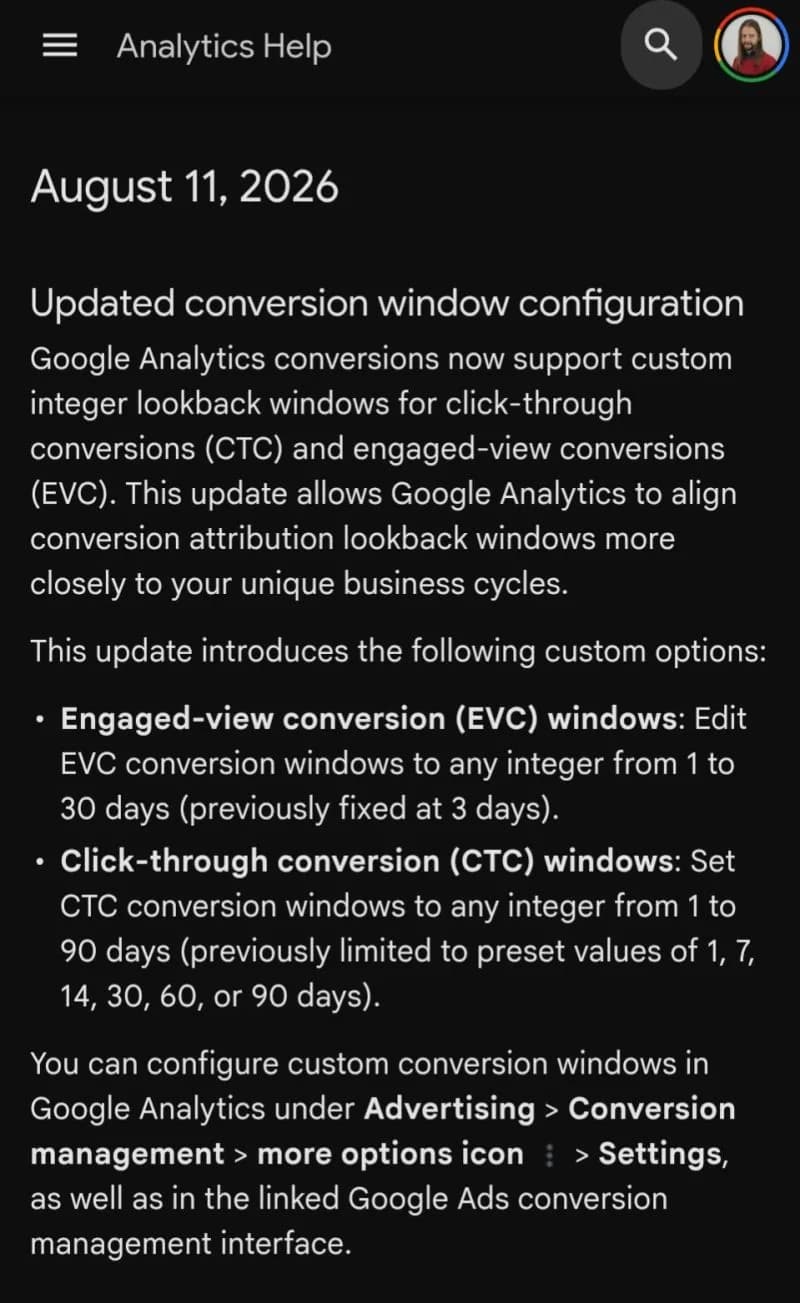
Per the 11 August release notes, click-through and engaged-view conversion windows in GA4 now accept any custom integer day count instead of preset buckets.
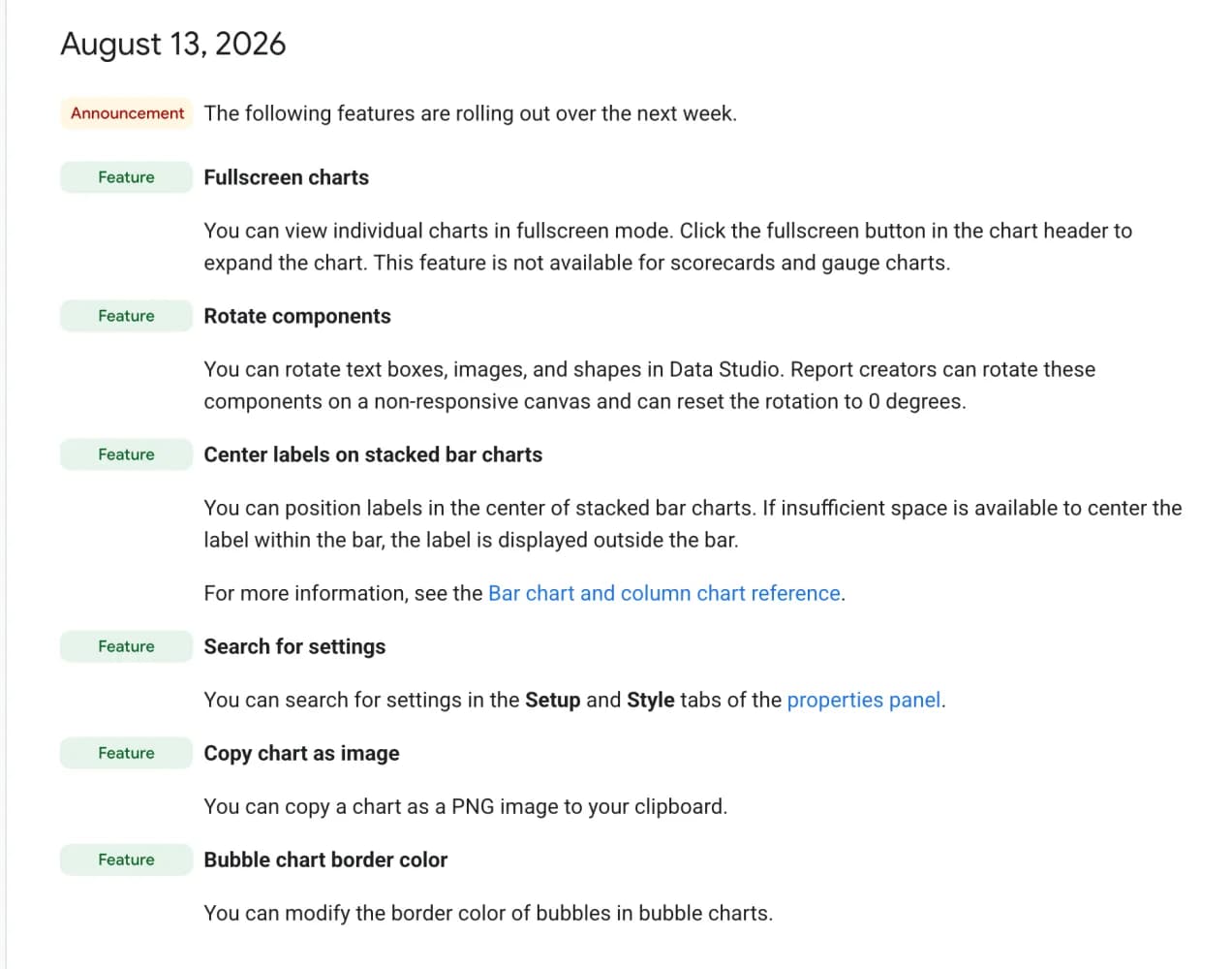
The 13 August release adds fullscreen viewing for individual charts, rotation controls for text, images, and shapes on non-responsive canvases, centred labels on stacked bars, and settings search in the properties panel.
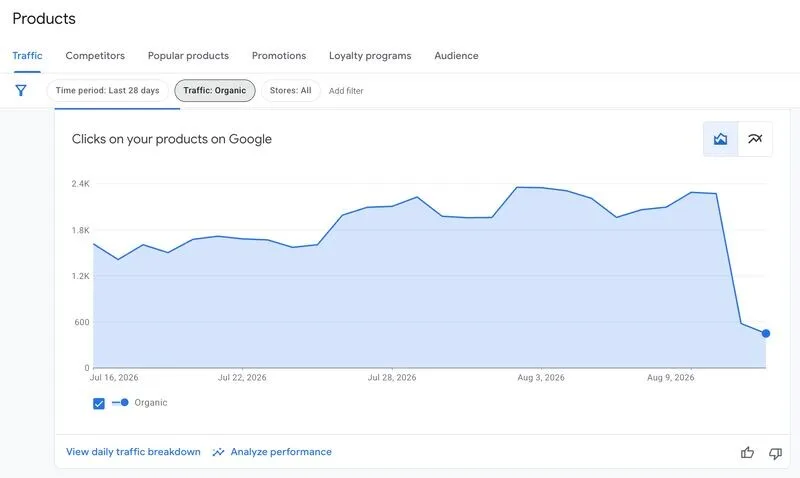
Merchant Centre analytics showed a dip in organic figures across multiple accounts from around 11 August, suggesting a reporting issue rather than a real change in performance.
Microsoft’s Conversions API provides a server-side route for sending conversion events. Review access, event mapping and duplicate handling before adding it to an existing UET setup.
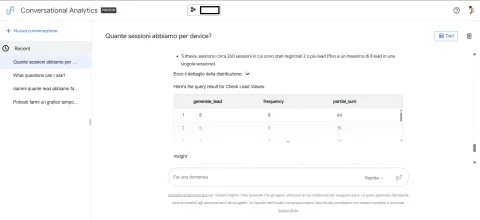
Google added Conversational Analytics inside Looker Studio, carrying a preview badge and available on the free tier. Questions in plain language return analysis of connected data.
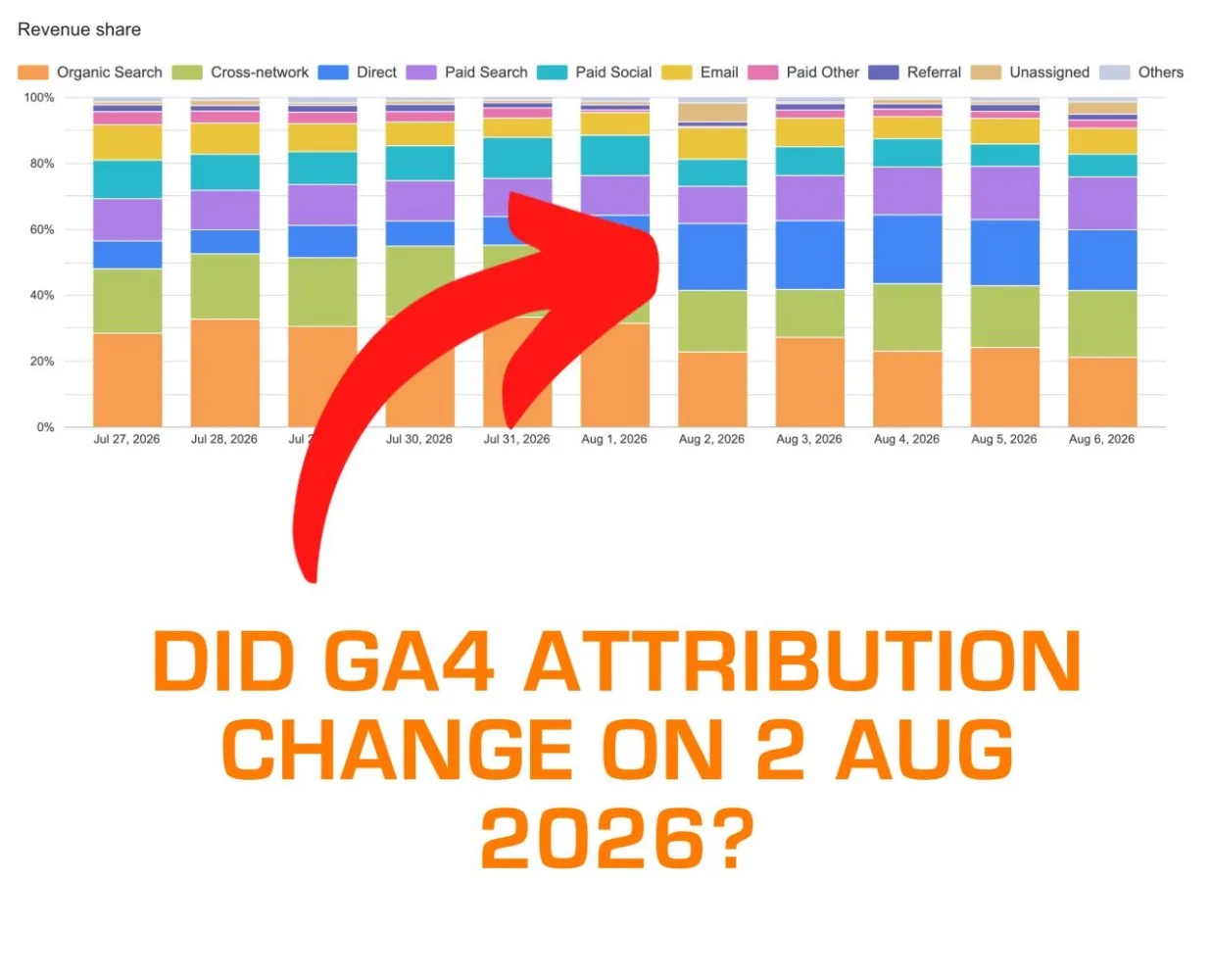
Multiple unrelated GA4 properties show Direct suddenly gaining revenue from 2 August, with consistent patterns suggesting an attribution bug rather than a tracking change.
In this Community Q&A edition of Ads Decoded, Google Ads Liaison Ginny Marvin answers practitioner questions on measuring campaign success as search queries turn into conversations.
A new "Has improvements" Tracking Status was spotted on a store visit conversion action during an account audit. Clicking it shows what is missing to enhance the conversion setup.