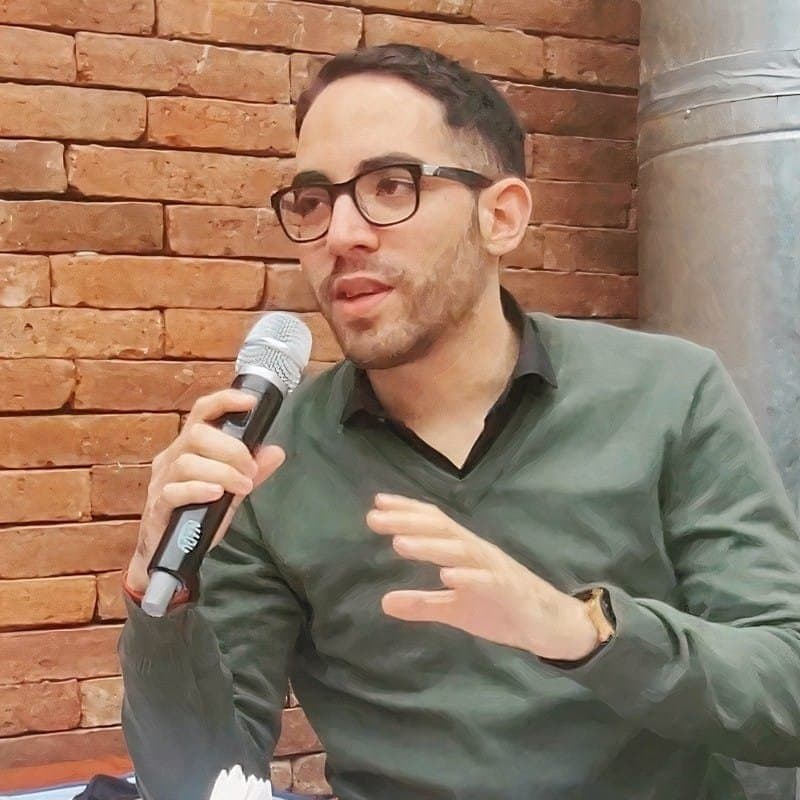
Marcin Wsól has surfaced an upcoming Google Ads change: Google will automatically link Google Ads accounts to Merchant Center for advertisers running Shopping campaigns or product-feed-driven inventory. The auto-link enables product data and conversion flow between the two platforms, using the same mechanics as the YouTube auto-linking covered above.
Arpan Banerjee has flagged a Google Ads auto-linking change with a hard deadline of 10 June 2026. From that date, Google will automatically link YouTube channels to Google Ads accounts unless the advertiser opts out before the deadline.
Jason King has spotted phone support reappearing in the Google Ads dashboard Overview: a return of a support surface that had been progressively de-emphasised in recent years. The option appears in the dashboard's contact-support pane, alongside chat and email options, for advertisers who reach the support flow via the Overview tab.
Arpan Banerjee has flagged a second hard deadline from Google: UploadClickConversions is deprecated, effective 15 June 2026. After that date, the API method for uploading click-attributed conversions will no longer be supported, and integrations still using the deprecated endpoint will break.
Google Ads has rolled out full placement reporting for the Search Partner Network, which is surfaced via the PPC News Feed. Advertisers can now see specific placement-level performance data across the Search Partner Network: closing the long-standing gap where Search Partners delivered traffic with effectively no placement visibility.
Google Ads will enforce the 37-month data retention policy from 1 June 2026, with VIVEK GUPTA flagging the deadline ahead of enforcement. The policy was officially confirmed in the Google Ads Developer Blog (covered in Week 19) and applies to the Google Ads API, Google Ads scripts, the Google Analytics Data API, and the BigQuery Data Transfer Service.
Barry Schwartz has flagged that Google is testing Merchant Advisor: a Merchant Centre equivalent to Google Ads Advisor, originally spotted by Tamara Hellgren on Momentic and surfaced by Hana Kobzová in her weekly digest. The product mirrors Ads Advisor's design pattern: in-context AI assistance for diagnosing feed issues, troubleshooting disapprovals, surfacing optimisation opportunities, and answering platform questions through natural-language interaction with the Gemini-powered Advisor.
Matt Navarra has flagged a new LinkedIn product: power users will soon be paid to give advice. The launch positions LinkedIn power users as paid advisors inside the LinkedIn platform: answering questions, providing tactical guidance, and earning revenue directly from the advice they share, in a model similar to Substack's paid newsletters or Cameo's celebrity messaging.
Matias Axel Ramayo has surfaced a quiet but consequential Meta Ads default change, with the original spot credit going to Carolina Arjona Moyano. Content Features: the Meta setting that lets the system apply AI-driven creative improvements to image and video assets (enhancements, edits, automated variations): is now automatically activated at the account level for all advertisers.
Navah Hopkins has issued a clarification correcting a misunderstanding circulating in the paid-media community. The launch is LinkedIn CTV: LinkedIn's Connected TV inventory: supporting LinkedIn profile targeting (job seniority, company lists, industry, function).
Meta has launched Instagram Instants, a new content surface for share-in-the-moment posts that sit between Stories and Reels in the Instagram content ecosystem. Instants are positioned as ephemeral content with a longer shelf life than Stories but shorter than Reels, designed for casual real-time sharing rather than polished content production.
Meta has launched incognito chat with Meta AI inside WhatsApp: letting users interact with Meta AI in a private mode that doesn't surface in chat history, doesn't influence Meta AI's memory of the user's preferences, and doesn't feed back into Meta's training data. The launch aligns with WhatsApp's broader privacy positioning and addresses user concerns about Meta AI's data handling on the messaging surface.
Matias Axel Ramayo has flagged a quiet but consequential Meta Ads behavioural change: when an ad within an ad set reaches its spending limit (delivery, frequency, or budget cap), Meta now redistributes the remaining budget to the higher-performing ads in the same ad set rather than splitting it equally. The change is part of Meta's broader auction-mechanic refinement and isn't formally announced.
Meta has renamed the Detailed Targeting option to Advantage+ Detailed Targeting, aligning the audience-targeting feature with Meta's broader Advantage+ branding. VIVEK GUPTA has flagged the rename with its strategic framing: this aligns with Meta's broader Advantage+ direction, where the system suggests interests, behaviours, and demographics aligned with campaign goals: but advertisers retain control over the configuration.
Meta has added a dedicated Lead Nurturing section to Ads Manager, surfaced by Bram Van der Hallen. The section consolidates lead-nurture workflows: follow-up sequences, retargeting setups, and lead-quality scoring: into a single Ads Manager surface, rather than scattering them across audience setup, campaign settings, and external integrations.
Bram Van der Hallen has flagged an important Meta image-asset update: when uploading multiple image assets in the refreshed Meta Ads interface, the system handles asset grouping and rotation differently than the previous interface: with implications for advertisers who have been running structured creative tests across image variants.
Thomas Eccel has spotted an AI video generator CTA appearing in Demand Gen campaigns as a beta feature: a "Create video" button in the campaign creation flow that lets advertisers generate AI-powered video assets directly in Demand Gen without going through external production tooling. The feature is in beta and not yet broadly available.
Paolo Bietolini has flagged a new Google Tag Gateway feature that lets advertisers cloak the GTM container ID served to the browser. The feature: released around 8 May: serves the GTM script under a custom domain rather than the standard googletagmanager.com path, hiding the container ID from competitive scrapers and ad-blocker fingerprinting.
Google Analytics 4 is adding AI Assistant as a Default Channel Group: a structural addition that will let GA4 properties automatically track traffic from ChatGPT, Claude, Perplexity, Gemini and other AI assistants as a discrete channel rather than burying it under Referral or Direct. Brie E.
Google Merchant Centre has announced that Merchant Centre for Agencies is now generally available globally as of 11 May 2026. The product was previously generally available in the US and Canada with a pilot in other markets through March 2026; the May rollout extends full GA worldwide.
Amazon has retired the Rufus AI shopping assistant and replaced it with Alexa for shopping, in a structural pivot that turns the AI shopping experience from passive Q&A to agentic recommendation and execution. Christian Umbach has flagged the launch with the most detailed structural read; Roger Dunn captures the strategic significance ("Amazon just turned Rufus into an agent"); Vanessa Hung provides additional context on Amazon's long-running voice-commerce strategy dating back to 2014.
Anthropic has confirmed that the Claude Platform on Amazon Web Services (AWS) is now generally available, giving AWS customers full access to the Claude Agent SDK, the full Claude model lineup (Opus, Sonnet, Haiku), and the broader Claude Platform tooling directly inside the AWS environment. The launch removes the previous limited-access barrier and makes Claude a sanctioned AI platform option for any AWS customer.
Amazon is rolling out an AI-driven Full Funnel campaign type for 1P Vendor accounts, surfaced by Saumitra Pandey. The new campaign type automates budget allocation and bidding across the full funnel: upper-funnel awareness through to lower-funnel conversion: for Amazon Vendor (1P) sellers, with Amazon's AI handling the cross-tactic budget orchestration that has historically required manual setup across separate Sponsored Products, Sponsored Brands, and DSP campaigns.
Amazon Ads has introduced Dynamic TV Creative for Prime Video: a new capability that automatically personalises TV ad creative based on viewer signals, environment, and contextual data. The format brings dynamic, creative, and optimisation patterns familiar from display advertising into the Prime Video CTV inventory, enabling brands to serve materially different versions of the same base creative to different viewer segments.
OpenAI has launched Codex in preview on the ChatGPT mobile app, letting developers remotely control It from their phones. Developers can now start new coding work, review outputs, steer execution, and approve next steps directly from the ChatGPT mobile app: the AI coding assistant is becoming a fully mobile-accessible product rather than a desktop-only tool.
Google has published its first major piece of official guidance on optimising websites for generative AI features on Google Search: including AI Overviews, AI Mode, and the broader generative AI experiences. Aleyda Solís and Charly Wargnier have both flagged the publication as having practitioner framing: this is the canonical reference Google has been deferring to for over a year, finally formalising what Google expects from websites that want to be cited or surfaced in AI-generated responses.
Lee Woodman has flagged that Shopify has rolled out llms.txt files across its entire 7-million-store portfolio. The llms.txt standard: analogous to robots.txt for traditional crawlers: gives AI crawlers (ChatGPT, Claude, Perplexity, Gemini) a structured signal about which content can be used for AI training and citation purposes.
Publicis Groupe has entered into an agreement to acquire LiveRamp, the global data collaboration platform: the largest agency-side acquisition of a data infrastructure provider in recent memory. The deal accelerates Publicis's data collaboration strategy and brings LiveRamp's identity-resolution, data-clean-room, and audience-collaboration infrastructure under Publicis Groupe's ownership.
Each update has one permanent page. New evidence about the same development is added to that page. Dates identify the source report or newsletter coverage; article publication dates appear in the full view.
2026 newsletter archive: 38 editions and 1,562 distinct updates through Week 36. Source descriptions, credits and media are preserved; missing details remain marked.
Spotted an update worth sharing?
Share the original source and what changed. If it is already covered, help us improve the existing update.