INDEPENDENT MINDS. SHARED AMBITION.
THE COLLECTIVE NEWSROOM

Paid media news and updates.

The changes that matter to advertisers, with the sources behind them and a practical next step. Pick a topic and catch up at your own pace.

582 updates
Newsfeed display mode

Google Ads

Search Partner Network gets full placement reporting

Google Ads has rolled out full placement reporting for the Search Partner Network, which is surfaced via the PPC News Feed. Advertisers can now see specific placement-level performance data across the Search Partner Network: closing the long-standing gap where Search Partners delivered traffic with effectively no placement visibility.

Google Ads

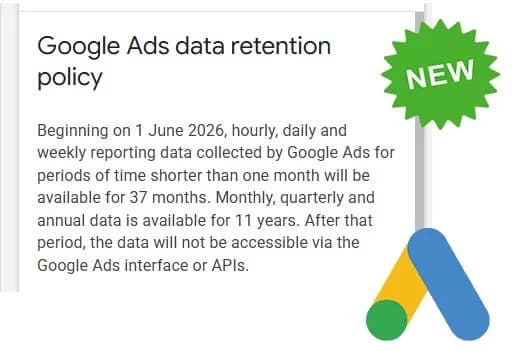
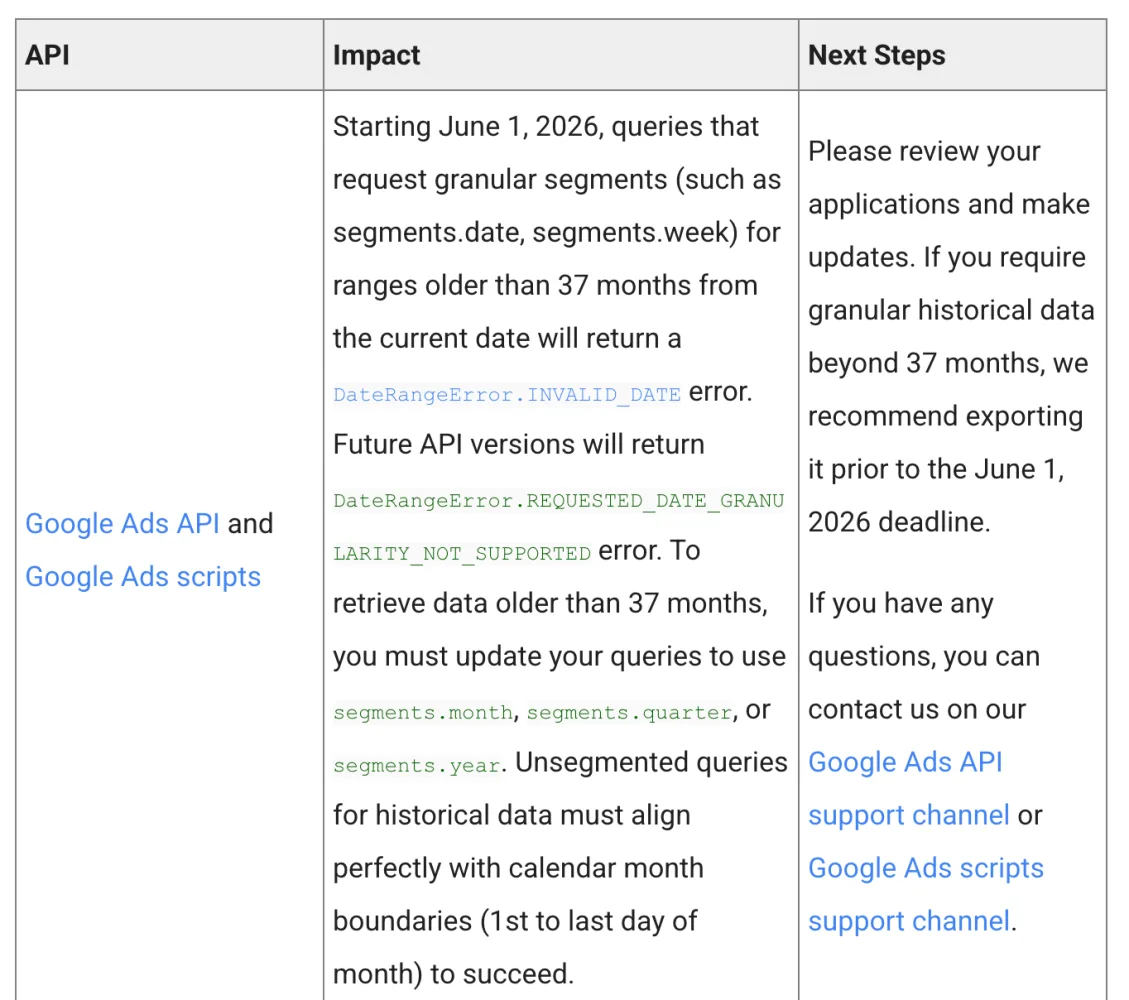
Data retention 37-month policy enforcement: final reminder before 1 June

Google Ads will enforce the 37-month data retention policy from 1 June 2026, with VIVEK GUPTA flagging the deadline ahead of enforcement. The policy was officially confirmed in the Google Ads Developer Blog (covered in Week 19) and applies to the Google Ads API, Google Ads scripts, the Google Analytics Data API, and the BigQuery Data Transfer Service.

SourceLinkedIn

Google Merchant Center

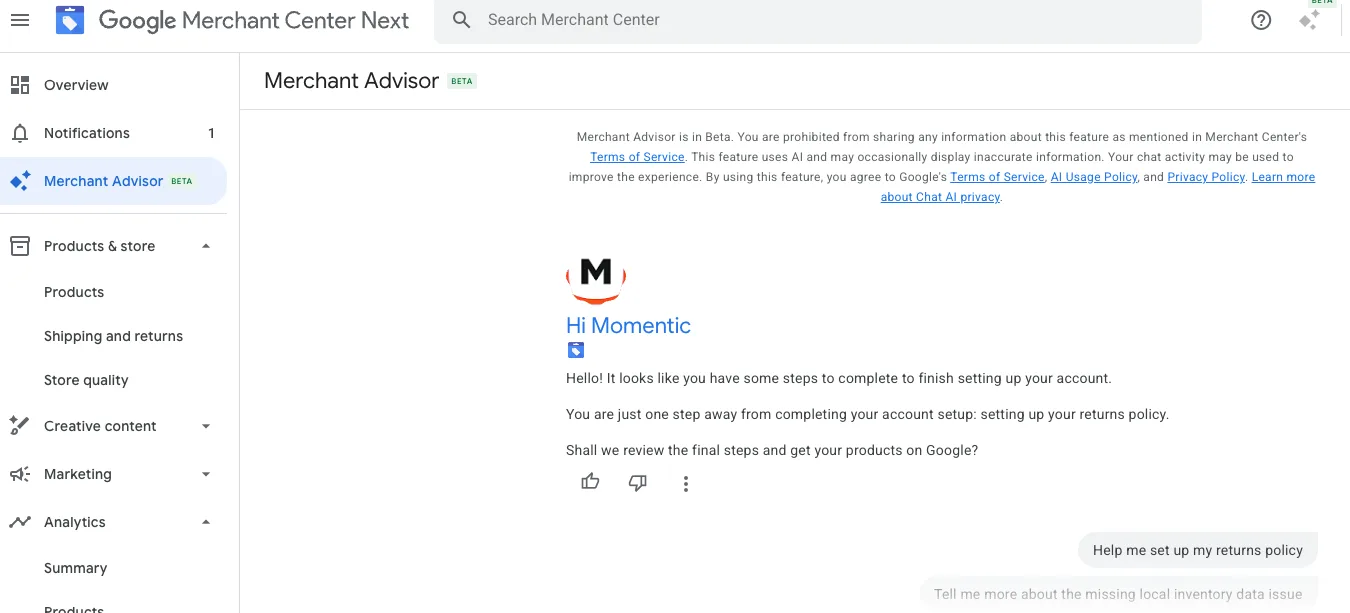
Merchant Advisor testing: Google Ads Advisor pattern lands in Merchant Centre

Barry Schwartz has flagged that Google is testing Merchant Advisor: a Merchant Centre equivalent to Google Ads Advisor, originally spotted by Tamara Hellgren on Momentic and surfaced by Hana Kobzová in her weekly digest. The product mirrors Ads Advisor's design pattern: in-context AI assistance for diagnosing feed issues, troubleshooting disapprovals, surfacing optimisation opportunities, and answering platform questions through natural-language interaction with the Gemini-powered Advisor.

SourceMomentic

Google Ads

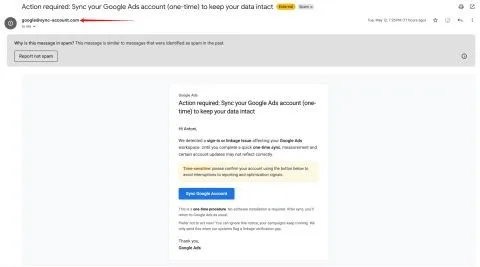
Google Ads scam emails circulating: synchronisation-error pretext

Thomas Eccel and Tamás Geiger have both flagged a wave of phishing emails targeting Google Ads advertisers, using a "synchronisation error in your Google Ads account" pretext to trick recipients into clicking a malicious link that purports to fix the synchronisation issue. The emails are sophisticated enough to bypass standard spam filters and reach advertisers' primary inboxes.

SourceLinkedIn

Google Ads

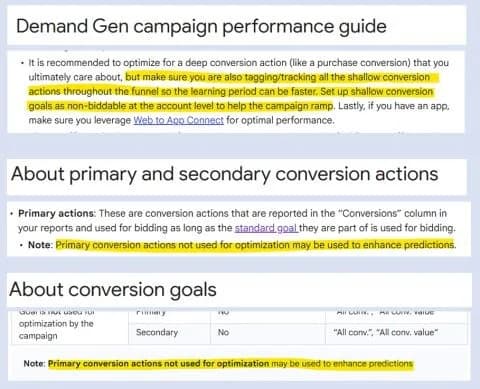
Help-page update clarifies primary conversion actions not used for optimisation

Dario Zannoni has flagged a quiet but consequential update to Google's Help pages: primary conversion actions not used for bidding optimisation may be treated differently than expected. The clarification updates the public documentation to explicitly state how primary conversions feed (or don't feed) into Smart Bidding optimisation when they're not selected as the optimisation goal.

SourceLinkedIn

Google Ads

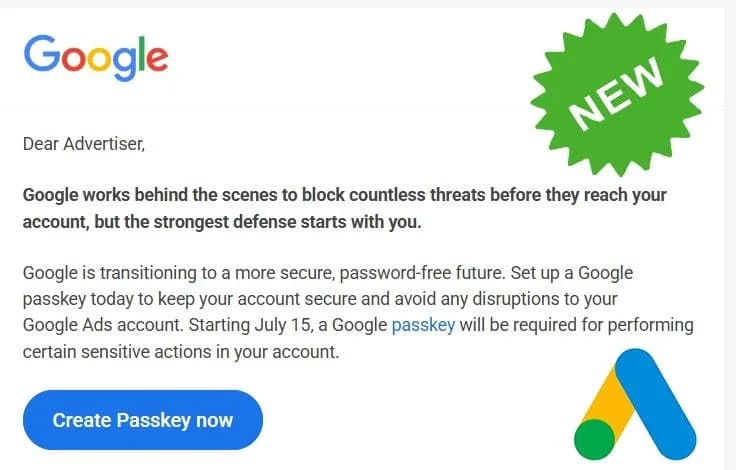
Passkeys required for Google Ads sensitive actions from 15 July

Vivek Gupta has flagged that Google Ads will require Passkeys for certain sensitive actions starting 15 July 2026, as part of the broader Security Agent/authentication overhaul covered in Week 18. The requirement applies to specific high-risk operations rather than to all account access.

SourceLinkedIn

Microsoft Advertising

Microsoft Ads adds a new transparency layer for Performance Max

Microsoft Advertising has expanded transparency controls for Performance Max campaigns, detailed in a May 2026 blog post. The update gives advertisers clearer visibility into PMax campaign behaviour, closing the same transparency gaps practitioners have been flagging across Google's Performance Max product for the past year.

Google Ads

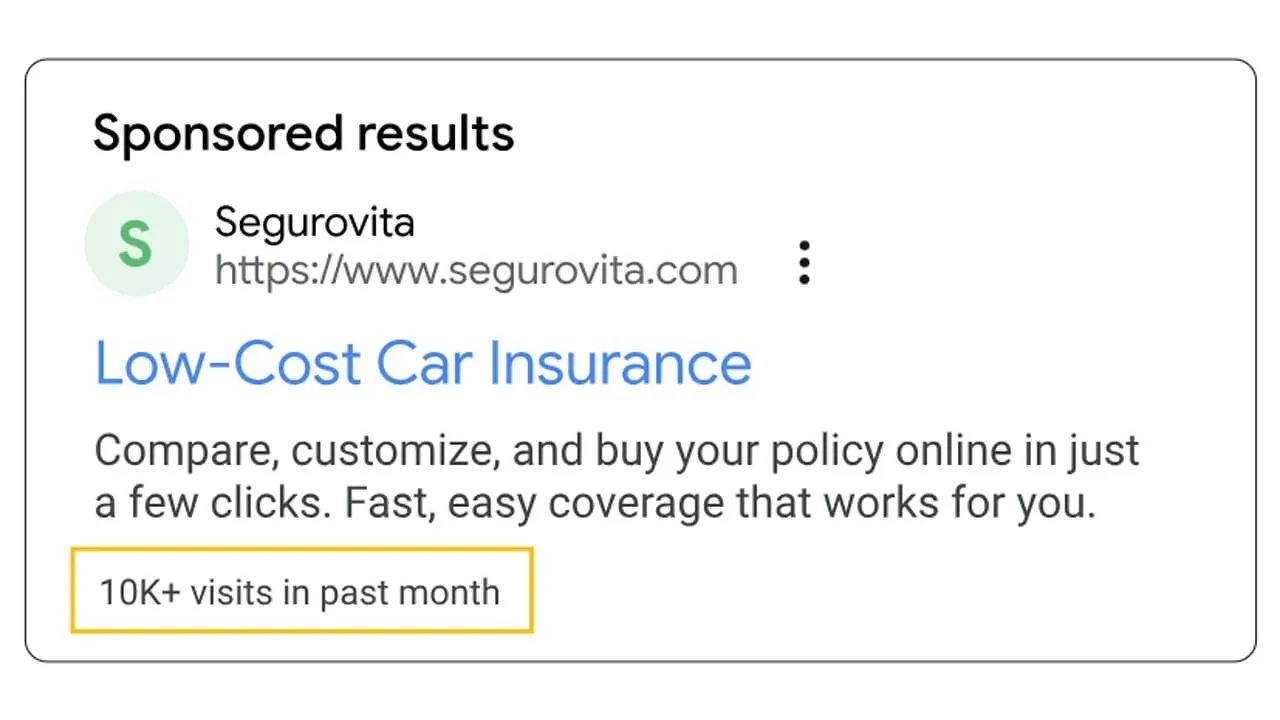
Site Visits asset officially launches in Google Ads

Google has officially introduced the Site Visits asset for Google Ads. You can see visit metrics in Search, Performance Max, and AI Max ads: boosting both ad performance and credibility by showing past visit volume to the advertised location or website.

Google Ads

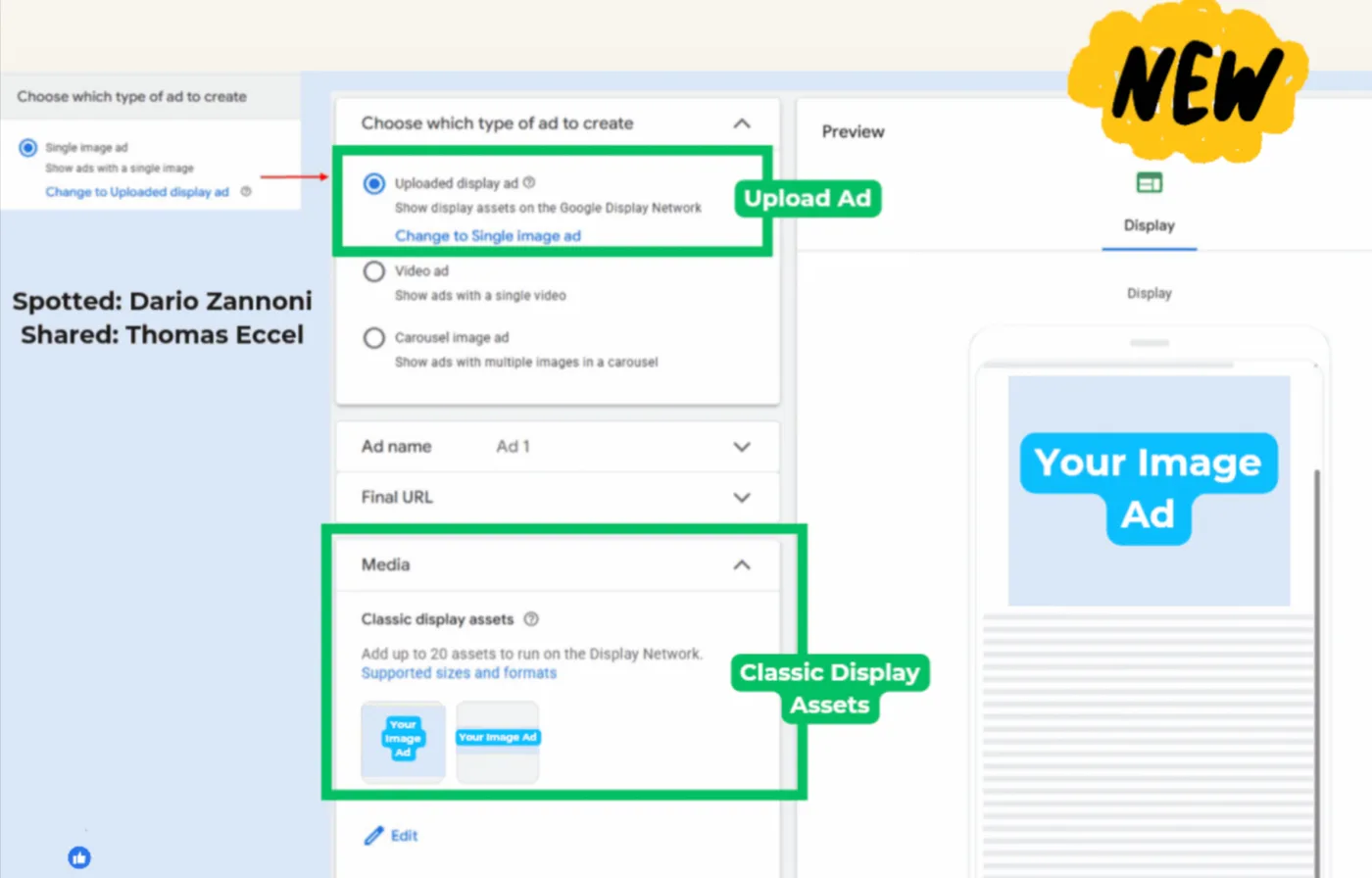
Uploaded display banners now serve through Demand Gen on the Google Display Network

Google has extended Demand Gen campaigns to accept uploaded GIF, JPG and PNG banners directly, with the banners serving on the Google Display Network from within the same Demand Gen campaign. Thomas Eccel has flagged the rollout (with Dario Zannoni credited for the initial sighting) and frames the strategic significance: this is the latest signal of an ongoing Display-to-Demand-Gen migration, with a formal "upgrade" path no longer looking far-fetched.

SourceLinkedIn

Google Ads

Google I/O 2026 set for 19–20 May with livestreamed keynotes and sessions

Google has confirmed Google I/O 2026 for 19–20 May, with livestreamed keynotes, technical sessions, and the standard set of product announcements that frame the year's developer roadmap. The event sits one day before Google Marketing Live on 21 May, creating a three-day window for major Google product announcements that will shape paid-media practice through the rest of 2026.

Google Merchant Center

Google brings shopping checkout buttons back to Search via UCP

Google has rolled out shopping checkout buttons in Google Search results: the first native checkout shopping experience in Search since the original "Buy on Google" surface was killed in 2023. Juozas Kaziukėnas has flagged the launch and traced its mechanics: the checkout flow is powered by Universal Commerce Protocol (UCP), the same payment infrastructure that has been running in Gemini and AI Mode for the past two months.

Google Ads

Google Ads 37-month data retention policy officially confirmed

Google has officially confirmed the new data retention policy via the Google Ads Developer Blog, providing the canonical source URL that was missing when the change was first flagged in Week 18 via advertiser email. Effective 1 June 2026, Google Ads API, Google Ads scripts, Google Analytics Data API, and the BigQuery Data Transfer Service all transition to a 37-month retention window for granular performance statistics (daily, hourly, weekly).

Google Ads

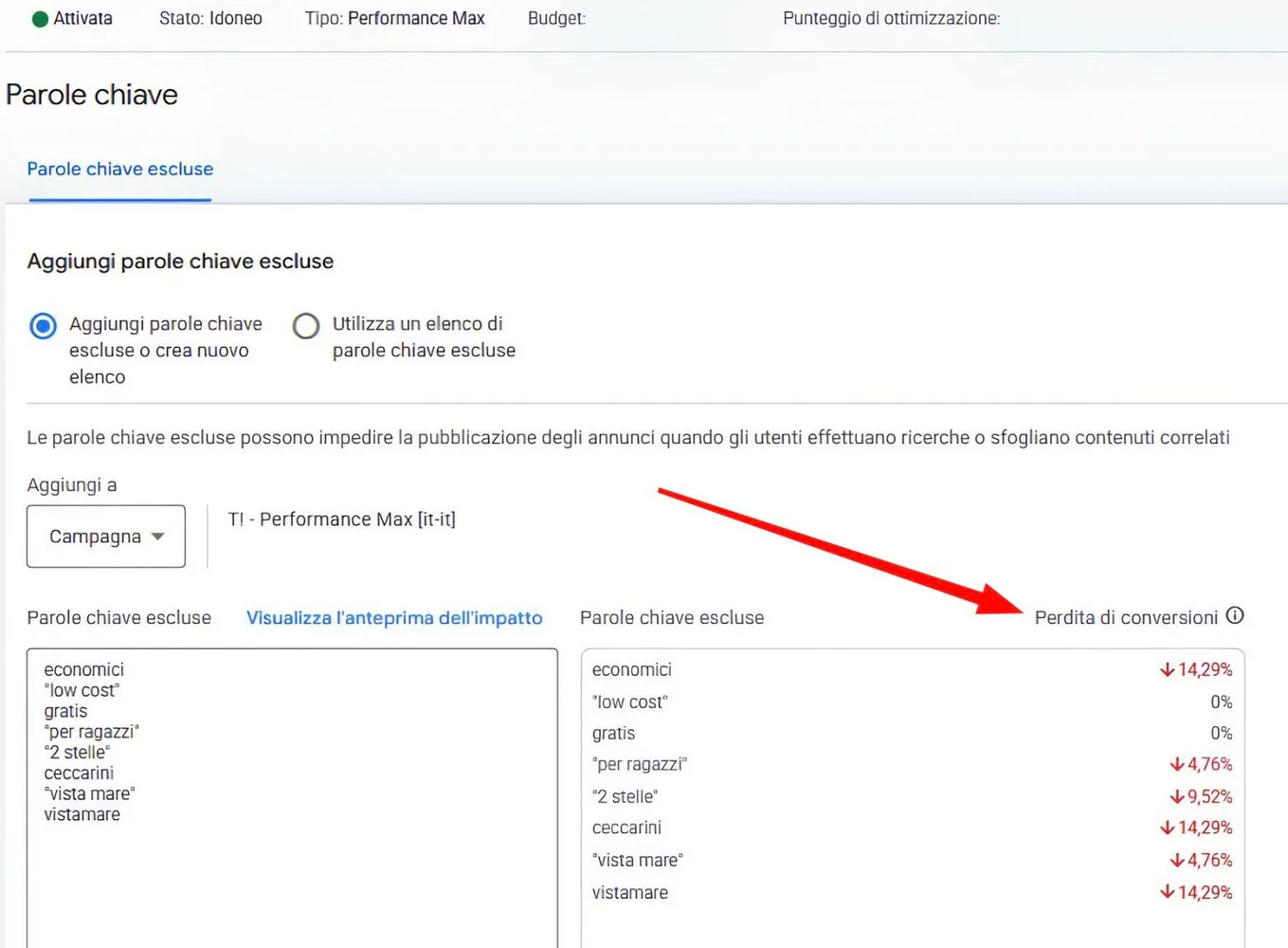
Performance Max adds Impact Preview for negative keywords

Google Ads has rolled out an Impact Preview for negative keywords inside Performance Max: the first time advertisers can see the estimated conversion impact of a negative before committing it to the campaign. The preview shows the expected "Loss in conversion value" as a percentage at the per-keyword level.

SourceLinkedIn

Microsoft Advertising

Microsoft Ads dynamic remarketing delivers account-wide lift

Joey Bidner has shared a practitioner read on Microsoft Advertising dynamic remarketing: a surface he previously dismissed, assuming Google's market share made Microsoft's inventory irrelevant. The actual results: strong campaign attribution and holistic account lift across multiple test accounts, with dynamic remarketing performing materially better than expected for a non-Google audience surface.

SourceLinkedIn

Google Ads

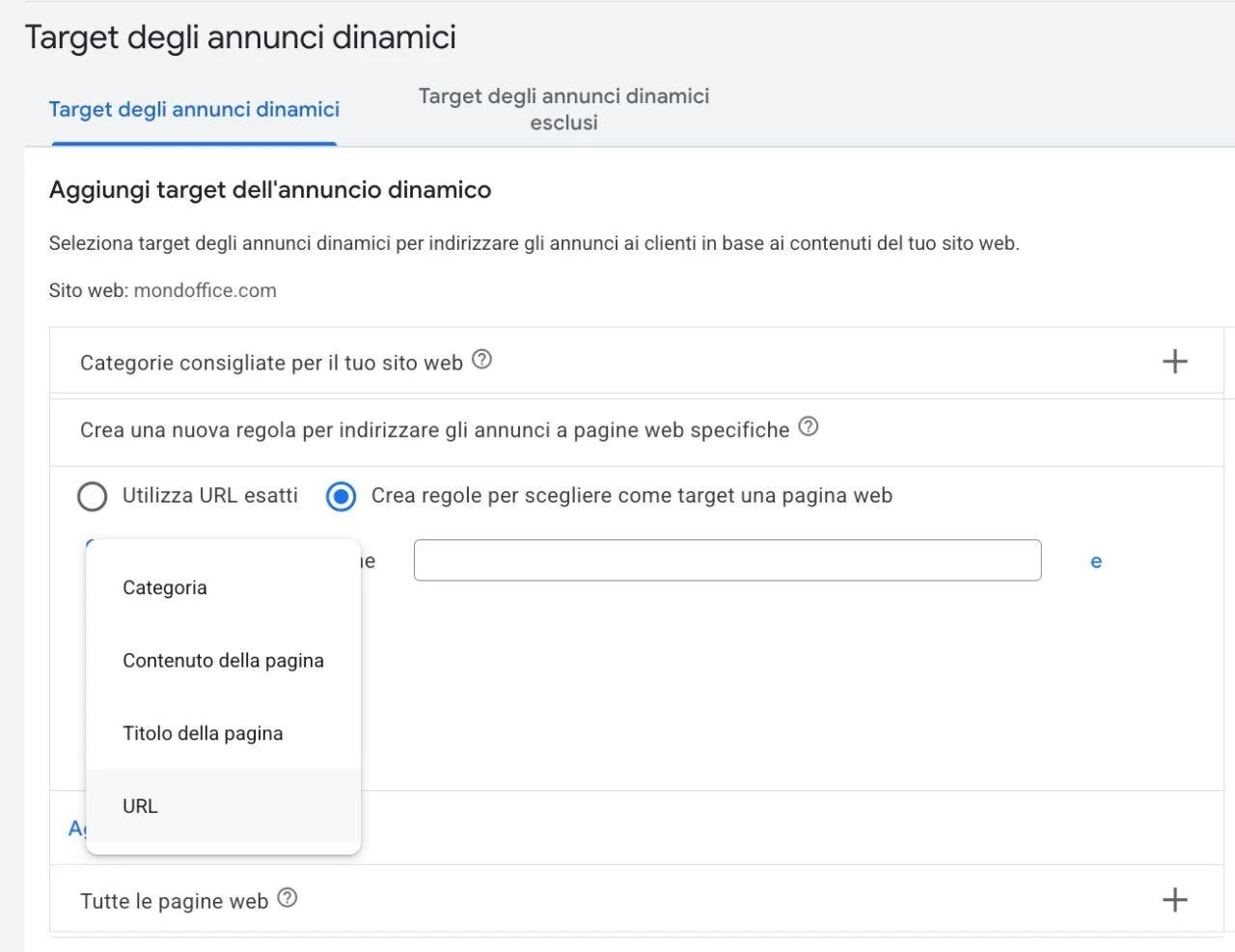
AI Max URL controls clarified ahead of DSA migration

Ginny Marvin (Google Ads Product Liaison) has detailed AI Max's URL-targeting capabilities in reply to Gabriele Benedetti's question about parity with DSA campaigns. The clarification corrects the assumption that AI Max lacks landing-page targeting: AI Max does support a combination of URL rule types: URLs, custom labels in page feeds, and URL combo rules: similar to DSA.

SourceLinkedIn

Microsoft Advertising

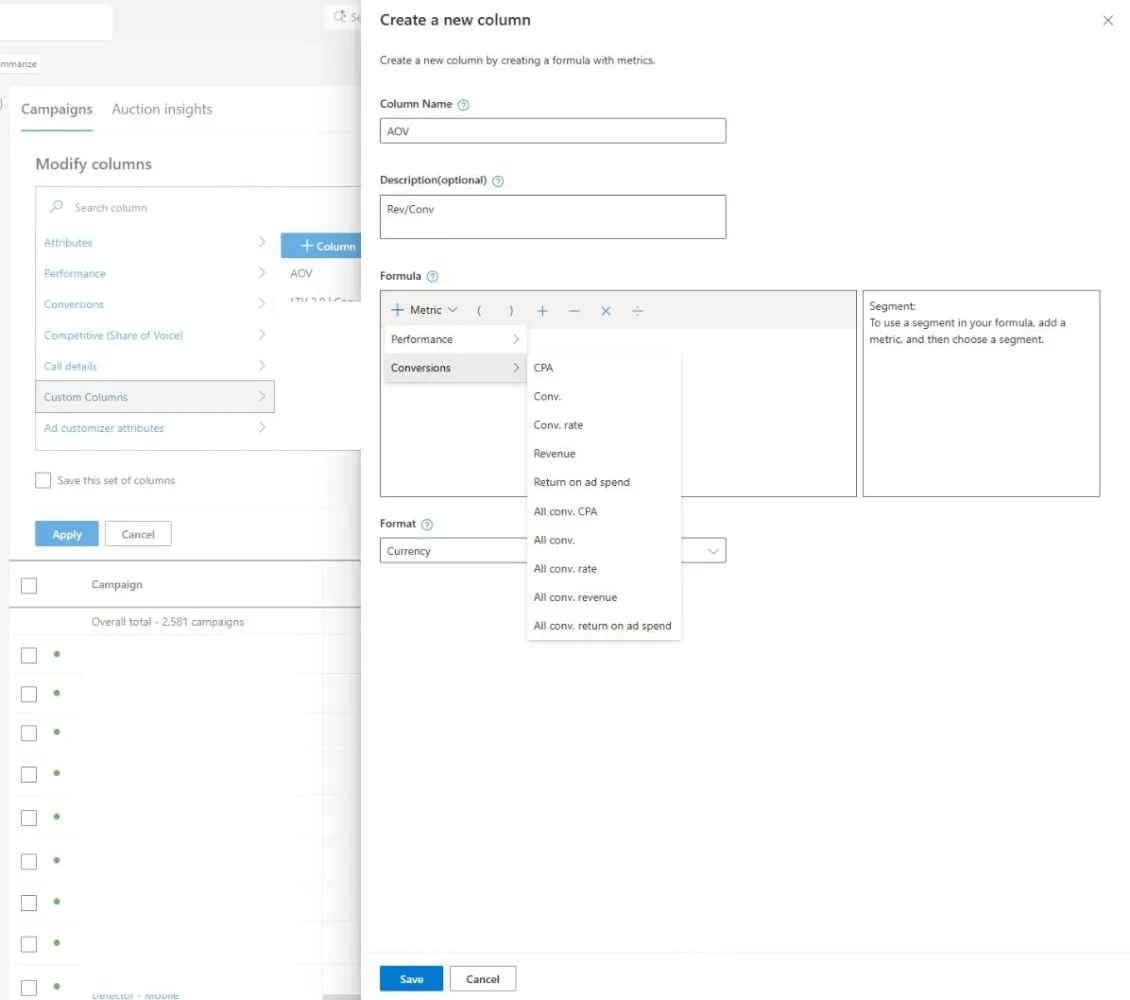
Microsoft custom columns now support all Microsoft Advertising conversion metrics

Microsoft Advertising has expanded custom columns to support all Microsoft Advertising conversion metrics: closing a gap that practitioners had been requesting through community feedback channels. Navah Hopkins has flagged the launch with the practical scope: advertisers can now create custom metrics based on all conversions or primary conversions data, with revenue and ROAS metrics anchored to the values set at the conversion-goal level.

SourceLinkedIn

Google Ads

Pickup cost and minimum order values become required in UK, Switzerland and the EEA from 30 September

Google Merchant Centre has detailed new requirements for local inventory ads and free local listings. A new pickup_cost attribute lets merchants specify pickup costs for in-store products, enabling accurate total costs to be shown on local inventory ads and free local listings.

Google Ads

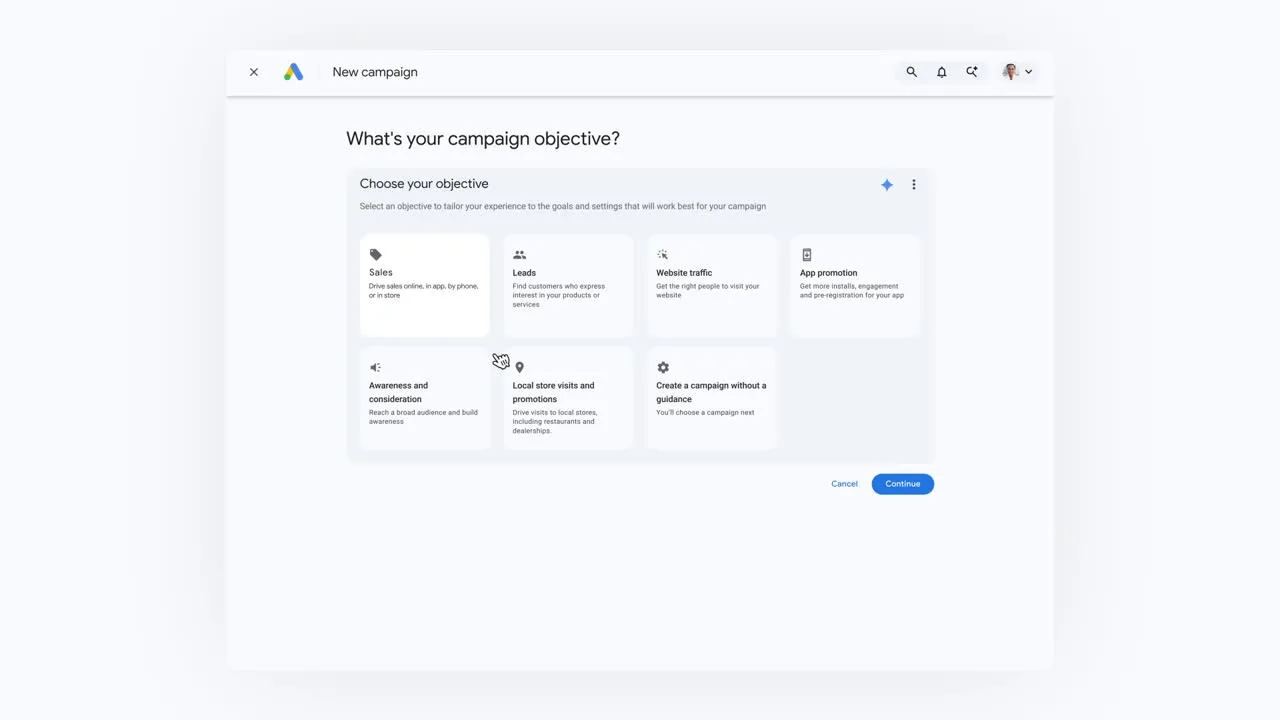
Search campaigns for Travel consolidate fragmented travel formats into AI Max

Google has launched Search campaigns for Travel, consolidating previously fragmented travel campaign types into a single AI Max-powered workflow. Travel advertisers had been managing different campaign types across separate interfaces: Hotel campaigns, Search ads with travel-specific feeds, and other vertical-specific formats: each with their own setup, reporting and optimisation patterns.

Google Ads

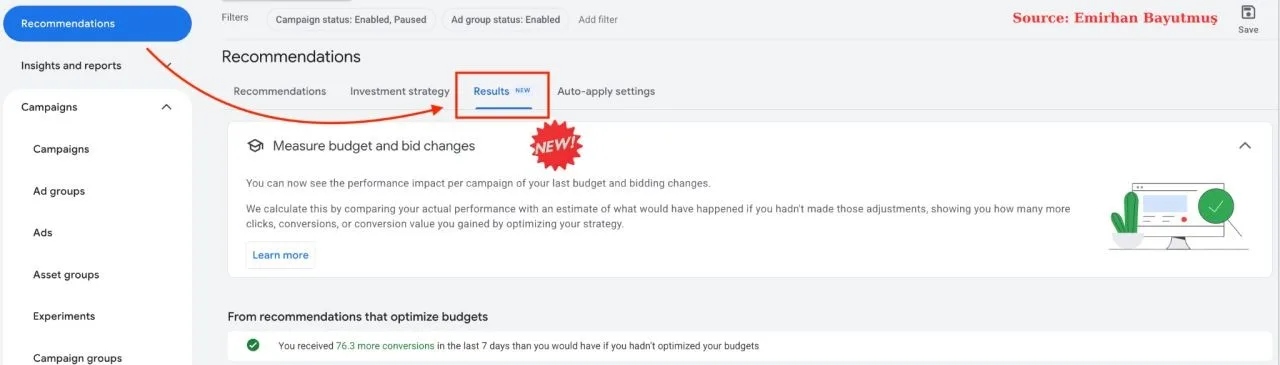
Google Ads adds the Results tab to Recommendations

Emirhan Bayutmuş has spotted a new Results tab appearing inside Google Ads Recommendations, surfacing the actual performance impact of changes: budget updates, bid adjustments: that the advertiser has accepted. The tab is rolling out gradually and is not yet available in every account.

SourceLinkedIn

Google Ads

Google Ads granular reporting capped at 37 months from 1 June

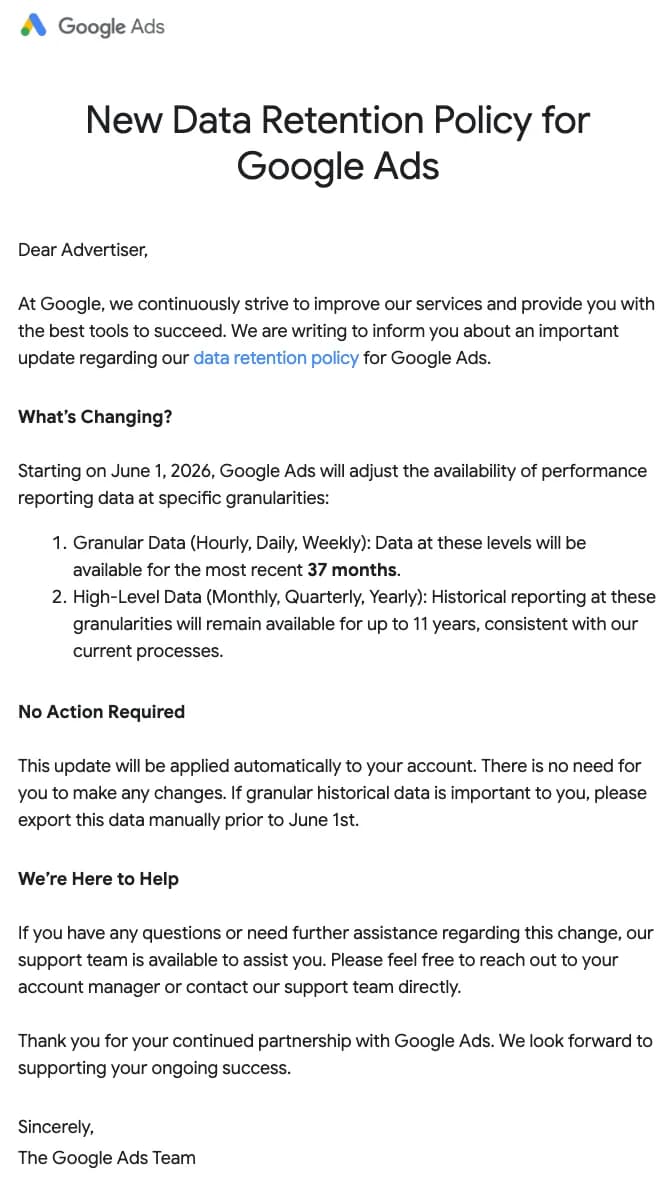
Google has confirmed via direct email to advertisers a new data retention policy for Google Ads, effective 1 June 2026. Hourly, daily and weekly performance reporting will be available for the most recent 37 months only.

SourceLinkedIn

Google Ads

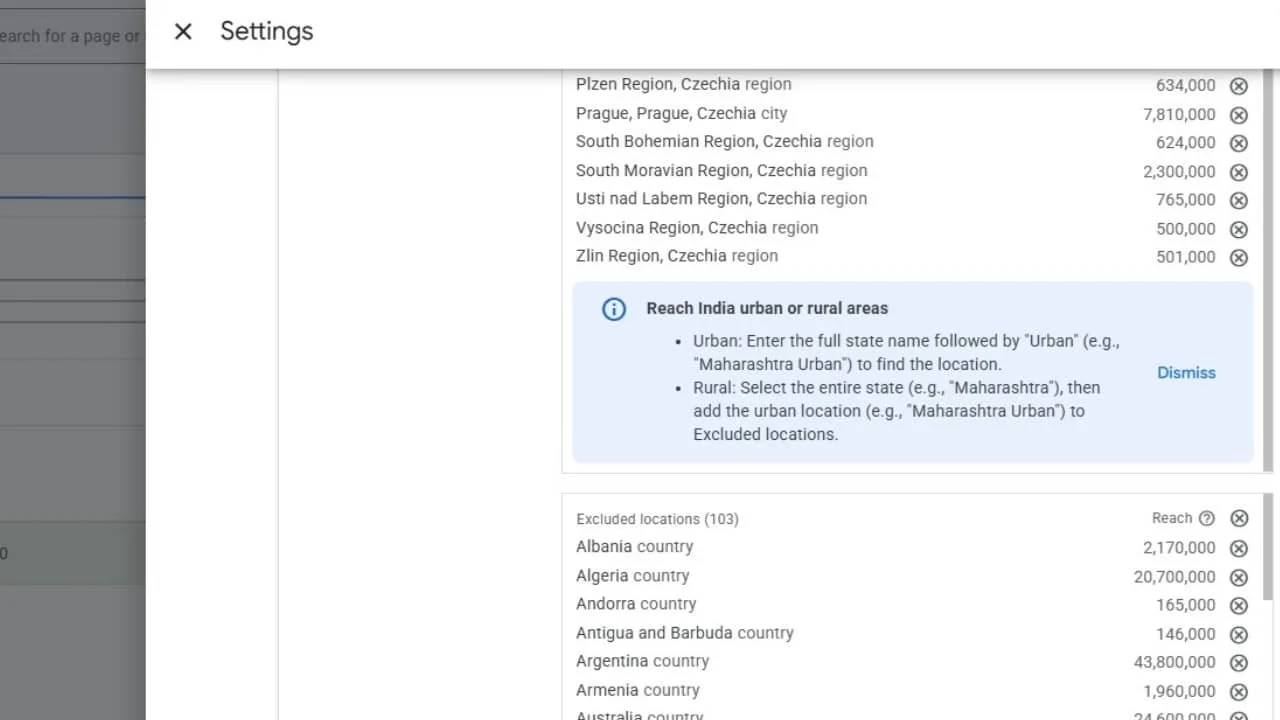
Google Ads improves urban-rural targeting in India

Google Ads has improved the precision of urban-rural targeting in India, enabling advertisers to achieve tighter control over delivery across the country's varied geographic and economic segments. The update lets campaigns specifically target urban or rural areas, allowing for sharper segmentation of audiences that previously fell into mixed targeting buckets.

Google Ads

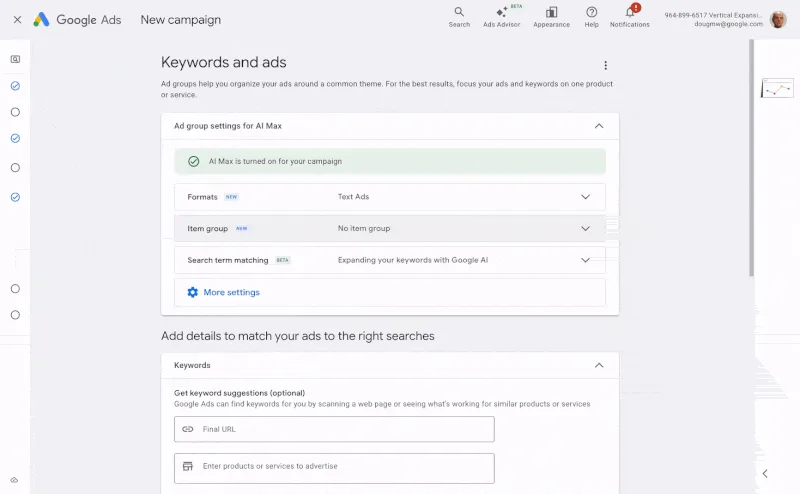
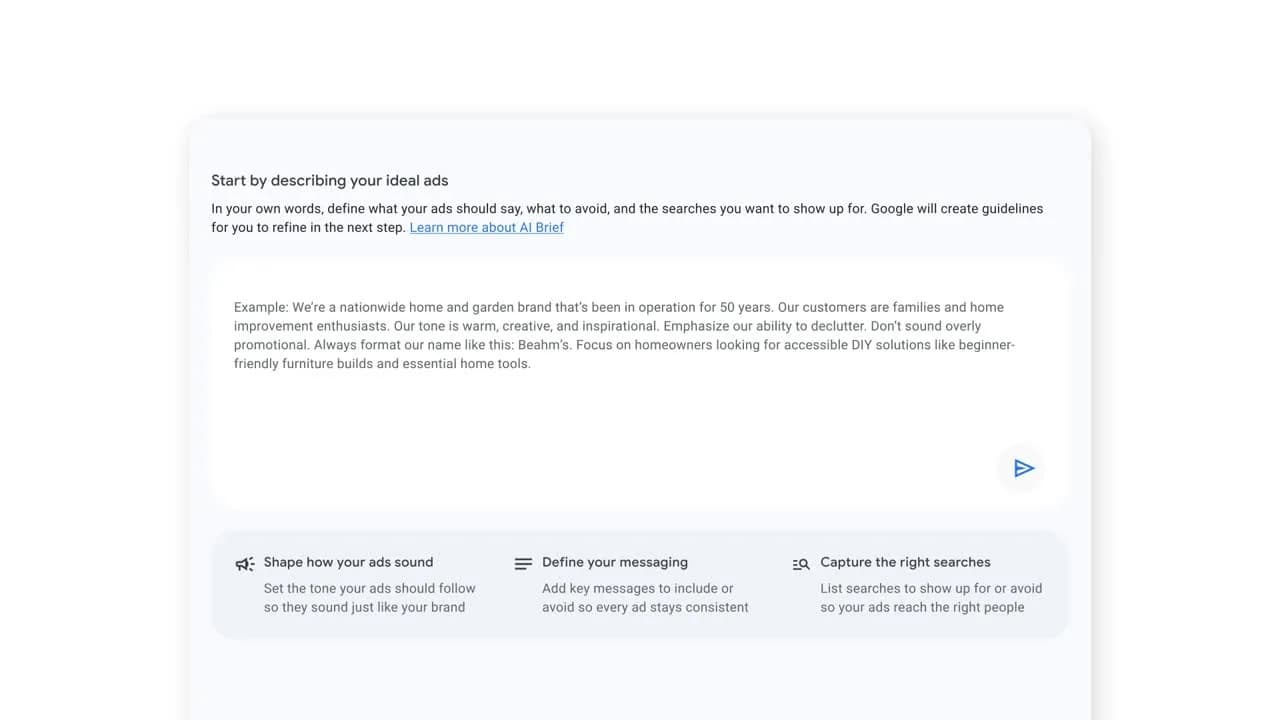
AI Max introduces AI Brief and text disclaimers as the product turns one

Google has marked AI Max for Search's first anniversary with two practitioner-facing additions. AI Brief is a Gemini-powered control layer that lets advertisers steer AI Max in plain English across three dimensions: Messaging Guidelines (what ads should and should not say, e.g. "never mention prices"), Matching Guidelines (which searches to capture or avoid, e.g. "prioritise searches for healthy pantry staples"), and Audience Guidelines (tailored messages for specific cohorts).

Google Ads

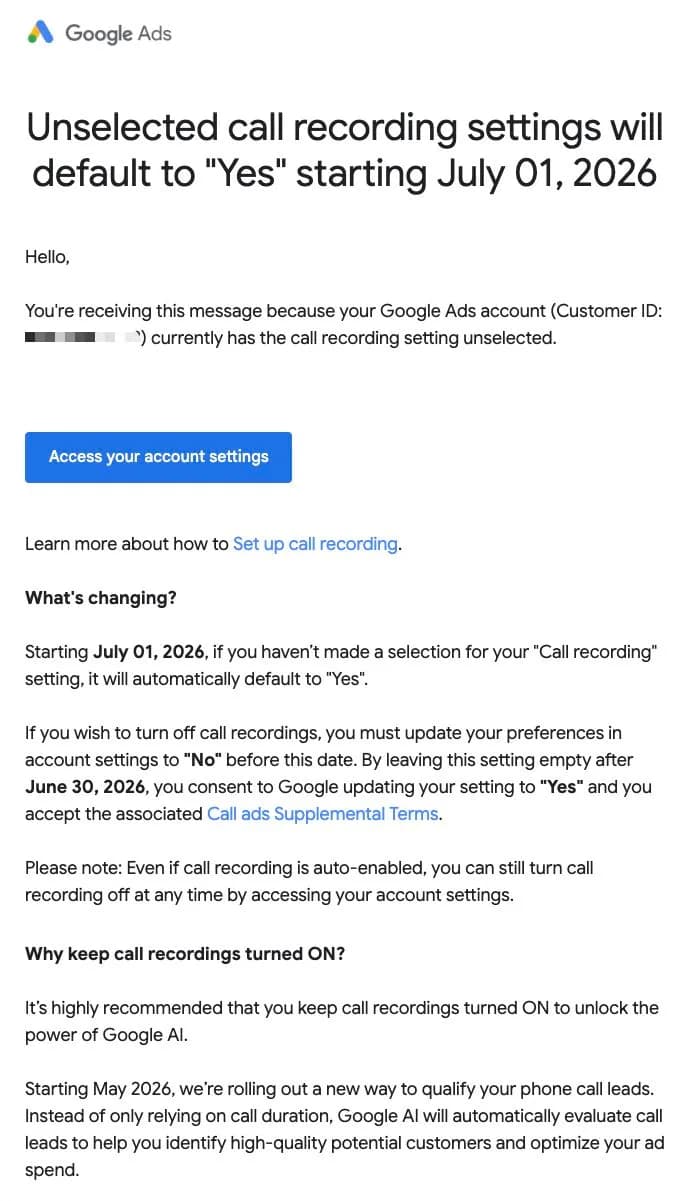
Google Ads switches call recording to "Yes" by default from 1 July

Google Ads will automatically switch call recording to "Yes" on 1 July 2026 for any account that has not actively selected a setting. Accounts that want to keep recording disabled must change the setting to "No" before 30 June; otherwise, the auto-default will apply.

SourceLinkedIn

Google Ads

Microsoft PMax Website Publisher URL report adds conversion and spend metrics

Microsoft Advertising has added conversion and spend metrics to the Performance Max Website Publisher URL report, addressing a transparency gap that had limited the report's usefulness. Navah Hopkins has flagged the change and notes the practical use case: advertisers can now identify which publisher placements are converting and at what spend level, then build Audience Ads campaigns specifically targeting the winning placements.

SourceLinkedIn

Google Ads

Demand Gen Drop adds Commerce Media Suite support and view-through optimisation

Google has rolled out two updates to Demand Gen as part of the April Demand Gen Drop. Demand Gen in Commerce Media Suite extends retailer first-party catalogue and conversion data into Demand Gen inventory in Google Ads, building on existing Display & Video 360 and Search Ads 360 support.

Google Ads

Google Ads API simplifies keyword forecast metrics

Google has simplified the keyword forecast metrics method in the Google Ads API, consolidating previously fragmented forecasting calls into a streamlined GenerateKeywordForecastMetrics method. The change supersedes the prior multi-method approach for keyword and campaign forecasting and aligns the forecasting API with the broader v24 simplification work.

Google Ads

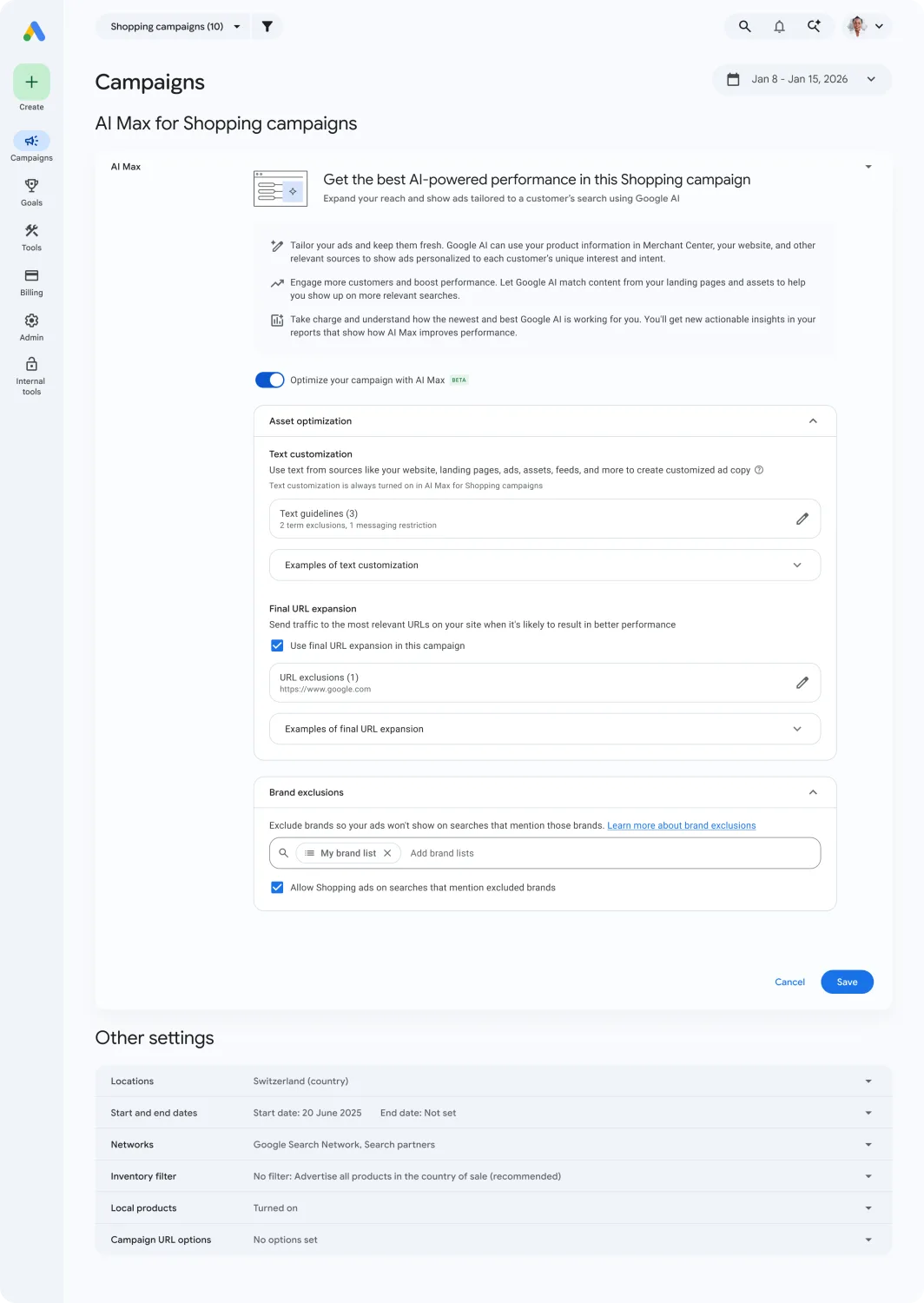
AI Max expands to Shopping campaigns to capture conversational queries

Google has launched AI Max for Shopping, extending the AI Max model from Search into the Shopping campaign type. The system uses Merchant Centre feeds to transform product data into dynamic Shopping ads that answer conversational queries: capturing the long-tail searches that standard Shopping campaigns historically miss because they fall outside literal product keyword matches.

Google Ads

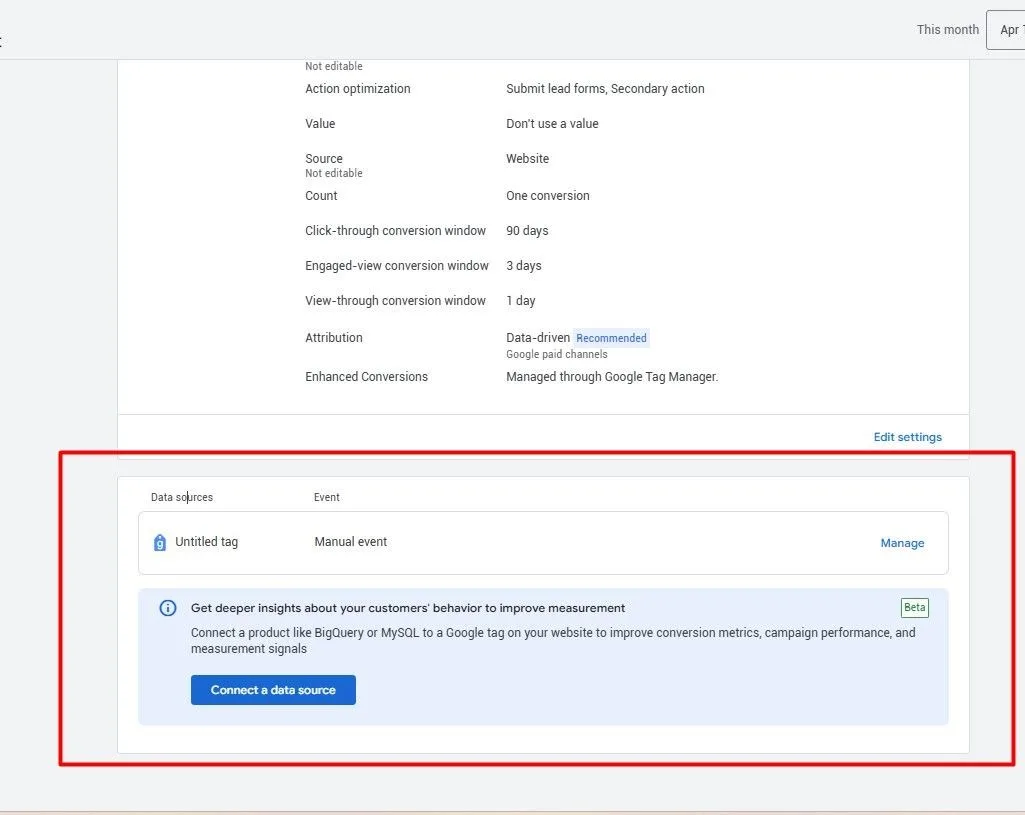
Google Ads adds a Connect a data source option for first-party tag integration

Natasha Kaurra has spotted a new "Connect a data source" option appearing inside Google Ads under Form Submission Conversion Goal, allowing advertisers to feed BigQuery or SQL-level data directly into the Google tag. Govind Singh has confirmed the same option appearing in his accounts.

SourceLinkedIn

30 of 582 updates loaded.

Load more updates

Each update has one permanent page. New evidence about the same development is added to that page. Dates identify the source report or newsletter coverage; article publication dates appear in the full view.

2026 newsletter archive: 38 editions and 1,562 distinct updates through Week 36. Source descriptions, credits and media are preserved; missing details remain marked.

Spotted an update worth sharing?

Share the original source and what changed. If it is already covered, help us improve the existing update.

Contribute news →Member news →